
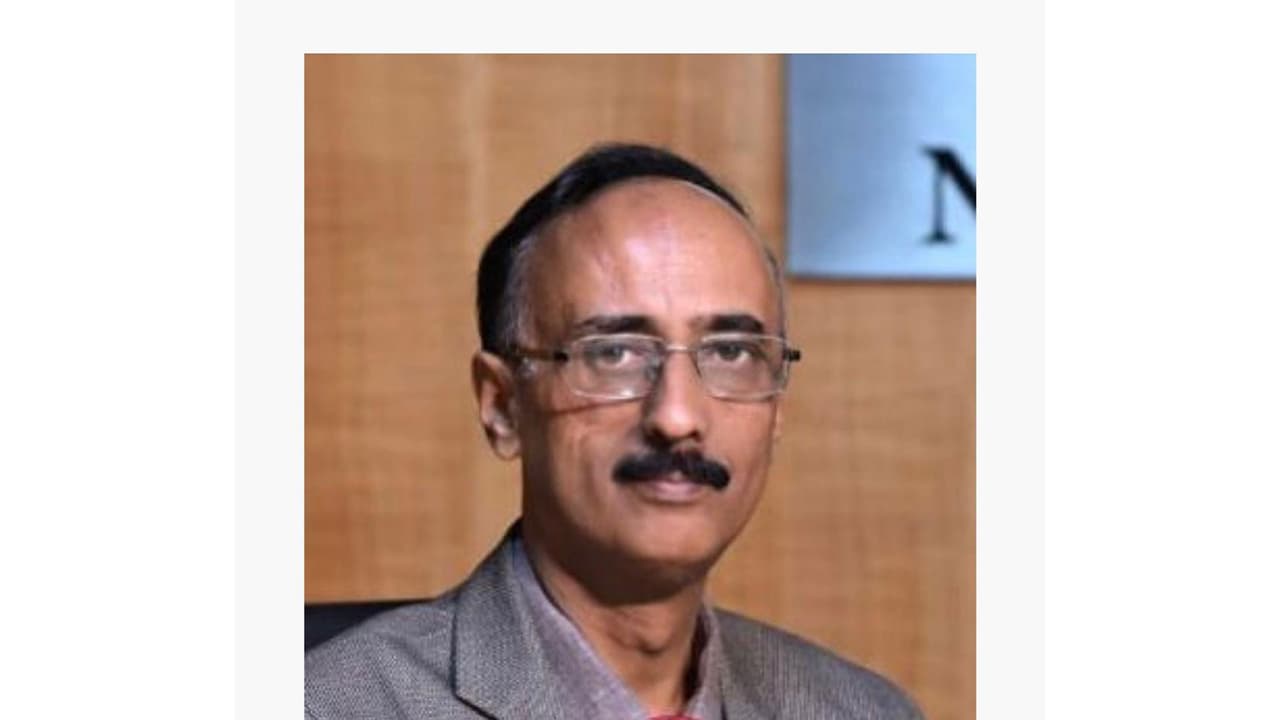
Demand for agri and rural credit is set to stay strong in 2026-27, driven by high input costs and wider KCC coverage, says NABARD's Ajay Sood. The focus is shifting to long-term investment, but rising borrowing costs pose a challenge for farmers.
Demand for agricultural and rural credit is expected to remain strong in 2026-27, supported by higher input costs, wider Kisan Credit Card (KCC) coverage and increasing investments in allied activities, mechanisation and agricultural infrastructure, according to NABARD Deputy Managing Director Ajay Kumar Sood.
Speaking to ANI, Sood said the demand for farm credit has grown significantly over the past decade and is expected to continue rising, although at a gradual pace. "Yes, it will definitely improve. We will see some steady improvement. As far as the latest figures are concerned, if I compare these figures since 2014-15, the agricultural credit disbursement was around Rs 8.5 lakh crore. Now, if I compare it with 2025-26, it's around Rs 30 lakh crore, which too is provisional. So it's expected to rise further," Sood told ANI when asked whether demand for agricultural and rural credit is improving this financial year.
Outlook for 2026-27
On the outlook for the next financial year, he said, "For 2026-27 also, demand will be very resilient, though it may be a more gradual pace of growth. Growth is basically happening because it is driven by higher input costs, enhanced KCC coverage and rising credit absorption in allied activities, mechanisation and agri-infrastructure."
Shift Towards Long-Term Investment
Sood noted that the structure of agricultural lending is gradually changing, with a greater focus on long-term investment credit rather than short-term crop loans. "The composition of the credit itself is now evolving with a greater emphasis on investment-led term lending, which is reflecting a gradual shift from a short-term crop loan towards more capital formation in agriculture," he said.
He added that the shift would improve the sector's ability to absorb credit and support long-term growth.
Rising Borrowing Costs a Challenge
At the same time, Sood cautioned that rising borrowing costs remain a challenge for farmers and other rural borrowers. "If I talk of the farmers, the farming community operates on a very thin margin, maybe 5-10 per cent. So even if there is a 100 basis point increase in interest rates, it can significantly erode their profitability. And that too, particularly for small and marginal farmers who form a major chunk of the operational holding, around 86 per cent are small and marginal farmers," he said.
According to Sood, higher interest rates could also affect access to affordable credit for Self-Help Groups (SHGs) and impact the expansion plans of rural micro, small and medium enterprises (MSMEs).
NABARD's Support Measures
To support rural lending, NABARD extended around Rs 4.5 lakh crore in concessional refinance assistance and targeted short-term refinance products during 2025-26. "Through our refinance support, during 2025-26 itself, we have provided around Rs 4.5 lakh crore concessional refinance assistance and targeted short-term refinance products. We are providing this relatively lower-cost liquidity to the rural financial institutions, reducing their dependence on high-cost borrowings and enabling sustained lending to farmers, SHGs and rural MSMEs," he said.
Resilience Against Global Shocks
On concerns over global geopolitical tensions and their impact on agriculture, Sood said India is well-positioned to manage any potential disruptions arising from developments around the Strait of Hormuz. "The domestic buffer stocks of wheat and rice are robust. Food inflation was subdued in 2025-26. The government has assured fertilizer availability for Kharif 2026-27 through proactive sourcing from alternate origins. Urea prices remain unchanged and domestic LNG availability for fertilizer manufacturing has improved," he said.
Limited Impact of Input Costs
Sood added that any increase in fertilizer-related costs would have a limited impact on overall farm production expenses. "As far as fertilizer and irrigation are concerned, which are the two very important sources of the production cost, they only account for around 11 per cent of the total crop production cost. Therefore, limiting their input cost pressures from the Hormuz shock," he said.
He also highlighted government initiatives such as the National Mission on Natural Farming, PM-KUSUM and the National Green Hydrogen Mission, saying they would help strengthen the farm sector's resilience against external shocks. (ANI)
(Except for the headline, this story has not been edited by Asianet Newsable English staff and is published from a syndicated feed.)