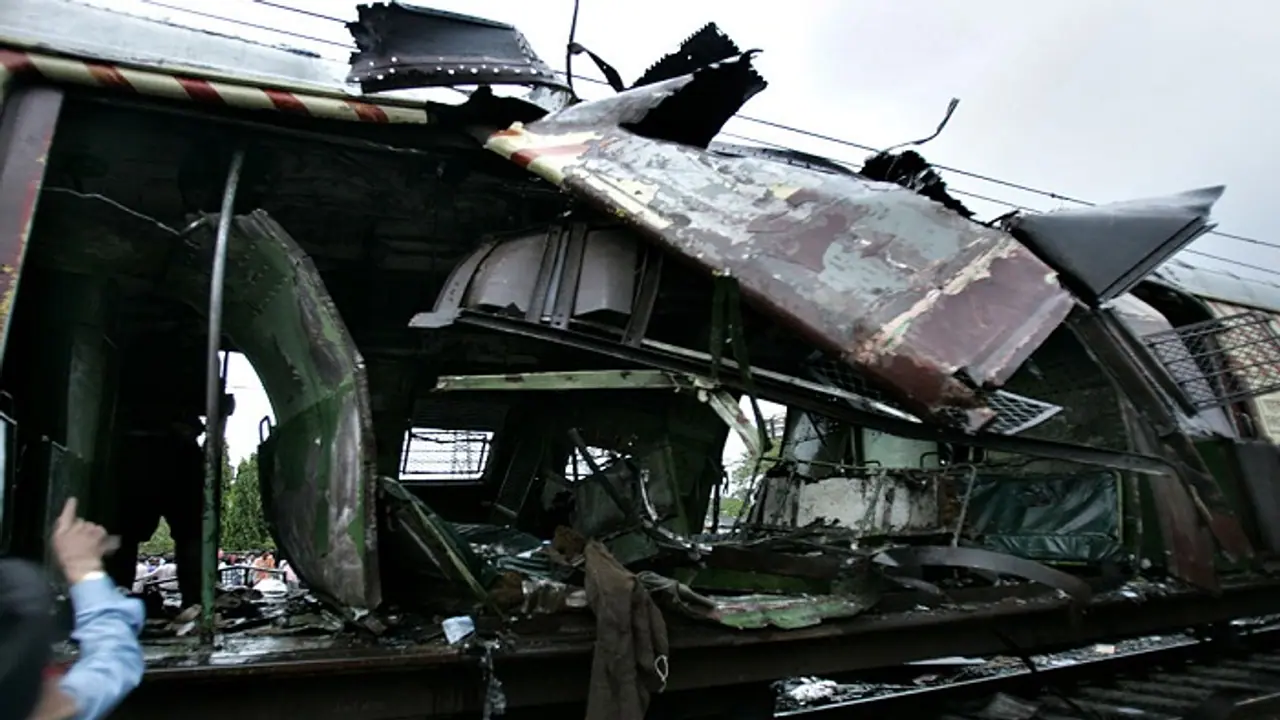
In 2006, Mumbai train blasts killed 189 and injured over 800. The Bombay High Court acquitted all 12 convicted men, citing a deeply flawed prosecution case.
Nearly two decades after one of Mumbai's darkest days, the Bombay High Court on Monday (July 21) acquitted all 12 men who were earlier convicted for the 2006 suburban train blasts that killed 189 people and injured over 800.
The division bench of Justices Revati Mohite Dere and Gauri Godse tore into the prosecution's case, calling it deeply flawed. They highlighted glaring lapses: key witnesses whose testimonies were inconsistent or delayed by years, identification parades that failed basic standards, and confessional statements tainted by allegations of custodial torture.
"Some witnesses remained silent for four years before suddenly naming the accused—this is simply not normal," the court said, expressing disbelief over the prosecution's approach. One of the witnesses, the court noted, had appeared in multiple unrelated cases, including the Ghatkopar blast case, casting further doubt on his credibility.
Related Articles

Adding to the concerns were procedural gaps. Several witnesses were never called to testify, and even in crucial matters like the recovery of RDX, the prosecution failed to prove an unbroken chain of custody. "The evidence was not shown to be sacrosanct until it reached the Forensic Science Laboratory," the court pointed out.
Ultimately, the judges said the state had "thoroughly failed" to prove its case beyond a reasonable doubt. The 2015 verdict by the special MCOCA court, which sentenced five men to death and seven to life imprisonment, was quashed.
Of the original 12 convicted, one, Kamal Ansari, died in prison in 2021 during the COVID-19 pandemic. The remaining 11, after 19 years of incarceration, are now set to be released.
"This judgment is a ray of hope for all those wrongly incarcerated," said defence lawyer Yug Mohit Chaudhry. The bench, in turn, responded with quiet dignity: "We did our duty. It was our responsibility."
Public Prosecutor Raja Thakare accepted the outcome, saying the judgment would serve as a "guiding light" for future cases.