
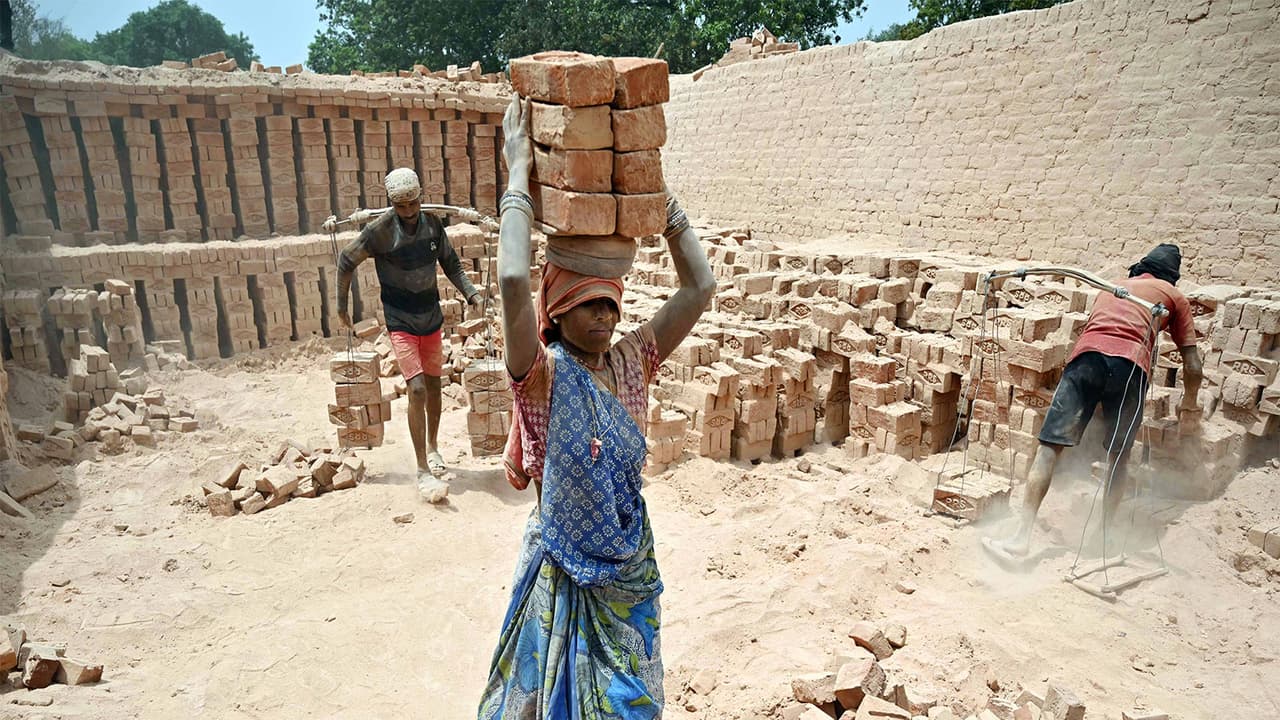
An SBI research report found nearly one-fourth of India's casual workforce receives pay below the minimum wage. Chhattisgarh, Odisha, and Jharkhand are the worst-performing states, with women being disproportionately affected by wage exploitation.
Nearly one-fourth of India's casual workforce receives pay below the statutory minimum wage. A research report by the State Bank of India (SBI) based on the latest Periodic Labour Force Survey (PLFS) 2025 data found massive gaps in how different regions handle wage regulation.
Regional Disparities in Wage Compliance
Chhattisgarh, Odisha, and Jharkhand emerged as the areas with the most frequent violations. In Chhattisgarh, roughly 70 per cent of casual workers earned less than the legal minimum, followed closely by Odisha at 66 per cent and Jharkhand at 65 per cent. The data suggested that in these specific regions, the majority of the casual labour force operated without the basic financial safeguards promised by the state.
As per the report, approximately 25 per cent of casual workers do not earn the legally mandated rates. This deficit in compensation points toward an environment where labour laws struggle to reach the most vulnerable segments of the economy.
"Substantial interstate disparities are observed in minimum wage compliance among casual workers," the research report noted.
While the situation remains critical in the eastern belt, other industrial and agricultural hubs also showed significant levels of non-compliance. In Punjab, approximately 37.19 per cent of the casual workforce earned below the threshold. Major economic contributors like Maharashtra and West Bengal also struggled with enforcement, where nearly one-third (~33) of casual workers received wages that fell short of the mandated minimum. Conversely, states like Tamil Nadu (4.58%) and Telangana (0.36%) showed much higher compliance with regard to minimum wage compliance for casual workforces. Andhra Pradesh stood out for having no recorded violations in this category.
"States need to strictly implement the Minimum Wages Act," the study emphasised.
Gender Disparity in Underpayment
A sharp gender disparity also existed within these figures. Female workers accounted for 45 per cent of all underpaid casual workers, even though they represent only 25 per cent of the total casual workforce. In contrast, male workers made up 75 per cent of the workforce but accounted for 55 per cent of those earning below the minimum wage. This imbalance suggested that women in the casual sector are disproportionately vulnerable to wage exploitation.
(Except for the headline, this story has not been edited by Asianet Newsable English staff and is published from a syndicated feed.)