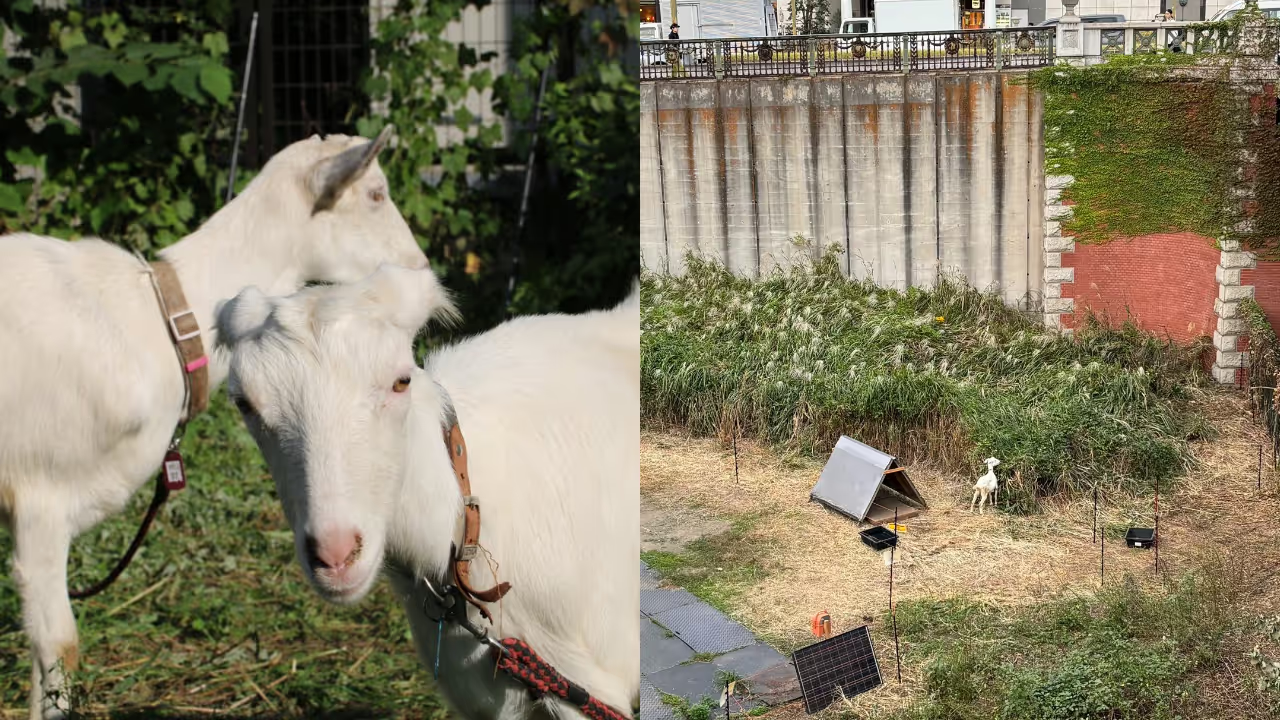
Two goats, Pokke and Nagi, have become a popular attraction at Tokyo's Yotsuya Station. Introduced by JR East for eco-friendly weed control, the pair are winning hearts among commuters, children and social media users.
Two goats have become an unexpected attraction outside a railway station in central Tokyo, Japan, after being brought in to help clear overgrown weeds from a patch of land. The unusual initiative by East Japan Railway Company (JR East) has captured the attention of commuters, local residents, children and social media users, turning an ordinary station area into a popular spot for curious onlookers.
Instead of relying solely on conventional weed-clearing methods, the railway company is experimenting with a more environmentally friendly approach by allowing the animals to graze on unwanted vegetation. The initiative is not only helping manage weeds but also bringing smiles to passers-by, with photographs and videos of the goats attracting attention online.
According to a report published by Japanese media outlet J-Town Net on October 23, JR East introduced the two goats outside Yotsuya Station in Tokyo's Chiyoda Ward on October 9. Since their arrival, the animals have attracted considerable public interest, with people stopping to watch them graze and observe their activities.
Related Articles

Why Did JR East Bring Goats to Yotsuya Station?
The two goats, named Pokke and Nagi, are playing an unusual role in maintaining the greenery around the railway station. Pokke is a two-year-old female, while Nagi is a one-year-old male. Their primary task is to eat the weeds growing on a designated patch of land outside the station, helping control vegetation naturally.
The idea reportedly originated with a railway employee who suggested that goats could provide an efficient alternative for clearing weeds. JR East subsequently decided to test the approach as part of its efforts to explore environmentally friendly vegetation management methods.
"The grassy area in front of the station is of a certain size, and an employee suggested using goats for weeding as one of the efficient methods of weeding, which led to its implementation," an employee from JR East's Ueno Business Headquarters told J-Town Net.
The initiative highlights how an unconventional approach can serve a practical purpose while creating a positive experience for the local community. By allowing the goats to graze on unwanted plants, the railway company is exploring an alternative to conventional weed-clearing practices.
According to FNN Prime Online, Pokke and Nagi are expected to continue their grazing duties until December. However, their assignment could end earlier if the weeds are cleared before the anticipated end date. For now, JR East has no plans to introduce additional goats as part of the trial.
Goats Become a Social Media Sensation
Beyond their role in vegetation control, Pokke and Nagi have attracted attention for the joy they have brought to the busy urban neighbourhood. Their presence has created an unusual sight in central Tokyo, where railway commuters and local residents have gathered to watch the animals at work.
The goats gained wider attention after university lecturer Shinji Fukuhara shared a photograph of them on X on October 19. Fukuhara, who regularly passes through Yotsuya Station, spotted the animals while returning from work and noticed the cheerful reactions of people gathered nearby.
"I saw a child holding onto the railing, smiling and chasing a goat, so I wanted to take a picture. The goat really did bring a smile to everyone's face. It felt a bit like a zoo, and when I thought about it that way, I began to think that there must be some meaning in being able to do something so heartwarming in the heart of Tokyo, especially in Chiyoda Ward," Fukuhara told the outlet.
His photograph helped bring the initiative to wider public attention, with the goats becoming a talking point among social media users. The sight of animals grazing beside a railway station has offered a refreshing contrast to the fast-paced surroundings of the Japanese capital.
JR East Welcomes the Public's Response
The public response has been encouraging, with the goats attracting people of different age groups. Local schoolchildren have reportedly shown particular interest in the animals, while other visitors have stopped to observe them during their daily journeys.
JR East has welcomed the attention, noting that the initiative has helped strengthen the connection between the railway station and the surrounding community.
"We are delighted that so many people have shown interest. We have also seen heartwarming scenes, such as local elementary school students calling out to the goats, which have given us a sense of connection between the station and the community. All of us at the station are very pleased about this," the JR East employee said.
The railway company has also shared updates about the goats on social media, encouraging people to watch them as they carry out their unusual duties.
The social media post further increased interest in the initiative, drawing attention to the railway company's experiment with natural weed control.
An Eco-Friendly Initiative With a Community Impact
The goat-weeding project at Yotsuya Station demonstrates how an alternative approach to routine maintenance can also encourage public engagement. While the primary objective is to manage weeds, the presence of Pokke and Nagi has given people an opportunity to pause during their daily routines and enjoy an unexpected encounter with animals in the heart of a major city.
The initiative has also sparked conversations online about environmentally friendly alternatives to conventional vegetation management. Although the trial is relatively small in scale, it illustrates how a simple idea can attract widespread interest when it combines a practical purpose with a positive community experience.
For now, Pokke and Nagi are expected to continue their work outside Yotsuya Station until the weeds have been cleared or their scheduled assignment comes to an end. In the meantime, the two goats have already achieved something beyond their original task. They have become familiar faces among commuters, bringing a little countryside charm to the streets of central Tokyo.