
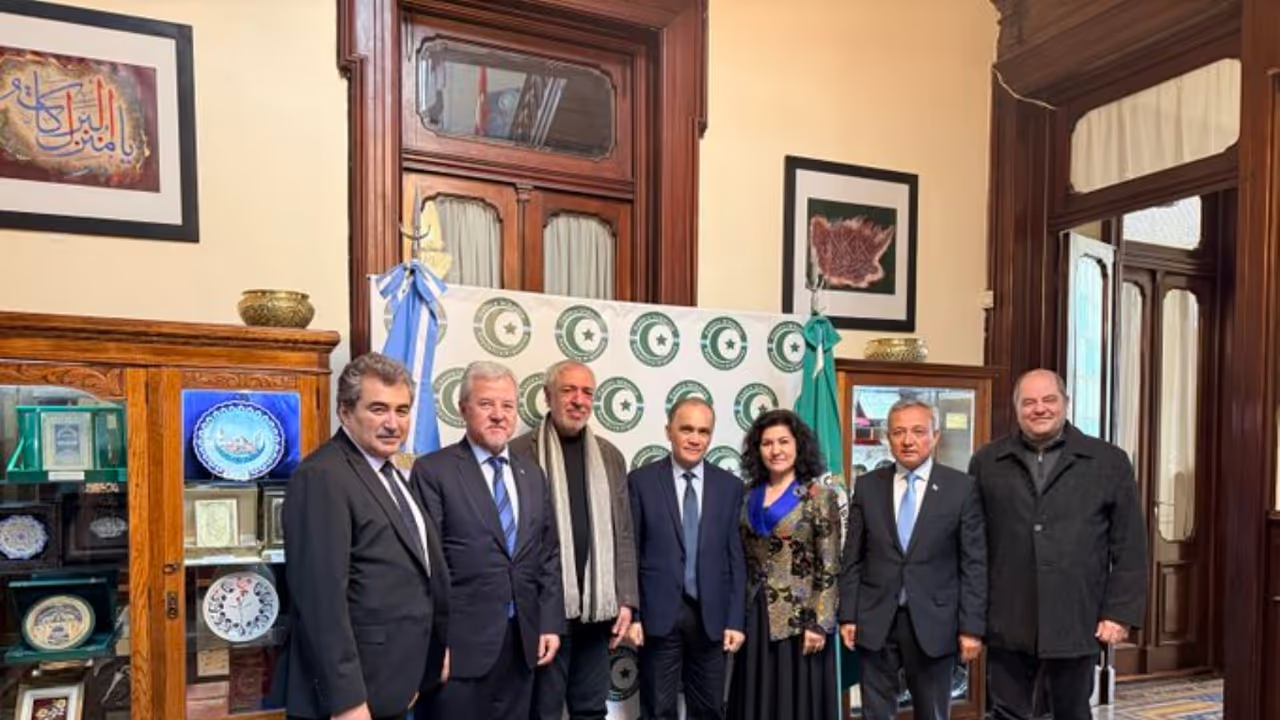
A Uyghur delegation in Buenos Aires met US representatives and local Muslim leaders to highlight human rights abuses in China's Xinjiang region, seeking international attention and solidarity for the Uyghur people.
Uyghur Delegation Seeks Support in Argentina
A delegation of prominent Uyghur representatives visiting Argentina has raised concerns over human rights violations in China's Xinjiang region during meetings with US representatives and members of Argentina's Muslim community in Buenos Aires.
The delegation included Dr Rishat Abbas, President of the Uyghur Academy; Abdulhakim Idris, Executive Director of the Center for Uyghur Studies; Turgunjan Alawdun, President of the World Uyghur Congress; and Dolkun Isa, President of the Uyghur Center for Democracy & Human Rights. During the visit, the delegation met representatives at the US Ambassador's Residence in Buenos Aires, where discussions focused on the situation of Uyghurs in Xinjiang and the importance of keeping international attention on alleged human rights abuses. The delegation also held a meeting at the Islamic Center of the Argentine Republic with its Vice President, Omar Abboud. The participants discussed the situation facing Uyghurs and the importance of Muslim communities around the world expressing solidarity with the Uyghur people.
It was a pleasure to have an impactful meeting at the Islamic Center of the Argentine Republic (@cira_islam) with its Vice President, Omar Abboud, in Buenos Aires. I, along with the Uyghur delegation, including @DrRishatAbbas, President of the Uyghur Academy; @AHakimIdris,… pic.twitter.com/U7T7xlWcXq — Rushan Abbas (@RushanAbbas) August 25, 2026
US Lawmakers Voice Support Amid Criticism
The visit comes amid continued criticism from US lawmakers and policymakers over China's treatment of Uyghurs and other predominantly Muslim communities in Xinjiang.
The case of Dr Gulshan Abbas, a Uyghur doctor detained in 2018, has emerged as one of the cases highlighted by Uyghur advocates. A recent report by the Hudson Institute, a Washington-based think tank, said Abbas was detained in Urumqi in September 2018, days after her sister, Uyghur rights advocate Rushan Abbas, spoke at a Hudson Institute event about alleged abuses in Xinjiang. The case has received support from US lawmakers.
Tom Suozzi, a member of the US House of Representatives from New York, said the United States must continue efforts to oppose what he described as the "brutal oppression" of Uyghurs by the Chinese Communist Party. "Dr. Gulshan Abbas remains unjustly imprisoned by the Chinese Communist Party," Suozzi said, adding that he was working with her sister and daughter to seek her release and reunite her with her family.
We must do everything we can to stop the brutal oppression of Uyghurs by the Chinese Communist Party. Dr. Gulshan Abbas remains unjustly imprisoned by the Chinese Communist Party along with more than one million Uyghurs that have committed no crime. I’m proud to work alongside… — Tom Suozzi (@RepTomSuozzi) August 24, 2026
Rushan Abbas thanked Suozzi for his support, saying she would continue campaigning for her sister's freedom and for other Uyghurs whom she described as unjustly imprisoned.
A Campaign for Global Attention
The Argentina visit is part of broader international outreach by Uyghur organisations seeking to build support for their concerns beyond traditional diplomatic centres. By engaging US representatives, Muslim community leaders and other international stakeholders, the delegation is seeking to keep the Xinjiang issue on the global human rights agenda.
The United States has repeatedly accused China of serious human rights violations in Xinjiang, including arbitrary detention and repression of Uyghur and other predominantly Muslim communities. Beijing rejects the allegations and maintains that its policies in Xinjiang are aimed at combating terrorism and extremism and promoting economic development. The issue remains a significant point of contention between Washington and Beijing, with US lawmakers continuing to call for accountability over China's policies in Xinjiang. (ANI)
(Except for the headline, this story has not been edited by Asianet Newsable English staff and is published from a syndicated feed.)