
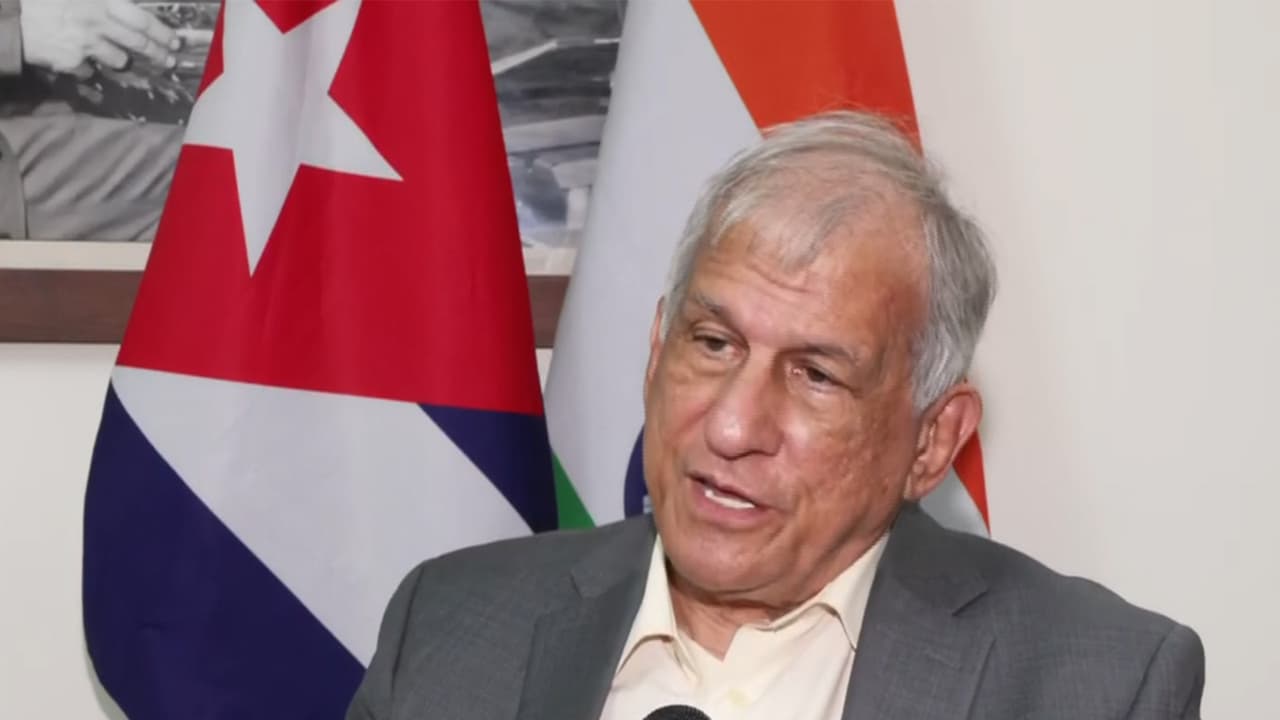
US sanctions have crippled Cuba's healthcare and economy, causing power cuts and rising infant mortality, says scientist Mitchell Valdes-Sosa. He highlighted Havana's keen interest in partnering with India in biotechnology and vaccine development.
US sanctions have severely impacted Cuba's healthcare system, economy and daily life, Cuban neuroscientist Mitchell Valdes-Sosa said, while underscoring Havana's interest in expanding collaboration with India in biotechnology, vaccine development and neuroscience research.
Impact of US Sanctions
Speaking to ANI, Valdes-Sosa said Cuba is facing significant challenges due to long-standing US restrictions, including difficulties in importing critical supplies and maintaining public health services. "The world is now waking up to the effect of the sanctions of the United States against Cuba. We are in a very difficult situation because we are having a lot of power cuts and difficulties importing materials for the public health system due to a lack of hard currency," he told ANI.
Valdes-Sosa claimed the sanctions have contributed to a deterioration in some of Cuba's health indicators. "Cuba's infant mortality rate was around 5.5 per 1,000 births a few years ago. Last year it rose to almost 10. This is a direct impact of the United States sanctions. Cuba is not a failed state; it is a sabotaged state," he said. He said prolonged power outages and economic pressures have disrupted daily life across the country, with outages sometimes lasting up to 20 hours.
Cuba Seeks Partnership with India
Against this backdrop, Valdes-Sosa highlighted India's growing importance as a scientific and technological partner for Cuba. "We are attracted to collaborating with India because the level of biomedical and biotechnology research is very high. India is the pharmacy of the world. Developing products together with Indian partners and taking them to the industrial stage is very attractive because India's reach in the pharmaceutical and biotechnology industries is extremely important," he said.
The Cuban scientist noted that Cuba operates a network of 36 biotechnology and research centres, including institutions focused on genetic engineering, immunology, vaccine development and neuroscience, and said collaboration with Indian scientists could help accelerate innovation. Referring to the 3rd BRICS Neuroscience Symposium held in Chennai, Valdes-Sosa said BRICS nations are increasingly working together on research related to brain health, brain function and neurotechnology.
Highlight on Medical Innovations
On Cuba's medical innovations, he highlighted cancer vaccines developed for specific forms of lung, head and neck cancers. "The cancer vaccine has already been used in thousands of patients worldwide. It increases life expectancy for important groups of patients. Medicine today is becoming more personalised because different cancers require different treatments," he said.
Praising India's Vaccine Maitri initiative, Valdes-Sosa said Cuba has benefited from Indian vaccines and biotechnology products. "India has become a powerhouse for biotech products and vaccines. Cuba will continue to benefit from this initiative," he added. (ANI)
(Except for the headline, this story has not been edited by Asianet Newsable English staff and is published from a syndicated feed.)