The new India-US trade deal lowers tariffs to 18%. Congresswoman Sydney Kamlager-Dove criticises past 50% duties, urging swift action to rebuild ties. PM Modi hails the agreement as a milestone for cooperation between the two democracies.
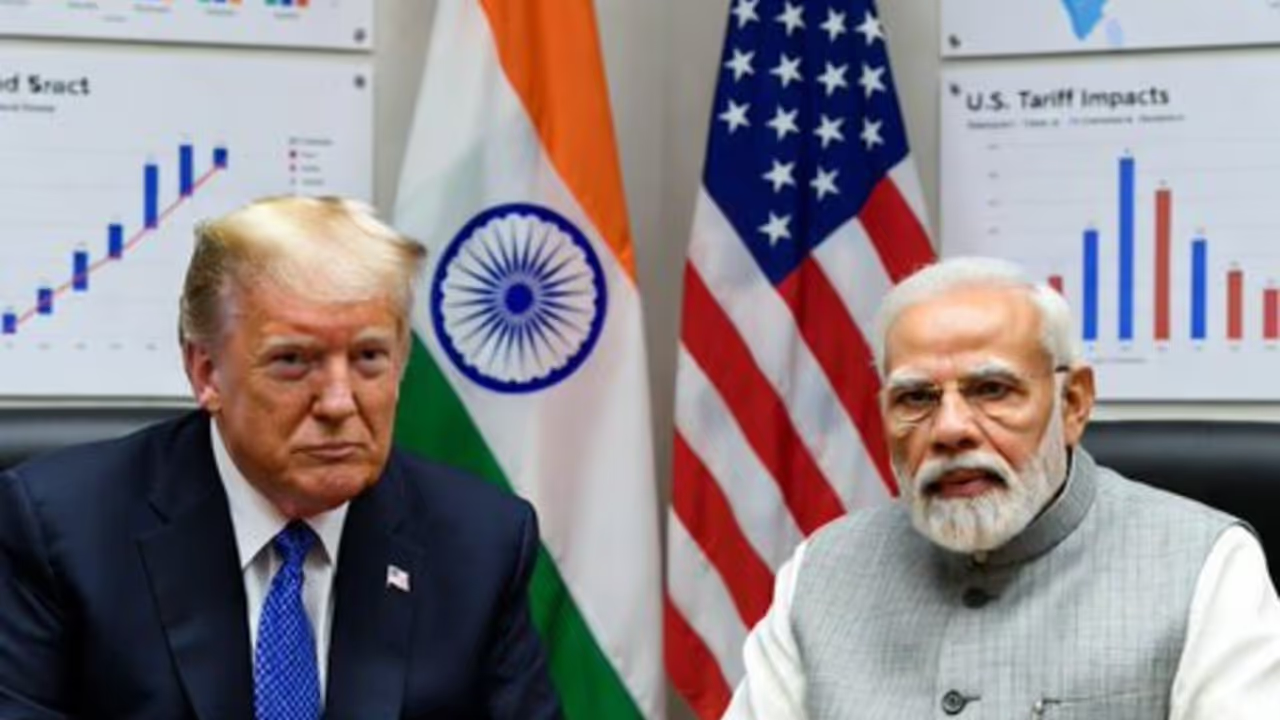
The announcement of a new India-US trade deal has lowered tariffs on Indian imports to 18 percent, marking a significant shift in bilateral economic relations. The agreement was confirmed by both leaders, with President Donald Trump declaring it effective immediately.
US Congresswoman Sydney Kamlager-Dove welcomed the development but sharply criticised the previous 50 percent tariffs imposed on India. She noted that 25 percent of those duties were linked to New Delhi’s purchase of Russian oil, and argued that they had hindered meaningful cooperation between the two countries.
In a post on X, Kamlager-Dove wrote that the earlier tariffs had “tanked a year of meaningful bilateral cooperation,” including the annual Quad Leaders’ Summit that was scheduled but never held. She urged the Trump administration to act quickly to strengthen ties, saying the new agreement left “no excuse for continued stagnation.”
Related Articles

President Trump emphasised the personal nature of the deal, stating it was reached “out of friendship and respect for Prime Minister Modi.” He confirmed that reciprocal tariffs would be reduced from 25 percent to 18 percent, effective immediately.
Prime Minister Narendra Modi responded with enthusiasm, calling the announcement “wonderful” and thanking Trump on behalf of India’s 1.4 billion people. He highlighted the broader significance of the agreement, stressing that cooperation between two large economies and democracies unlocks immense opportunities. Modi added that he looked forward to working closely with Trump to elevate the partnership to “unprecedented heights.”
The deal represents a turning point after a year marked by strained relations. The reduction in tariffs is expected to ease trade flows and encourage greater collaboration across sectors. While challenges remain, the agreement signals renewed commitment from both sides to deepen cooperation.
Observers note that the timing of the deal is crucial, as both nations seek to reinforce strategic and economic ties amid global uncertainty.