
The US Central Command confirmed its forces redirected 59 vessels, enforcing a 'steel wall' blockade on Iran. President Trump claimed 'total control' over the Strait of Hormuz, calling the blockade a success amid regional tensions.
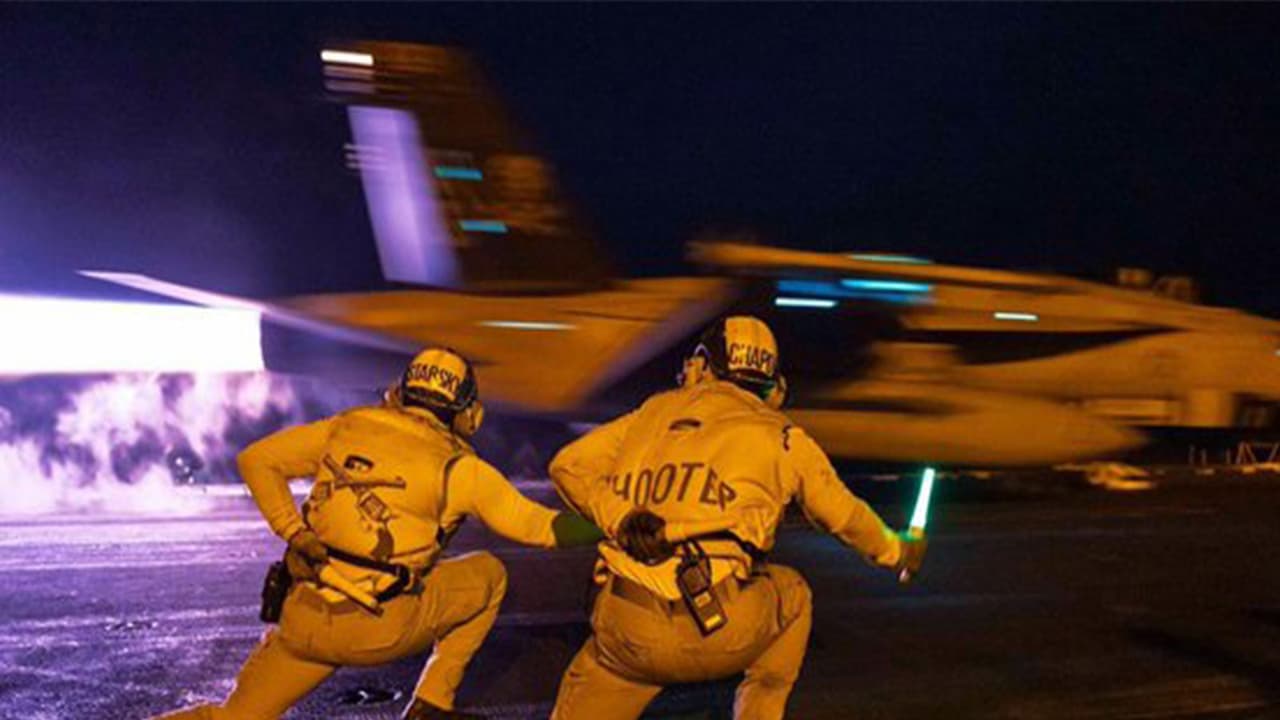
The US Central Command (CENTCOM) said that US forces have redirected 59 commercial vessels, disabled three and boarded two others as part of efforts to enforce a blockade against Iran. In a post on X, CENTCOM said, "An F/A-18 fighter jet launches from the flight deck of USS George HW Bush (CVN 77) while the ship sails in regional waters and supports enforcement of America's steel wall blockade against Iran." The command added that, "As of August 12, US forces have redirected 59 commercial vessels, disabled 3 and boarded 2 to ensure full compliance with the blockade."
Trump Claims 'Total Control'
Earlier in the day, President Donald Trump claimed that the US exercised "total control" over the Strait of Hormuz, and he "will keep it" amid stalled negotiations with Iran regarding the reopening of the strategic conduit. In a statement on Truth Social, Trump asserted, "The USA has total control over the Strait of Hormuz. I THINK WE WILL KEEP IT! Our Naval Blockade is being called, by everyone, 'A WALL OF STEEL,' and there is nothing Iran can do about it."
Trump further maintained that Tehran's military infrastructure had been severely degraded, concluding his message with the phrase, "Praise be to Allah!" "All they have is FAKE NEWS and 300% INFLATION, and getting worse! Iran is all talk and no action, the Bully of the Middle East No Longer. Praise be to Allah! President DONALD J. TRUMP," he added in the social media post.
Heightened Tensions in Strait of Hormuz
The US President's remarks follow an extended confrontation over the Strait of Hormuz, a key maritime passage through which nearly 20 per cent of global petroleum trade passes. The latest escalation comes after weeks of military exchanges involving Iranian, Israeli, and US forces across the region. The hostilities have intensified apprehensions regarding a wider regional confrontation, accompanied by repeated warnings from Tehran that maritime traffic could be restricted or disrupted if external pressure on Iran continues to mount. In response, Washington has deployed a significant naval presence across the Gulf, reaffirming that guaranteeing freedom of navigation remains a primary security goal.
Diplomatic Efforts and Demands
Trump's statements coincided with ongoing behind-the-scenes diplomatic engagement. Representatives from Washington and Tehran have been involved in indirect discussions regarding terms to alleviate the Hormuz crisis and resume regular maritime traffic.
Further, Tehran has reportedly demanded compensation for war-related damages in response to the US war launched by Trump on February 28 and sanctions-linked economic losses, a condition that Trump has publicly dismissed. (ANI)
(Except for the headline, this story has not been edited by Asianet Newsable English staff and is published from a syndicated feed.)