
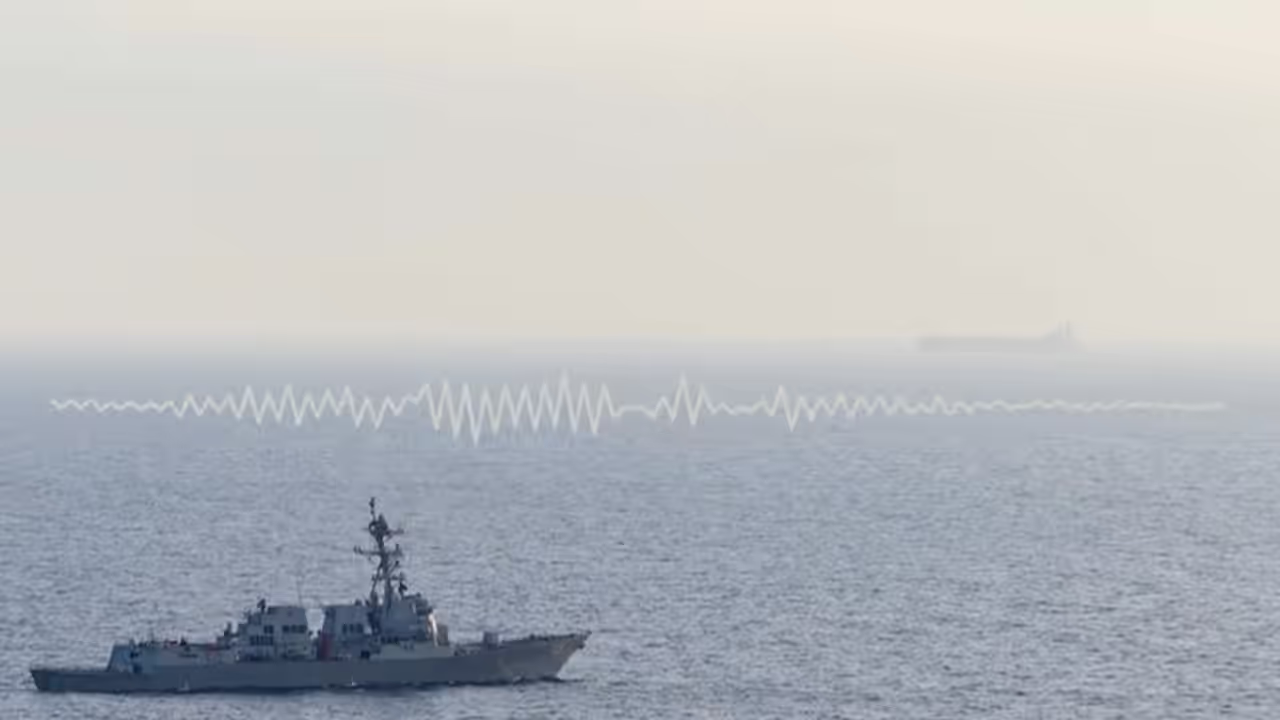
The United States has imposed a naval blockade on Iranian ports, escalating tensions in the Strait of Hormuz. US Central Command warned it would use military force against any vessel defying the blockade, which follows failed diplomatic talks.
Tensions in the Middle East have escalated sharply after the United States issued a direct warning to ships operating near the Strait of Hormuz, declaring that any vessel attempting to defy the newly announced maritime blockade could face military action. The development comes as Iran strongly rejected Washington’s move, insisting that the country cannot be isolated through naval pressure and warning that any escalation could trigger a wider regional crisis.
In an audio message released by the US Central Command (CENTCOM), American naval forces delivered a blunt message to commercial and military vessels in the region. The warning stated: “Do not attempt to breach the blockade. Vessels will be boarded for interdiction and seizure transiting to or from an Iranian port. Turn around and prepare to be boarded. If you do not comply with this blockade, we will use force. The whole of the United States Navy is ready to force compliance.”
The message underlined Washington’s determination to enforce restrictions on maritime traffic linked to Iran despite growing international concern over the legality and consequences of such action.
The blockade follows the collapse of recent diplomatic negotiations between Washington and Tehran, where officials had reportedly discussed de-escalation measures linked to Iran’s nuclear programme and freedom of navigation in Gulf waters. After those talks failed to produce a breakthrough, US President Donald Trump ordered naval forces to begin operations aimed at stopping ships entering or leaving Iranian ports. The Strait of Hormuz, through which nearly one-fifth of the world’s oil and liquefied natural gas passes, has now become the centre of a dangerous geopolitical confrontation.
Also Read: US blockade: USS Spruance forces Iranian cargo vessel back to Iran
CENTCOM also posted updates on social media showing US warships patrolling the Gulf of Oman. One post read: “U.S. naval vessels are on patrol in the Gulf of Oman as CENTCOM continues to execute a U.S. blockade on ships entering and departing Iranian ports. U.S. forces are present, vigilant, and ready to ensure compliance.” Another update said: “Thousands of U.S. service members, including 5,000 Sailors and Marines from the Abraham Lincoln Carrier Strike Group, are executing the mission to blockade ships entering and departing Iranian ports.” These posts signalled that the operation was already underway with substantial military backing.
Iran responded swiftly and defiantly. Foreign Ministry spokesperson Esmail Baghaei dismissed the American move, declaring: “Firstly, Iran is not ‘blockadable’.” He added: “If you fail to reach a result through a diplomatic process, resorting to other means of pressure will certainly not lead to any result and you will not succeed.” Baghaei further warned that Iranian armed forces were closely monitoring developments and would “respond proportionally wherever necessary.” His remarks made clear that Tehran views the blockade as both unlawful and provocative.
Iran also rejected suggestions of foreign involvement in securing the Strait of Hormuz. Baghaei said: “The security of the Strait of Hormuz has been ensured by Iran for decades. Iran has been the guardian of this waterway's security.” He argued that recent instability was caused by what he called the “US-Zionist-imposed war” and said regional countries, rather than outside powers, should handle maritime security. Tehran has consistently maintained that it can protect shipping lanes without foreign military intervention.
Also Read: Iran May Open Safe Ship Corridor Through Oman Side of Strait of Hormuz Amid US Talks
Shipping activity through the narrow waterway has already slowed dramatically as vessel owners weigh the risks of entering one of the world’s most sensitive maritime routes. Analysts warn that even a limited confrontation in the Strait of Hormuz could send oil prices sharply higher, disrupt global supply chains and deepen instability across the Gulf. While Washington says the operation is designed to pressure Iran, Tehran’s latest response suggests neither side is ready to back down, raising fears that the standoff could quickly spiral into a broader conflict.
