
Donald Trump defended his tariff policy, claiming it ended 8 wars and boosted national security. As the Supreme Court reviews his authority, his administration prepares a 'plan B' to maintain tariffs using other trade laws if the court rules against him.
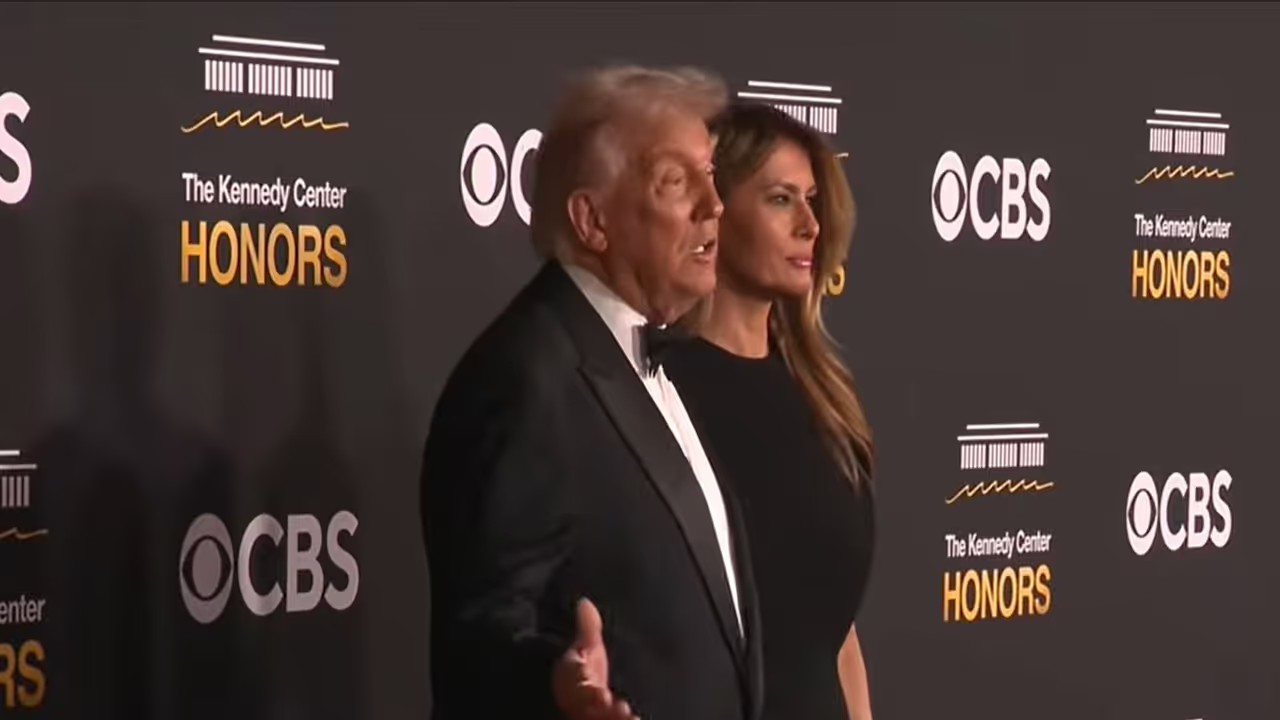
US President Donald Trump and the First Lady arrived on the red carpet at the Kennedy Center Honours in Washington DC, where the president commented on his administration's tariff policy, emphasising national security benefits. Speaking on tariffs, Trump said, "We have tremendous flexibility with the current system. It's unbelievable for national security. I've ended eight wars, largely because of trade and because of tariffs." He added, "If we go the other tariff route, it won't give you the same pure national security."
Legal Challenge Looms Over Tariff Authority
As Trump highlighted what he sees as the security advantages of tariffs, his comments came ahead of a key Supreme Court ruling on whether he exceeded presidential authority in imposing broad duties. In the coming weeks, the justices are expected to determine whether Trump violated federal law by using emergency powers to launch sweeping tariffs during his second term. Since returning to office in January, the president has repeatedly applied and reinstated tariffs on various trading partners, raising costs on products including appliances, lumber and electrical components.
A coalition of companies and trade organisations has challenged the approach, arguing Trump misused the International Emergency Economic Powers Act (IEEPA) by treating it as a blanket tool for tariffs. In a post on Truth Social, Trump addressed the looming Supreme Court decision, insisting he has alternative options if his current strategy is restricted. "While the United States has other methods of charging TARIFFS against foreign countries, many of whom have, for YEARS, TAKEN ADVANTAGE OF OUR NATION, the current method of Tariffing before the United States Supreme Court is far more DIRECT, LESS CUMBERSOME, and MUCH FASTER," he wrote. Trump also asserted broad presidential powers over national security and foreign policy, saying he had "settled 8 Wars in 10 months because of the rights clearly given to the President of the United States."
Administration Prepares 'Plan B'
To ensure the tariff strategy continues even if the court limits existing measures, US Treasury Secretary Scott Bessent has been preparing a fallback plan. His proposed "plan B" would use other statutory authorities combined with tougher actions on economic competition.
Utilising Alternative Trade Laws
"We can recreate the exact tariff structure with 301s, with 232s, with the I think they're called 122s," he said, referring to three separate provisions governing trade actions. Section 301 targets unfair foreign trade practices, Section 232 permits tariffs on imports that threaten national security, and Section 122 allows short-term tariffs or quotas in balance-of-payments emergencies.
Bessent warned that if the Supreme Court overturns the current tariffs, it could result in "massive refunds" owed to companies that paid them. He added that the government may have to return significant amounts already counted as federal revenue, creating fiscal and administrative challenges for the Treasury. (ANI)
(Except for the headline, this story has not been edited by Asianet Newsable English staff and is published from a syndicated feed.)