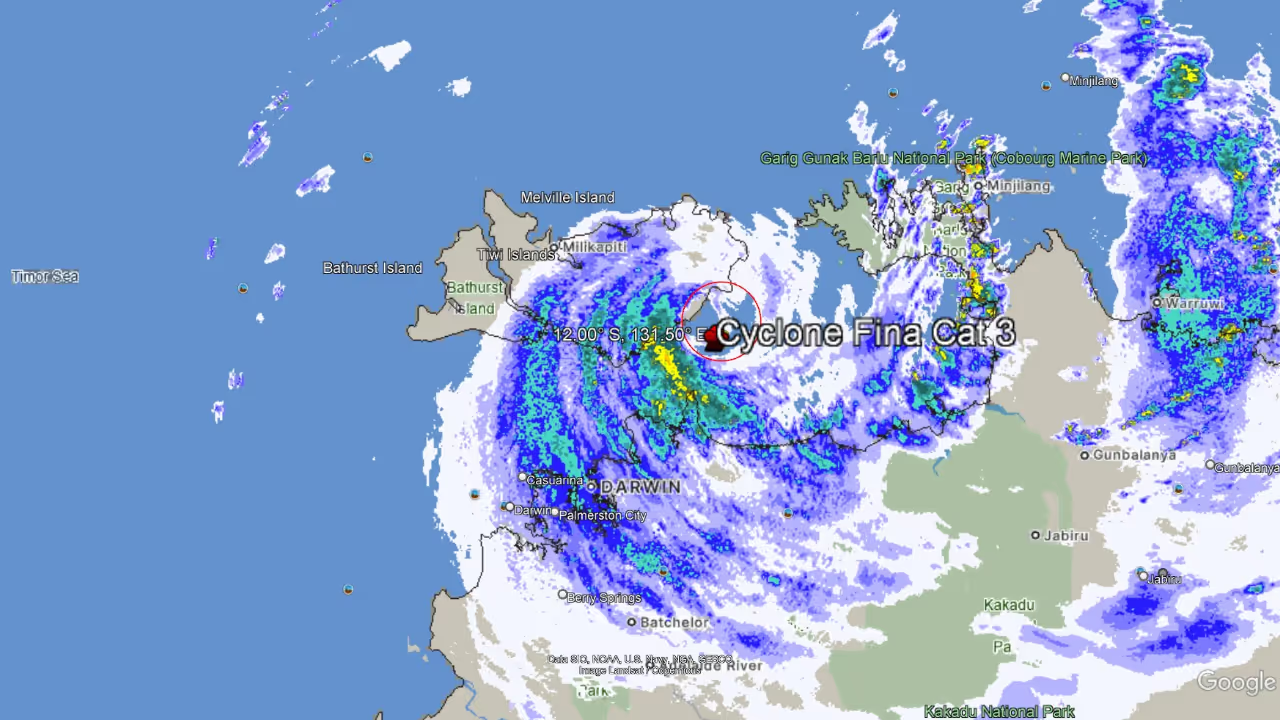
Tropical Cyclone Fina has strengthened into a Category 3 system near Australia’s Northern Territory, bringing destructive winds, heavy rainfall and dangerous conditions as authorities warn of flash flooding and urge residents to stay prepared.
Sydney: Tropical Cyclone Fina intensified into a category 3 storm on Saturday as it made its way towards Australia's Northern Territory, whipped by winds of around 120 kilometres per hour.
The state was on high alert as authorities expected the worst of the storm to strike on Saturday.
"It is going to get very wet and it is going to get very windy," Bureau of Meteorology forecaster Angus Hines said Saturday. "The worst of the wind is still building and not expected to come until later today or overnight".
Related Articles

Forecasters expect the cyclone to remain over the ocean -- although it will sweep close to land -- meaning cities will avoid the worst of it. But this will likely prolong the system, as land interaction can weaken storms.
At the Northern Territory's Salvation Army, homeless shelter the Red Shield House 49 has stocked enough food for a week.
"A lot of our most vulnerable come through here. This is a great facility and the team are really well-trained to look after them," Peter Sampson of the Salvation Army told national broadcaster ABC.
There are also concerns for the Tiwi Islands -- a sparsely populated archipelago about 80 kilometres (50 miles) off the coast of Darwin -- which are experiencing the full force of the cyclone with winds up to 185 kilometres per hour.
Northern Territory Police Force Superintendent Kirsten Engels said people should be "moving to shelters or hunkering down at home and avoiding any unnecessary travel".
"The situation is really serious. We have been planning for this, you don't need to panic," she told the ABC.
Some areas of Darwin could receive 200 millimetres (eight inches) of rain, which would heighten the risk of flash flooding.
While Fina was initially expected to make landfall as a category 2 tropical cyclone, weather forecasters upgraded it as it intensified Saturday morning. Wind speeds were estimated to be about 120 kilometres per hour around the core of the system.
Researchers have repeatedly warned that climate change amplifies the risk of natural disasters such as bushfires, floods and cyclones.
(Except for the headline, this story has not been edited by Asianet Newsable English staff and is published from a syndicated feed)