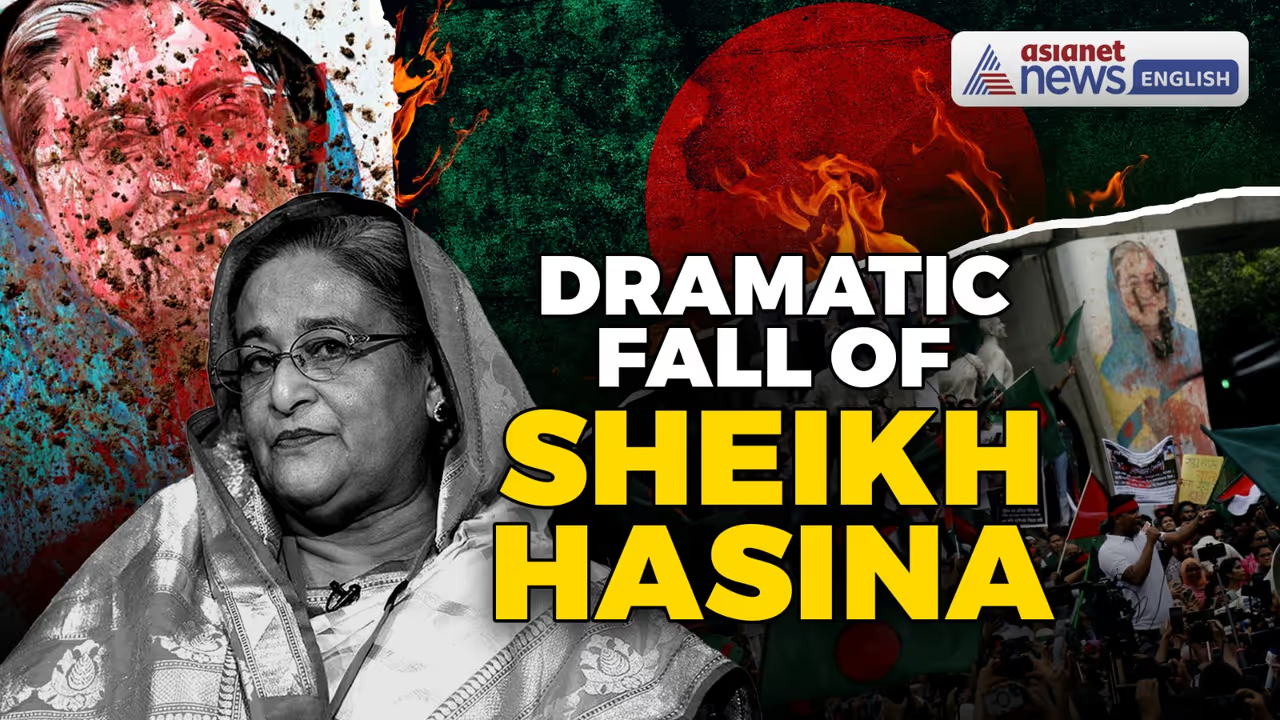
Bangladesh ex-PM Sheikh Hasina sentenced to death in absentia for crimes against humanity after a 15-month political and legal saga triggered by a student uprising. Her aides face prison, marking a historic verdict that shakes the nation.
The dramatic fall of Bangladesh’s former Prime Minister Sheikh Hasina culminated on Monday when the International Crimes Tribunal-Bangladesh (ICT-BD) sentenced her to death in absentia for crimes against humanity. The path to this historic verdict spanned over 15 months of political upheaval, mass protests, and legal battles that began with a student-led uprising in August 2024.
Here is a detailed timeline of the events that led to Hasina’s conviction:
August 2024: Uprising and Exile
On August 5, 2024, widespread student protests erupted across Dhaka, demanding Hasina’s resignation. Within days, the former prime minister was ousted from office and fled to India, marking the beginning of a turbulent chapter in Bangladesh’s history. By August 8, an interim government led by Nobel laureate Muhammad Yunus was formed to stabilize the nation.
Related Articles

Six days later, on August 14, the interim administration announced it would hold accountable those responsible for the violent deaths during the student movement, signaling a future crackdown under the International Crimes Tribunal-Bangladesh (ICT-BD).
October–November 2024: Legal Machinery in Motion
In October 2024, the interim government reconstituted the ICT-BD to oversee investigations and trials. On October 17, the tribunal issued arrest warrants for Sheikh Hasina and 45 top leaders of her Awami League party, linking them to alleged crimes against humanity. By November, the three-member tribunal, led by Golam Mortuza Majumdar, instructed investigators to complete the probe by December, setting the stage for formal prosecution.
February 2025: Human Cost Documented
A United Nations fact-finding mission reported in February 2025 that approximately 1,400 people had been killed during the student protests, highlighting the scale of violence that would dominate the tribunal’s proceedings.
June 2025: Trial Opens
The official trial began on June 1, 2025. Prosecutors presented the case as a coordinated and systematic campaign of violence against unarmed civilians. By June 19, the tribunal appointed former Supreme Court judge AY Moshiuzzaman as amicus curiae to assist in Hasina’s defence, providing a rare legal lifeline to the former prime minister.
July 2025: Contempt and Indictment
Hasina’s legal troubles escalated in July. On July 2, she was sentenced in absentia to six months’ imprisonment for contempt of court. Just over a week later, on July 10, the ICT formally indicted Hasina, former Home Minister Asaduzzaman Khan Kamal, and former Police Chief Chowdhury Abdullah Al-Mamun on five counts of crimes against humanity, including mass killings.
August–October 2025: In Absentia Trial Continues
On August 3, the tribunal commenced Hasina’s trial in absentia, alongside her two aides. The hearings stretched over two months, concluding on October 23. During this period, Mamun, who would later cooperate as a state witness, remained under scrutiny alongside the other accused.
November 2025: Verdict Day
On November 13, the tribunal announced that the verdict would be delivered on November 17. True to schedule, ICT-BD convicted Hasina and former Home Minister Kamal of crimes against humanity and sentenced them to death in absentia. Mamun, having turned state witness, received a five-year prison term.
Sheikh Hasina’s dramatic fall from power—from a revered prime minister to a convicted fugitive—marks one of the most turbulent periods in Bangladesh’s political history. The country now faces the aftermath of a verdict that has reshaped its political landscape, while questions remain over international implications and Hasina’s future.