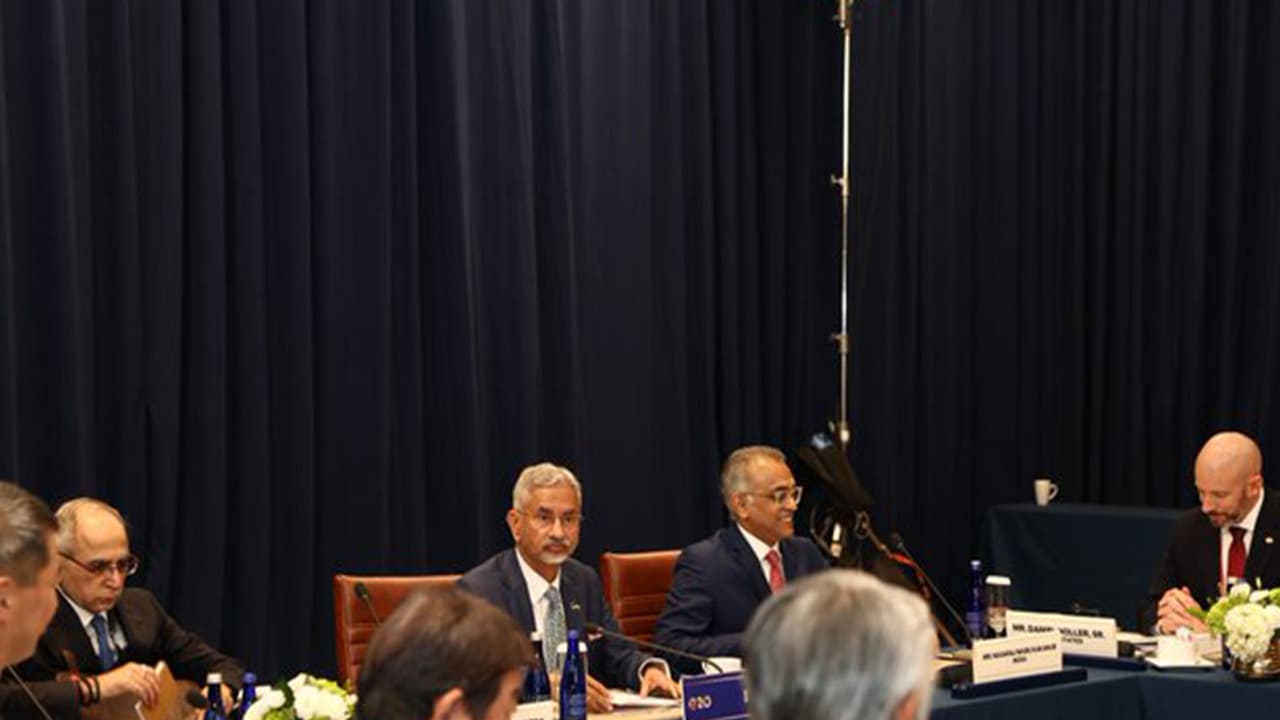
Quad nations, including India, US, Japan, and Australia, plan to expand joint maritime exercises, strengthen critical mineral supply chains, and collaborate to dismantle transnational cyber crime networks for a free and open Indo-Pacific.
Quad Maritime and Security Cooperation
An Indian Coast Guard (ICG) vessel carried representatives of all four Quad countries from Chennai to Perth as part of a maritime mission, with India, the United States, Japan and Australia agreeing to expand joint exercises and step up efforts to address cyber scam networks and critical minerals supply chain vulnerabilities. The second Quad-at-Sea Ship Observer mission was conducted between September 25 and October 7. According to the joint statement, the four countries regarded the deployment aboard an Indian Coast Guard offshore patrol vessel as an important step in enhancing cooperation against unlawful maritime activities.
Details were released after External Affairs Minister (EAM) S Jaishankar met US Secretary of State Marco Rubio, Japanese Foreign Minister Toshimitsu Motegi and Australian Foreign Minister Penny Wong in Atlanta on Saturday. The Quad partners said their first exercise under the Indo-Pacific Maritime Surveillance Collaboration initiative would be conducted during Sea Dragon 2027. The initiative aims to strengthen maritime awareness through improved information sharing and monitoring of activities at sea.
Maritime Initiatives and Disaster Response
The four countries also announced the first Quad Maritime Domain Awareness Track 1.5 Symposium, scheduled for early 2027 under the Quad Maritime Training Initiative, known as MAITRI. The symposium will offer regional partners an opportunity to discuss maritime monitoring methods, technological developments and information-sharing mechanisms. The ministers also highlighted the importance of maritime security in ensuring the smooth movement of trade and energy supplies. They emphasised the need to safeguard navigational rights and freedoms in the Strait of Hormuz, the Red Sea and the Bab el-Mandeb Strait. The joint statement called for uninterrupted passage and safe navigation for maritime crews and vessels without tolls, in accordance with international law as reflected in the UN Convention on the Law of the Sea.
Cooperation among the four countries will also cover disaster response. Australia, Japan and the United States will send observers to India's annual joint humanitarian assistance and disaster relief exercise scheduled for November. The partners also highlighted progress in developing standard operating procedures for the Indo-Pacific Logistics Network during a September tabletop exercise organised by Japan's Defence Ministry. Further cooperation on coordinated disaster relief logistics is planned at the next Rim of the Pacific exercise.
Addressing Transnational Crime and Economic Security
On transnational crime, the ministers raised concerns over online and cyber scams, describing such activities as threats to national and international peace and security. They condemned criminal networks involved in human trafficking and forcing victims to carry out fraudulent activities. According to the release, these operations collectively steal tens of billions of dollars annually from citizens across the four countries. “The Quad countries committed to dismantling these operations and holding transnational criminal groups and their leaders accountable,” the joint statement said. The release did not specify any particular enforcement measures or provide a timeline for implementing the commitment.
On economic security, the ministers welcomed a US commitment of USD 10 million towards developing infrastructure and facilities in India and ASEAN countries for recovering critical minerals from waste. The funding is intended to support facilities across the region and is not exclusively allocated to India. The four Quad countries are working to recover minerals from discarded electronics and scrap materials to minimise dependence on individual suppliers. They also welcomed private investment in waste collection networks, processing plants and refineries. The partners will explore measures to simplify cross-border export and import procedures for recyclable materials while ensuring stronger implementation of existing regulations. The ministers also voiced concern over economic coercion, arbitrary export restrictions and non-market practices affecting supply chains in critical industries.
The Atlanta talks took place on the sidelines of the G20 Foreign Ministers’ Meeting. According to Japan, the discussions lasted around 40 minutes and marked the Quad’s third ministerial meeting this year, following earlier engagements in May and July. The maritime surveillance initiative was announced by the foreign ministers of the four countries in New Delhi in May. The Quad Critical Minerals Initiative Framework was also unveiled during the same month. Both initiatives form part of the grouping's broader cooperation towards a free and open Indo-Pacific. (ANI)
(Except for the headline, this story has not been edited by Asianetnews Editorial staff and is published from a syndicated feed.)