
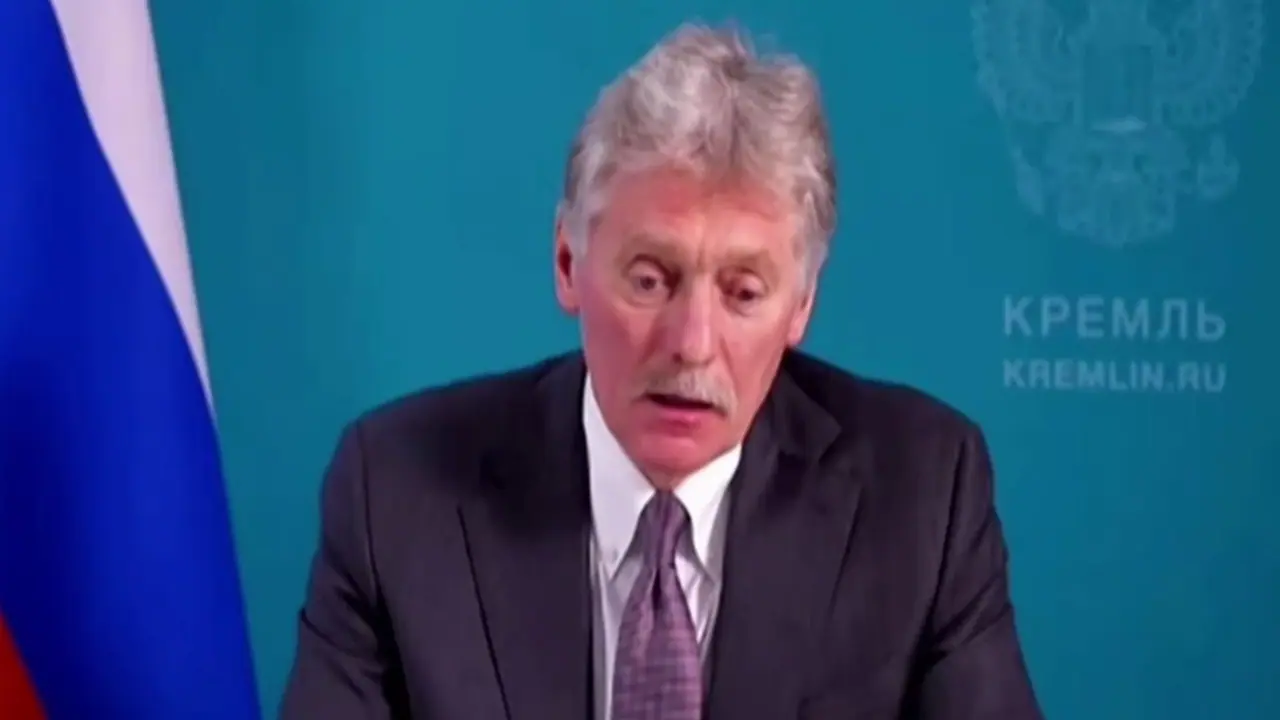
Russian President Vladimir Putin is set to visit India for the BRICS Summit on September 12. His spokesperson, Dmitry Peskov, said the visit is a chance for bilateral talks and that Russia supports expanding BRICS cooperation in various sectors.
Russia's Commitment to BRICS Cooperation
"We have no doubt that the summit will be successful. Russia, we are doing our best to contribute to further development of BRICS cooperation in the three main pillars of our interaction. So, those are policy and security. economy and finance, and cultural and humanitarian contexts. So, we are supporting idea of inviting new countries to join different formats within BRICS," he added.
Focus on Financial Cooperation
The Kremlin spokesperson highlighted the need for cooperation in the financial sphere alleging that certain nations were using their currency as a tool for political oppression. "The cooperation space within BRICS financial sphere is of great importance. Russia recently reached a level of 90 percent of all the payments, all the transactions with BRICS countries being made in national currencies, it's very important. It's not because we are aiming for de-dollarization, for getting rid of U.S. dollars. To the contrary, we are open to to every acceptable methods of payments, but you know that certain countries are using some national currencies as a tool for political oppression. They are introducing sanctions based on their national currencies. So, if they don't let us use their money, we use our own money," Peskov said.
India to Host 18th BRICS Summit in 2026
India is set to host the 18th BRICS Summit in New Delhi on September 12-13, 2026, marking a pivotal moment for the rapidly evolving intergovernmental forum of major emerging market economies and developing nations. Initially established as the BRIC alliance comprising Brazil, Russia, India, and China, which convened its first Foreign Ministers' meeting on the sidelines of the UN General Assembly in New York in 2006 and held its inaugural summit in Yekaterinburg, Russia, in 2009, the group expanded to BRICS following South Africa's admission in 2011.
India's Four Pillars for Chairship
Guided by India’s 2026 chairship theme, “Building for Resilience, Innovation, Cooperation and Sustainability,” New Delhi's vision focuses on steering the agenda beyond routine political coordination towards tangible, practical cooperation across commerce, agriculture, healthcare, energy, digital technology, urban development, small enterprise empowerment, startups, climate action, and cultural exchanges. India’s chairship framework is organised around four primary pillars, starting with Resilience, which aims to protect institutions, societies, and economies from supply-chain disruptions, health crises, geopolitical shocks, and climate risks. Innovation forms the second pillar, concentrating on the deployment of artificial intelligence, financial technologies, digital public infrastructure, and data-driven systems. The third pillar, Cooperation, focuses on broadening trade flows, institutional linkages, development financing, and economic policy alignment. The fourth pillar, Sustainability, seeks to promote global climate action, green finance, energy transitions, and sustainable development, ensuring that established mechanisms deliver enduring operational benefits beyond the summit.
Advancing Economic Governance and Trade
In economic governance and trade, the alliance has advanced the Strategy for BRICS Economic Partnership 2030 while reaffirming support for a robust multilateral trading system with the WTO at its core. To fortify trade corridors, member states have adopted the BRICS Global Value Chains Action Plan 2026-2030, alongside guiding principles designed to assess export-oriented micro, small, and medium enterprises (MSMEs). (ANI)
(Except for the headline, this story has not been edited by Asianetnews Editorial staff and is published from a syndicated feed.)