And just hours after Lee took office, South Korea's crucial steel and aluminium exports are set to be hit by steep levies of 50 percent as part of US President Donald Trump's tariff bonanza.
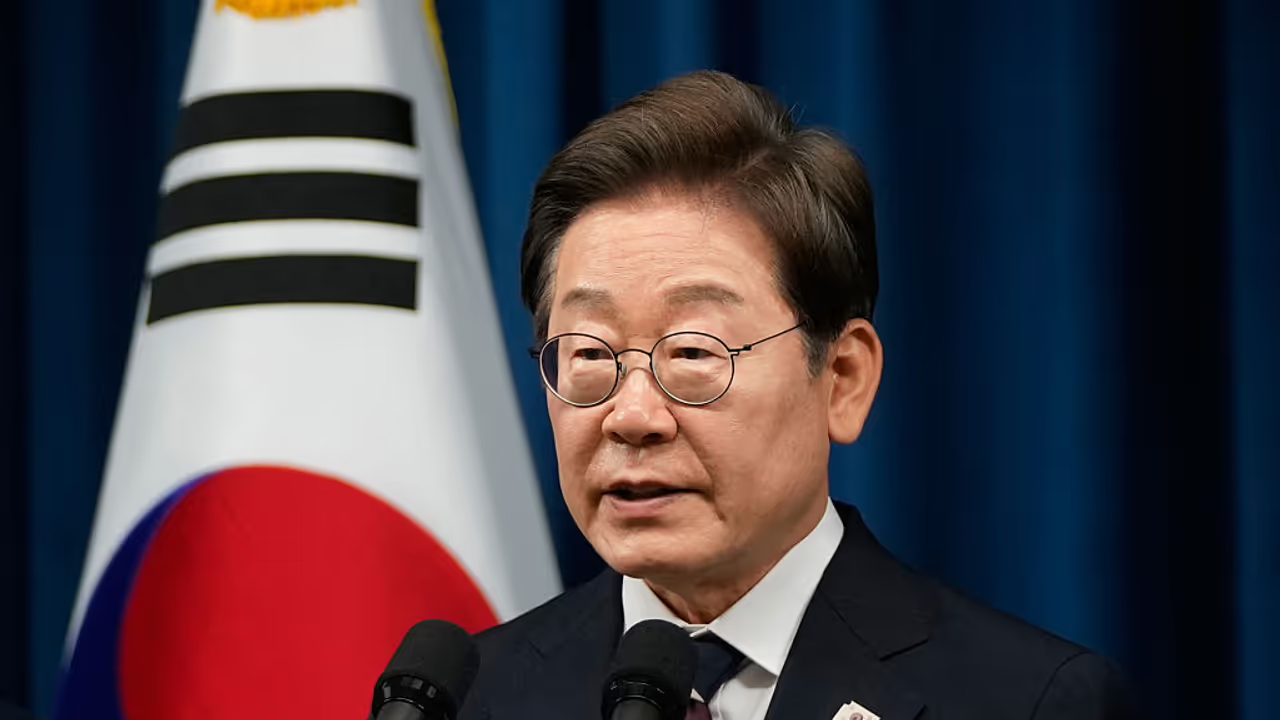
South Korean President Lee Jae-myung assumes office with a bulging in-tray, from a deepening economic slump and global trade war to mounting concerns over military ties between nuclear-armed North Korea and Russia.
And just hours after Lee took office, South Korea's crucial steel and aluminium exports are set to be hit by steep levies of 50 percent as part of US President Donald Trump's tariff bonanza.
A look at what Lee will have to deal with as president:
Related Articles

Trade tension
Chief among Lee's priorities will be steering South Korea's export-dependent economy -- Asia's fourth largest -- through economic turmoil sparked by the tariffs Trump has imposed on US trading partners.
"One of South Korea's major export items is aluminium and steel," Kim Dae-jong, a professor at Sejong University, told AFP, adding that the tariffs could worsen "the already sluggish domestic economy".
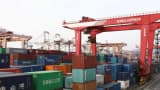
South Korea was the fourth largest exporter of steel to the United States last year, accounting for 13 percent of its total steel imports.
With the US doubling Wednesday its tariffs on imported aluminium and steel, Seoul will need to work quickly to shield its economy from the headwinds.
Lee is seen by his supporters as a pragmatic and effective negotiator, with over a decade of experience as a city mayor and provincial governor.
"Political leadership is crucial at times like this. And with an elected president, a phone call with Trump could improve the situation significantly," Kim added.
On the campaign trail, Lee said Seoul needs to "start negotiations on tariffs immediately" with the Trump administration, but also stressed there was no need to "rush" a deal.
Nefarious neighbour
Lee's Democratic Party has taken a relatively dovish approach to North Korea in the past, with former president Moon Jae-in holding several historic summits with Pyongyang's leader Kim Jong Un -- and Trump.
But Moon's efforts to normalise ties failed and the North has since bolstered relations with Russia, sent at least 14,000 troops to help Moscow's war in Ukraine, and declared the South its enemy state.
Lee has hinted that he will take a different approach compared to hawkish Yoon, under whom inter-Korean ties fell to their worst point in years.
On the campaign trail, Lee accused Yoon of deliberately provoking the North to justify his martial law bid -- prompting backlash from conservatives.
During Yoon's administration, North Korea blew up roads and railways connecting it to the South and erected what looked like walls near the border.
"Wasn't it out of fear that the South might push up with tanks that North Korea built those tank barriers?" Lee said.
Superpower standoff
Lee's tenure begins as South Korea finds itself in the middle of a growing superpower standoff between the United States, its traditional security guarantor, and China, its largest trade partner.
US Secretary of Defense Pete Hegseth in May warned Beijing was "credibly preparing to potentially use military force to alter the balance of power in the Indo-Pacific".
He called on US allies in Asia such as Seoul to boost their defences in the face of mounting threats.
Lee, however, has suggested his country should pursue friendlier ties with Beijing, a long-time backer of Pyongyang.
He drew backlash last year by saying he would say "xie xie" -- thank you in Chinese -- to both China and the self-ruled island of Taiwan in the event of a conflict involving the two.
When asked during the campaign by TIME magazine whether he would come to Taiwan's aid if it were attacked by Beijing, Lee said: "I will think about that answer when aliens are about to invade the earth."
Polarised politics
Lee must also lead a nation still deeply divided and reeling from the political turmoil triggered by Yoon's martial law bid in December.
If the new centre-left administration too aggressively goes after the conservatives, it will "only galvanise the far-rightists, ultimately undermining efforts to reduce political polarisation", Gi-Wook Shin, a sociology professor at Stanford University, told AFP.
During the campaign, Lee said he would push to amend the constitution to make it harder to impose martial law.
He also said it was necessary to launch a special investigation to identify those who may have been complicit with Yoon's bid to suspend civilian rule.
Declining birth rate
Lee's administration will also have to deal with one of the world's lowest birth rates, a soaring cost of living and growing inequality.
During the campaign, Lee said the younger generation's "sense of hopelessness" and deepening inequality were the main causes of South Korea's declining fertility rate.
Many young South Koreans are not confident that "their children's lives will be any better than their own".
Lee has pledged to create a shorter work week, extend the retirement age, expand state-led care services for children, people with disabilities and seniors, offer more housing options and increase support for small businesses and young South Koreans, among others.
Lee Jae-myung vows to 'heal wounds' with nuclear-armed North
Lee Jae-myung vowed to reach out to the nuclear-armed North and "heal wounds" as he took office Wednesday, after winning a snap election triggered by his predecessor's disastrous martial law declaration.
South Korea's new centre-left leader also warned that "rising protectionism and supply chain restructuring" pose an existential threat to Asia's export-dependent fourth-largest economy, which has been buffeted by the global trade chaos sparked by US President Donald Trump.
Lee spoke to South Korea's top military commander and formally assumed operational control of the country's armed forces Wednesday, urging them to maintain "readiness" in case of Pyongyang's provocations -- but said in his first comments that he was ready to talk.
"We will heal the wounds of division and war and establish a future of peace and prosperity," he said.
"No matter how costly, peace is better than war."
He said Seoul would "deter North Korean nuclear and military provocations while opening communication channels and pursuing dialogue and cooperation to build peace on the Korean Peninsula".
Lee took office just hours before US tariffs on steel and aluminium were due to take effect, with the 50 percent levy hitting crucial South Korean exports.
"The rapid changes in the global order such as rising protectionism and supply chain restructuring pose a threat to our very survival," Lee said.
Markets reacted favourably to the election, with the benchmark KOSPI and the won rising Wednesday.
‘Significant departure’
Lee's comments on North Korea are a "significant departure" from those of his hawkish predecessor as he did not immediately attach preconditions to dialogue, said Hong Min, a senior analyst at the Korea Institute for National Unification.
It signals "his desire to resolve disagreements through talks", Hong told AFP.
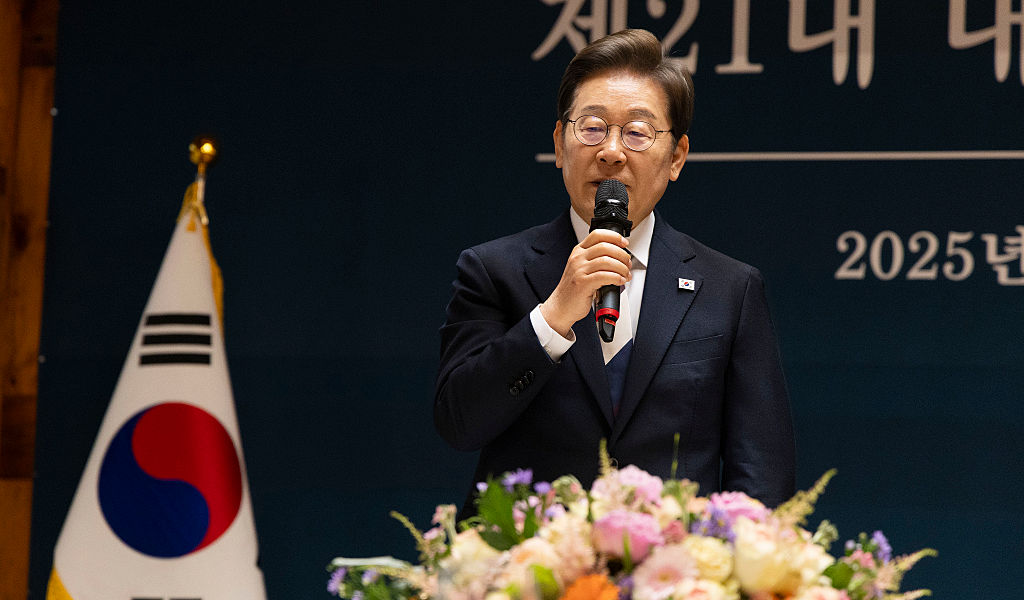
Lee held a modest inauguration ceremony at the National Assembly -- where Yoon deployed armed troops on the night he attempted to suspend civilian rule.
Lee also announced a number of top appointments, including long-time adviser Kim Min-seok as prime minister and former unification minister Lee Jong-seok as spy chief.
Lee's day is expected to end with a flurry of congratulatory phone calls from world leaders, with Trump likely to be the first on the line.
Trump's top diplomat, Marco Rubio, was swift to offer his own congratulations and voice hope for working with Lee, who previously sought greater distance from the United States.
Washington's alliance with Seoul was "ironclad", the US secretary of state said, citing "shared values and deep economic ties".
In a statement, the White House described the election as "free and fair".
But it added: "The United States remains concerned and opposed to Chinese interference and influence in democracies around the world".
Chinese President Xi Jinping congratulated Lee, while emphasising the "great importance to the development of China-South Korea relations".
"The Chinese side is willing to work with the South Korean side to ... firmly maintain the direction of good-neighbourly friendship, adhere to the goal of mutual benefit and win-win," Xi said, according to state media CCTV.
Japanese Prime Minister Shigeru Ishiba also said he wanted to "energise cooperation" between Seoul and Tokyo, South Korea's former colonial ruler.
And India's Narendra Modi said on X he wanted to "strengthen" ties with Seoul as he congratulated Lee.
‘Positive direction’
Lee comes to power with his party already holding a parliamentary majority -- secure for the next three years -- meaning he is likely to be able to get his legislative agenda done.
On the streets of Seoul, South Koreans said they welcomed Lee's overtures to the North.
"Since our economy and many other aspects of society are closely linked to the state of inter-Korean relations, I hope we can take a long-term perspective and move in a more positive direction," Choi Ki-ho, 55, told AFP.
Lee Ju-yeon, a 42-year-old quasi-public sector employee, said they hoped Lee "will devote himself to uniting our divided nation".