
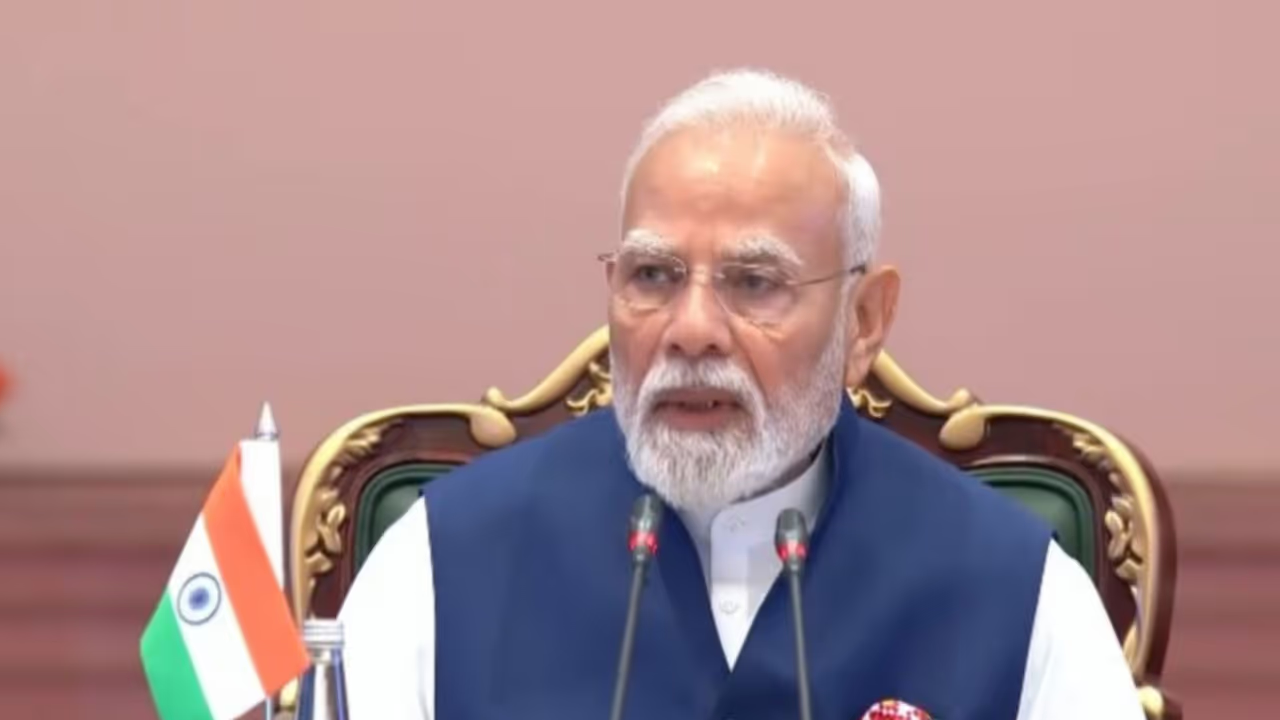
Addressing the 18th BRICS Summit, PM Narendra Modi stressed the need for greater resilience and preparedness among BRICS nations, saying no crisis is confined to one region in today's interconnected world amid rising global tensions.
Prime Minister Narendra Modi on Sunday stressed the need for greater resilience and preparedness among BRICS countries amid rising global tensions, saying that "no crisis remains confined to a single region" in today's interconnected world.
Addressing the open session on “Resilience, Innovation, Cooperation and Sustainability: Shaping the Future for Inclusive Global Growth” on the second day of the 18th BRICS Summit in New Delhi, PM Modi said, “Today, the number of tensions in the world is constantly rising, having a significant and widespread negative impact on the lives of ordinary people. Pandemics, climate disasters, and supply chain disruptions have demonstrated that in today's interconnected world, no crisis remains confined to a single region. Therefore, we have placed special emphasis on enhancing resilience within the BRICS group. It is equally essential to identify challenges in a timely manner, remain prepared for them, and take immediate action."
He further said that a consensus had been reached on a BRICS Integrated Early Warning System for the prevention of and response to infectious diseases. “Additionally, Early Warning Data Integration Guidelines have been formulated for disaster management,” PM Modi said.
The open session, titled “Resilience, Innovation, Cooperation and Sustainability: Shaping the Future for Inclusive Global Growth”, began at the Summit Hall inside Bharat Mandapam in New Delhi on Sunday.
Earlier, Prime Minister Narendra Modi and BRICS leaders posed for a family photo of the grouping at Bharat Mandapam, the venue for the 18th BRICS Summit under the chairship of India. PM Modi stood in the centre with Russian President Vladimir Putin and Chinese President Xi Jinping beside him.
The last leg of the summit is focused on the core pillars of India's 2026 BRICS chairship -- resilience, innovation, cooperation and sustainability. The two-day summit is being hosted by India on September 12-13 under the chairship theme, “Building for Resilience, Innovation, Cooperation and Sustainability." The open session is part of the two-day BRICS Summit being hosted by India on September 12-13 under the chairship theme, “Building for Resilience, Innovation, Cooperation and Sustainability." The open session is providing an opportunity for BRICS leaders to deliberate on areas of common interest and discuss ways to strengthen cooperation among member countries while advancing an inclusive approach to global growth.
Bilateral Engagements on Sidelines of BRICS Summit
On the second day of the summit, Prime Minister Narendra Modi is also scheduled to hold bilateral meetings with leaders of South Africa, Kazakhstan, the Philippines, Egypt, Burundi, Uganda and Nigeria.
PM Modi will meet South African President Cyril Ramaphosa on the sidelines of the BRICS Summit. South Africa has been a core part of BRICS. President Cyril Ramaphosa attended the BRICS session on ‘Inclusive Global Governance & Strengthening Multilateralism’ on Saturday and visited the ‘Bharat Innovates’ exposition in New Delhi.
PM Modi will also meet Egypt President Abdel Fattah El-Sisi. The Egyptian leader met Russian President Vladimir Putin on the sidelines of the BRICS Summit on Saturday.
PM Modi will also meet Kazakhstan President Kassym-Jomart Tokayev, Philippines President Ferdinand R Marcos Jr, Burundi President Evariste Ndayishimiye, Uganda Vice President Jessica Alupo and Nigerian Vice President Kashim Shettima as India boosts its ties with African and Asian nations.
New Delhi Declaration Unanimously Adopted
Earlier, on Saturday, BRICS leaders unanimously adopted the New Delhi Declaration, with Prime Minister Narendra Modi describing the outcome as a reflection of a BRICS that is “wider in reach and stronger in purpose”.
PM Modi, who made a series of posts on X, said the declaration focuses on innovation, sustainability and people-to-people ties, with the aim of making cooperation “more practical, development-oriented and responsive to the aspirations of the BRICS nations”. “I thank all the fellow BRICS nations and their leaders for its adoption,” the Prime Minister said.
Declaration Addresses Global Tensions and Economic Policies
The declaration expressed deep concern over the continued escalation of tensions in West Asia and called for exercising maximum restraint, as well as avoiding actions that could further aggravate the situation.
The New Delhi Declaration reaffirmed BRICS’ support for a lasting two-state solution to the Israeli-Palestinian conflict, while urging deeper international institutional support for Palestine and reaffirming Israel’s legal obligation to ensure the provision of humanitarian aid in Gaza.
The BRICS countries also called for an immediate end to unilateral economic sanctions and expressed grave concern over rising protectionist policies, warning that arbitrary tariff hikes and green-labelled trade barriers are disrupting global supply chains and hurting the developing world.
India’s presidency, which began on January 1, 2026, is guided by the theme “Building for Resilience, Innovation, Cooperation and Sustainability”, deploying a human-centric approach across its core pillars to reinforce institutional strength and support sustainable growth. (ANI)
(Except for the headline, this story has not been edited by Asianetnews Editorial staff and is published from a syndicated feed.)