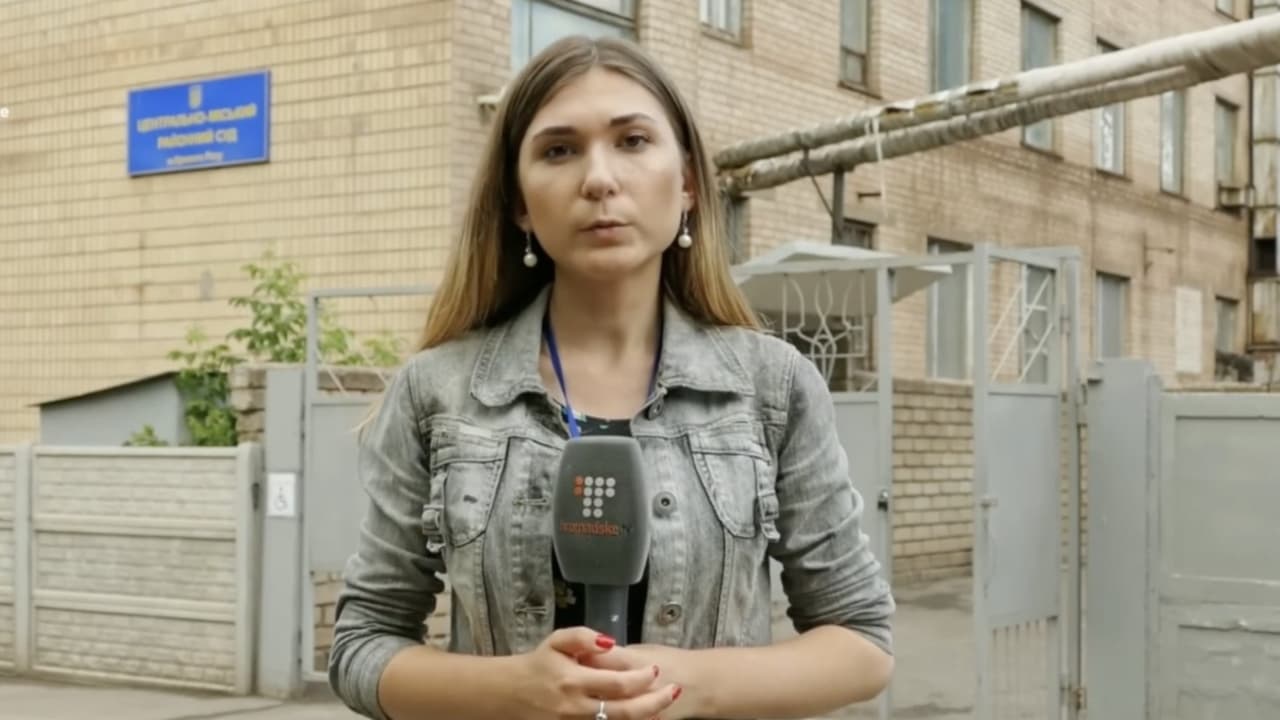
A chilling probe has now revealed that Roshchyna was brutally tortured in Russian captivity — her brain removed, bones broken, starved, drugged, electrocuted before her mutilated body was finally returned.
In February, the bodies of 757 Ukrainian military casualties were exchanged. But one body stood out: number 757, labeled simply “NM SPAS,” an unidentified male listed as having died of heart failure.
Weeks later, the horrific truth unraveled. The corpse was not a soldier but Viktoriia Roshchyna, a 27-year-old Ukrainian investigative journalist, missing since July 2023.
A chilling investigation has now revealed that Roshchyna was brutally tortured in Russian captivity — her brain removed, bones broken, starved, drugged, electrocuted, and subjected to horrific cruelty before her mutilated body was finally returned.
Related Articles

According to The Guardian, Roshchyna was among Ukraine’s most daring reporters who ventured deep into Russian-occupied zones, determined to report the regime’s darkest crimes. Her final was an undercover mission to expose illegal detention sites and the torture of civilians.
But she became a victim of the very atrocities she set out to document.
On July 25, 2023, Roshchyna crossed into Russia through Latvia, travelling a covert route to reach occupied Melitopol in Zaporizhzhia. Her phone went silent soon after.
First apprehended in Enerhodar after reportedly being detected by a drone, she was briefly held at a local police station before being transferred to "the garages", a clandestine torture chamber in Melitopol run by the Russian FSB.
According to a former cellmate, Roshchyna endured relentless electric shocks — burn marks were later found on her feet. She was stabbed in her limbs, leaving a 3cm deep wound in her forearm and a gaping 5cm injury above her heel that caused excruciating pain.
“She said: ‘I begged them not to touch that wound,’” the witness recalled. Her pleas were ignored. “She said one guy, she called him a jerk … was brutal, unhinged,” the same witness recounted.
Broken in Taganrog She was later transferred to SIZO-2, a notorious pre-trial detention center in Taganrog, Russia, infamous for brutalizing inmates with electric shocks, waterboarding, and stress positions.
By the time she arrived, Roshchyna was heavily sedated and disoriented. “She basically started to go crazy,” a detainee said.
Held in isolation and deprived of food, her condition deteriorated rapidly. Weighing just 30 kilograms, she could barely lift her head without assistance. “I would prop her up and she would grab the top bunk to pull herself up,” a former inmate said.
Her hair had been shaved, ribs fractured, and abrasions scarred her body. “Her eyes were terrified. She didn’t speak. She stopped eating,” another cellmate recounted. She lay curled on the floor, hidden behind a curtain.
When her remains were finally returned to Ukraine, they bore clear signs of sustained torture. Her hyoid bone, typically broken in cases of strangulation, was fractured. Shockingly, her brain, eyes, and larynx were missing — a gruesome mutilation that obscures the precise cause of death.
Ukrainian prosecutors believe the removal of vital organs may have been a deliberate attempt to conceal signs of neurological trauma or asphyxiation.
During her nearly year-long disappearance, Roshchyna managed to place just one brief call — a four-minute conversation with her parents. That was the last time anyone heard her voice.
Though a war crimes investigation is underway, the road to justice remains uncertain. Yet over 50 testimonies from survivors and insiders have constructed a chilling portrait of systemic abuse and state-sponsored cruelty.
“She died trying to expose exactly what happened to her,” said Sevhil Musaieva, her editor at Ukrainska Pravda. “Viktoriia had no personal life. Her entire world was her mission.”