As details of the shooting of Dhaka-8 independent candidate Sharif Osman Hadi have emerged, its clear it was not an act driven by foreign intrigue, but a locally organised political conspiracy rooted in Bangladesh’s own turbulent electoral landscape.
New Delhi: As details of the shooting of Dhaka-8 independent candidate Sharif Osman Hadi have emerged, one conclusion has steadily become clearer: this was not an act driven by foreign intrigue, but a locally organised political conspiracy rooted in Bangladesh’s own turbulent electoral landscape.
Investigators now say the gun attack was orchestrated by Faisal Karim Masud, a former leader of the Awami League’s student wing, Chhatra League. According to security officials, the motive was neither ideological spectacle nor international signalling, but something far more familiar—intimidating political rivals and destabilising the pre-election environment at a sensitive moment.
Daylight Attack in Central Dhaka
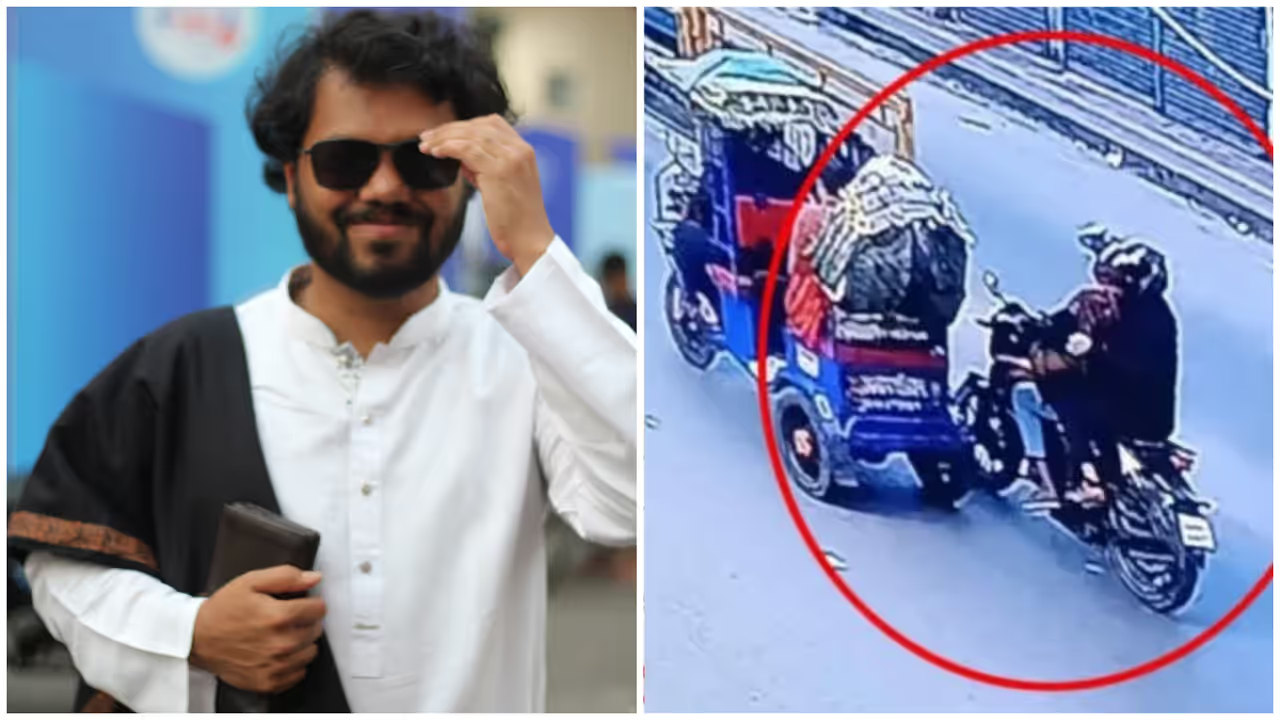
Hadi, spokesperson of the Inqilab Mancha and a vocal figure associated with the July movement, was shot in the head on 12 December while campaigning in central Dhaka.
Related Articles

He was travelling in a battery-run rickshaw when two men on a motorcycle approached.
Eyewitnesses and CCTV footage show the pillion rider firing at close range before the attackers disappeared into the city’s congested streets.
The attack left Hadi critically injured and sent shockwaves through the country, reigniting fears of election-related violence spiralling out of control. What initially appeared to be another brazen street shooting soon began to reveal a deeper political trail.
From Anonymous Gunmen to a Named Suspect
Within days, law enforcement agencies identified Faisal Karim Masud, also known as Daud Khan - as the prime suspect.
Masud, once active within the ruling party’s student network, is believed to have maintained links across rival factions operating in the grey zone where politics, business interests, and muscle power intersect.
Investigators say this overlap is key to understanding the attack. Rather than a lone actor or an impulsive crime, the shooting bore the hallmarks of planning, coordination, and political intent.
RAB Raids and the Unravelling of the Network
The Rapid Action Battalion (RAB) moved swiftly to dismantle Masud’s immediate support system.
His wife Samia, brother-in-law Shipu, and a female associate identified as Maria were arrested on suspicion of helping him evade capture and managing funds connected to the operation.
During raids, officers reportedly recovered multiple cheque books allegedly signed by Masud, along with electronic devices that investigators believe contain communications exchanged before and after the attack. Security officials say these findings reinforce the assessment that the shooting was organised well in advance.
Police have also recovered the motorcycle used in the attack, as well as ammunition consistent with the 7.65-calibre rounds believed to have struck Hadi. Banking records and phone data, officials say, further tie the accused to a coordinated plot rather than an isolated act of violence.
Flight, Borders, and Confusion
As the investigation intensified, authorities announced a cash reward and circulated Masud’s photograph nationwide. Soon after, reports emerged that Masud and his alleged accomplice, motorcycle rider Alamgir Hossain, had fled via the Haluaghat border in Mymensingh on the same day as the shooting.
This triggered brief diplomatic friction, with conflicting claims over whether the suspects had crossed into India.
New Delhi issued a denial, while Bangladeshi officials continued to track the suspects’ movements. Security agencies have since clarified that the core of the investigation remains firmly domestic, focused on identifying all facilitators who provided transport, safe houses, and financial support.
Multiple specialised units, including the Detective Branch and the Police Bureau of Investigation - have been brought in, reflecting concerns that the conspiracy extended beyond a simple two-man hit team.
A Plot Aimed at the Electoral Process
Security officials and election authorities now describe the shooting as part of a broader attempt to undermine the credibility of the upcoming national polls.
The choice of target was not incidental. Hadi, an outspoken anti-establishment figure critical of both India and elements of Bangladesh’s older political order, occupied a disruptive space in the electoral field.
Investigators believe the attack was intended to send a message to intimidate challengers, distort campaigning, and create an atmosphere of fear rather than to advance any external agenda.
State Response and Lingering Questions
The interim government led by Chief Adviser Muhammad Yunus has responded by expanding “Operation Devil Hunt,” a nationwide drive targeting illegal arms and politically connected criminal networks. Authorities say the crackdown aims to prevent further violence as the election approaches.
Yet concerns remain. Rights advocates and voters alike argue that unless the full chain behind the Hadi attack is exposed from financiers and political patrons to ground-level enforcers - the incident will stand as another reminder of how deeply internal politics has militarised Bangladesh’s electoral arena.
The investigation into the shooting of Sharif Osman Hadi points decisively inward. Evidence gathered so far indicates a domestically organised political conspiracy, not foreign interference.
Claims of an Indian role find no support in the facts emerging from the case. What the attack instead reveals is a familiar and troubling reality: the use of organised violence by local actors to manipulate political outcomes during moments of transition.
Bangladeshi police and the Rapid Action Battalion have identified the shooting of Dhaka-8 independent candidate Sharif Osman Hadi as a locally planned political operation allegedly led by former Chhatra League leader Faisal Karim Masud.
Investigators say the attack was aimed at intimidating rivals and destabilising the pre-election environment. There is no evidence of Indian involvement; the case points to a domestic conspiracy rooted in Bangladesh’s internal political dynamics.