
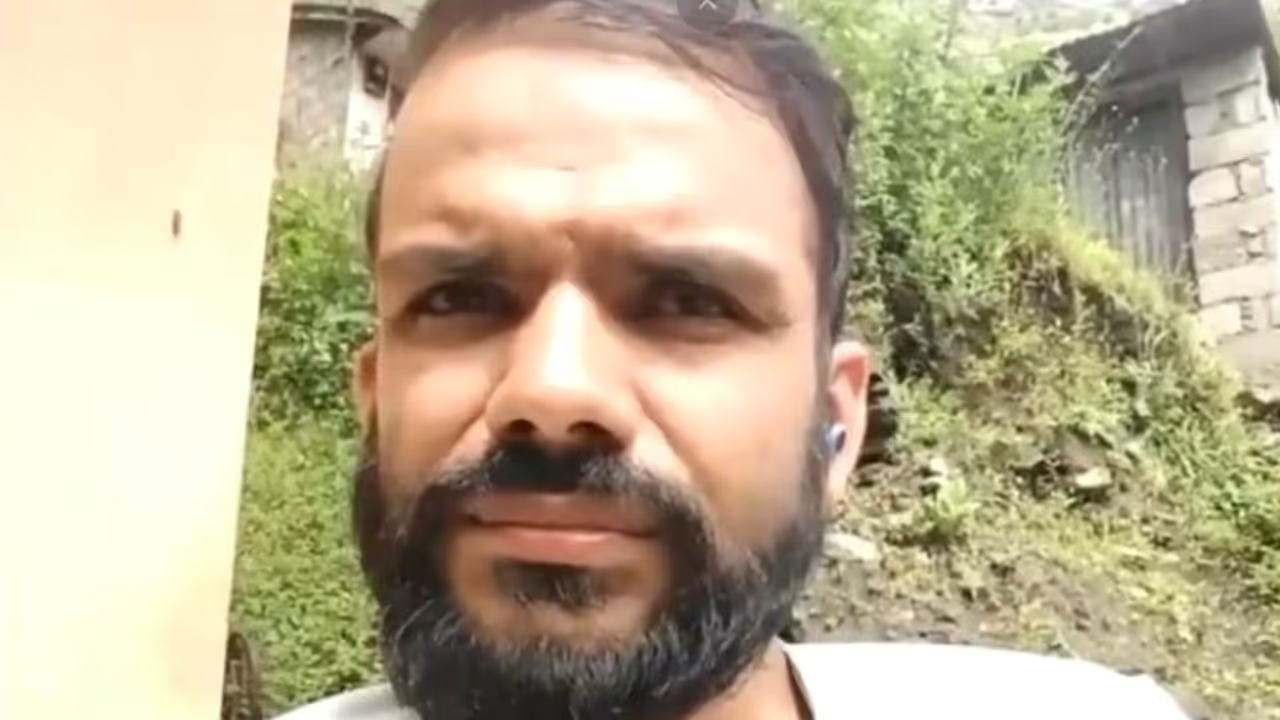
Nepali MP Sagar Dhakal lauded the Indian Army's swift support and technical aid in disaster relief operations in Rasuwa. He praised the seamless coordination with the Nepali Army and highlighted innovative solutions provided by Indian teams.
Bilateral Coordination Praised
Lauding the Indian Army’s swift on-ground support and technological interventions during ongoing disaster relief operations, Nepali MP and hydromechanical engineer Sagar Dhakal expressed gratitude to the Government of India, highlighting a high level of bilateral coordination on the front lines.
Emphasising the joint response between security forces, Dhakal noted that international teams have integrated seamlessly with local operational units to navigate the extreme terrain. "The Indian Army has been very helpful. We have been coordinating closely with the Nepali Army, which is highly experienced and well-equipped for operations in mountainous terrain. At the same time, the Indian Army has been working alongside us on the front lines. We are all working together as one team," Dhakal said.
Technological and Expert Exchange
Highlighting specific technical assistance, the lawmaker pointed out that Indian personnel introduced specialised solutions to overcome hazardous ground conditions caused by severe mud sludge. "The Indian teams have also brought new technologies and innovative ideas. For example, they introduced a chemical that helps separate mud from water, making it possible to walk over mud sludge more safely. That proved to be very useful. I have shared this knowledge with my own team as well, as it is important to have such resources available as a backup," he explained.
Dhakal emphasised that the relief effort has operated as a bilateral exchange of field expertise, with local teams sharing techniques for operating specialised equipment such as water-jetting machines. "At the same time, we are also sharing our expertise with them, including techniques for operating water-jetting machines and other equipment. It has been a two-way exchange of knowledge and experience. Overall, the cooperation has been extremely valuable. I would like to sincerely thank the Government of India for its support during this time of crisis. We hope that, with the experience gained through this operation, we will also be able to support India in the future whenever needed," he added.
Unprecedented Scale of Destruction
Reflecting on the unprecedented magnitude of the destruction, the engineer-turned-politician underscored the severity of the crisis facing the affected region. "As an engineer and as someone who has completed a master's degree in water resources management and worked in different countries, I would say that I had never imagined a disaster on this scale," Dhakal said.
"When you stand here now, it is difficult to believe that a bustling settlement once existed in this location. The scale of destruction is beyond anything most people could have imagined."
Joint Rescue Operations Continue at Chilime Tunnel
This comes as joint Indian and Nepali rescue teams continue to navigate severe environmental obstacles inside the Chilime Hydropower Project tunnel in Rasuwa, deploying excavators, loaders, and mud pumps to clear blocked sections and reach the underground powerhouse.
Updating on the progress of the joint operations in the flood-hit neighbour country, India's Ambassador to Nepal, Naveen Srivastava, highlighted on Monday that rescue personnel are overcoming unexpected hurdles as they move deeper into the structure. "Chilime Tunnel Rescue update: India & Nepal joint team continued their work in tandem to clean up the remaining blocked portion of the tunnel with excavators and loaders," Ambassador Srivastava wrote on X.
"There were unexpected challenges including inflow of water from inside the tunnel and presence of big boulders. The teams are using mud pumps to dewater the area. It is expected that clearing work will continue tomorrow to reach the powerhouse," he noted. The joint rescue operation was launched following severe flash floods and mudslides that deposited heavy slush, rock debris, and water inside the tunnel complex. Equipped with heavy machinery and specialised dewatering pumps, Indian and Nepali technical personnel are working continuously to secure the remaining stretch leading to the powerhouse. (ANI)
(Except for the headline, this story has not been edited by Asianet Newsable English staff and is published from a syndicated feed.)