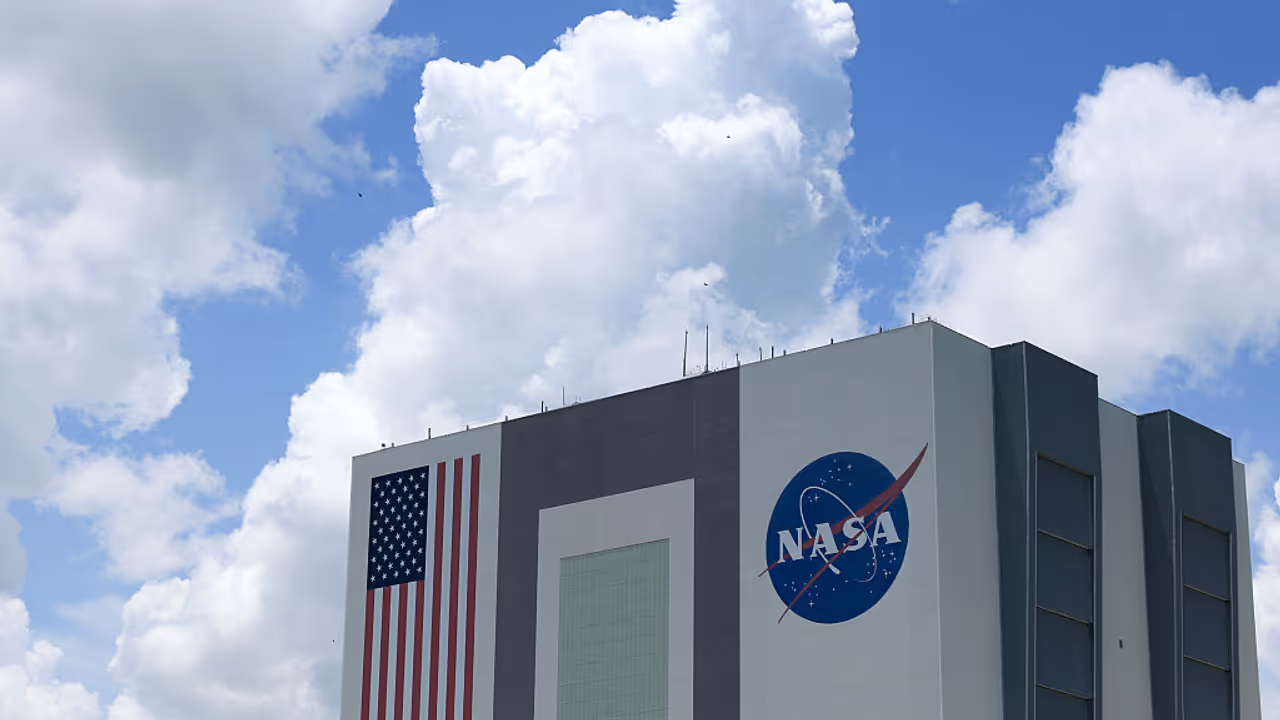
The Deferred Resignation Program, offering voluntary exit and potential incentives, aims to avoid forced layoffs and increase efficiency. NASA's remaining workforce is estimated at 14,000 after these resignations and normal attrition.
Washington DC: The National Aeronautics and Space Administration (NASA) has announced that 3,870 employees, or approximately 20% of the workforce, are set to resign through the government’s Deferred Resignation Program. This marks the second major wave of NASA departures since Donald Trump became the US President for the second time.
The first phase, launched soon after his inauguration, offered voluntary buyouts to employees and led to about 870 staff members, or nearly 5% of the total workforce, leaving the agency. The initiative was overseen by the Department of Government Efficiency, which was then headed by tech entrepreneur Elon Musk.
The latest round began in June, during which employees were asked whether they want to resign. The deadline to opt in was set for July 25. Around 3,870 workers, roughly 20% of NASA’s staff, chose to resign. According to NASA officials, the move will avoid forced layoffs. In a statement, NASA said safety was the topmost priority and that the reduction is aimed at making the space agency more efficient.
Related Articles

After the recent resignations and normal staff turnover, NASA estimates it will have about 14,000 civil servants remaining. This figure reflects the agency’s adjusted workforce size following the voluntary departures and natural attrition, such as retirements and personal exits.
What is Deferred Resignation Program?
Under this program, employees who agree to resign can defer their official exit for a specified period. This allows NASA to ensure mission continuity while giving staff time to transition, complete critical projects, or explore new opportunities. It is often paired with incentives such as extended benefits or severance packages, making it a preferred alternative to sudden layoffs.
During the Trump administration, NASA’s focus was shifted toward programs like Artemis (Moon missions) and commercial partnerships (SpaceX, Blue Origin). This led to increased privatization and reliance on contractors, reducing the need for a large in-house workforce. Trump pushed for space exploration leadership and funding toward deep space missions, while cutting some research programs and Earth science projects. These shifts strained existing budgets and forced NASA to reorganize its staffing.