
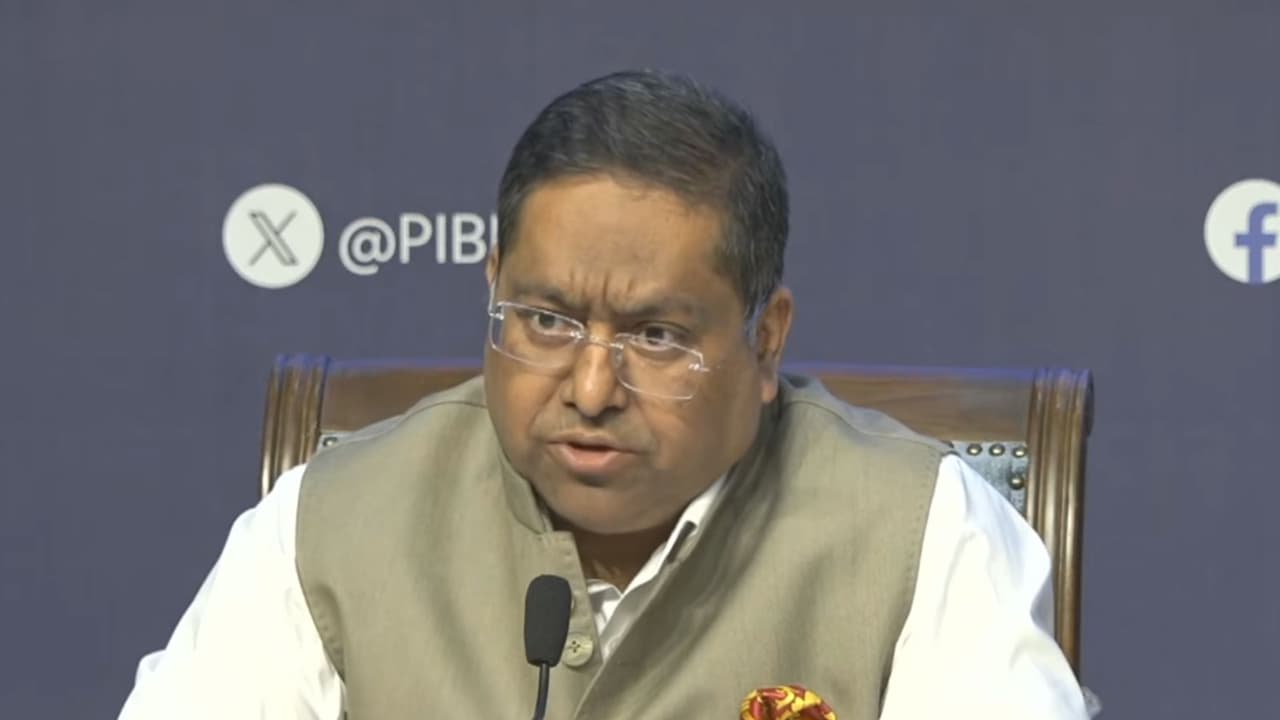
MEA briefed on India's diplomatic efforts to protect its economy and maritime security, highlighting PM Modi's talks with US President Trump on open sea lanes and EAM Jaishankar's discussions with Israel and Australia on regional developments.
In a comprehensive inter-ministerial briefing held on Wednesday, the Ministry of External Affairs (MEA) detailed a whirlwind of high-level diplomacy aimed at safeguarding India's economic interests and maritime security. MEA Spokesperson Randhir Jaiswal highlighted the recent conversation between Prime Minister Narendra Modi and US President Donald Trump as a cornerstone of current strategic efforts.
Strategic Cooperation and Maritime Security
"Prime Minister Narendra Modi held a conversation with the President of the United States, focusing on strengthening strategic cooperation between the two countries, with both sides reiterating their commitment to ensuring stability and keeping critical global sea routes, including the Strait of Hormuz, open for safe maritime trade and energy flow," said Jaiswal. From the volatile waters of the Strait of Hormuz to green energy transitions in the Indo-Pacific, New Delhi is reinforcing its position as a stabilising force in an increasingly uncertain world.
Ensuring Safe Passage of Indian Ships
Jaiswal confirmed that India is in active discussions with multiple nations to ensure the safe return of its remaining ships currently situated near the strategic corridor. MEA spokesperson Jaiswal said, "We are in discussions with several countries regarding the Strait of Hormuz. We are trying to ensure that, firstly, our remaining ships there also return safely."
Jaishankar's Diplomatic Outreach
In parallel diplomatic engagements, External Affairs Minister S Jaishankar also held a series of high-level discussions with his counterparts from Israel and Australia, reflecting India's continued outreach on evolving geopolitical developments in West Asia and the Indo-Pacific region.
Talks with Israel on West Asia
Jaiswal informed, "During his conversation with the Israeli Foreign Minister, the two leaders exchanged views on the ongoing conflict situation in West Asia, regional security concerns, and efforts to maintain humanitarian access and stability in the region."
India-Australia Strategic Partnership Review
Jaishankar also spoke with the Australian Foreign Minister, shared Jaiswal, where both sides reviewed the progress of the India-Australia Comprehensive Strategic Partnership. The discussions focused on expanding cooperation in trade, defence coordination, critical minerals, and maritime security, alongside strengthening supply chain resilience amid global uncertainties.
Focus on Green Energy and Supply Chains
India participated in the Asia Zero Emission Community (AZEC) meeting, pivoting toward clean energy cooperation and the creation of diversified, "green" global supply chains. "The External Affairs Minister participated in the AZEC (Asia Zero Emission Community) meeting convened by Japan, where member countries discussed enhancing clean energy cooperation, green transition pathways, and building more resilient and diversified global supply chains," Jaiswal said. India reiterated its commitment to working with like-minded partners to ensure secure, sustainable, and inclusive economic growth frameworks in the region.
India's Stance on Global Oil Markets
Addressing India's stance on global oil markets, Jaiswal was direct about the government's priorities. Despite geopolitical pressures, India's energy policy remains rooted in domestic necessity. Jaiswal said, "We continue to buy oil from diversified sources, keeping in mind the energy security needs of 1.4 billion people, the current situation in the international market, and the global situation we have to deal with."
This pragmatism extends to the Gulf, with high-level coordination ongoing with UAE energy leaders and Qatar's petroleum sector to ensure stable hydrocarbon supplies.
Expanding Footprint in Latin America
The briefing also touched upon India's expanding footprint in Latin America. Diplomatic sources indicated a growing engagement with Brazil, particularly in trade diversification and technology cooperation, further illustrating India's "multi-aligned" foreign policy.
By positioning itself as a key stakeholder in global supply chain resilience and open sea lanes, New Delhi continues to balance its regional security concerns with the immense energy demands of its growing economy. (ANI)
(Except for the headline, this story has not been edited by Asianet Newsable English staff and is published from a syndicated feed.)