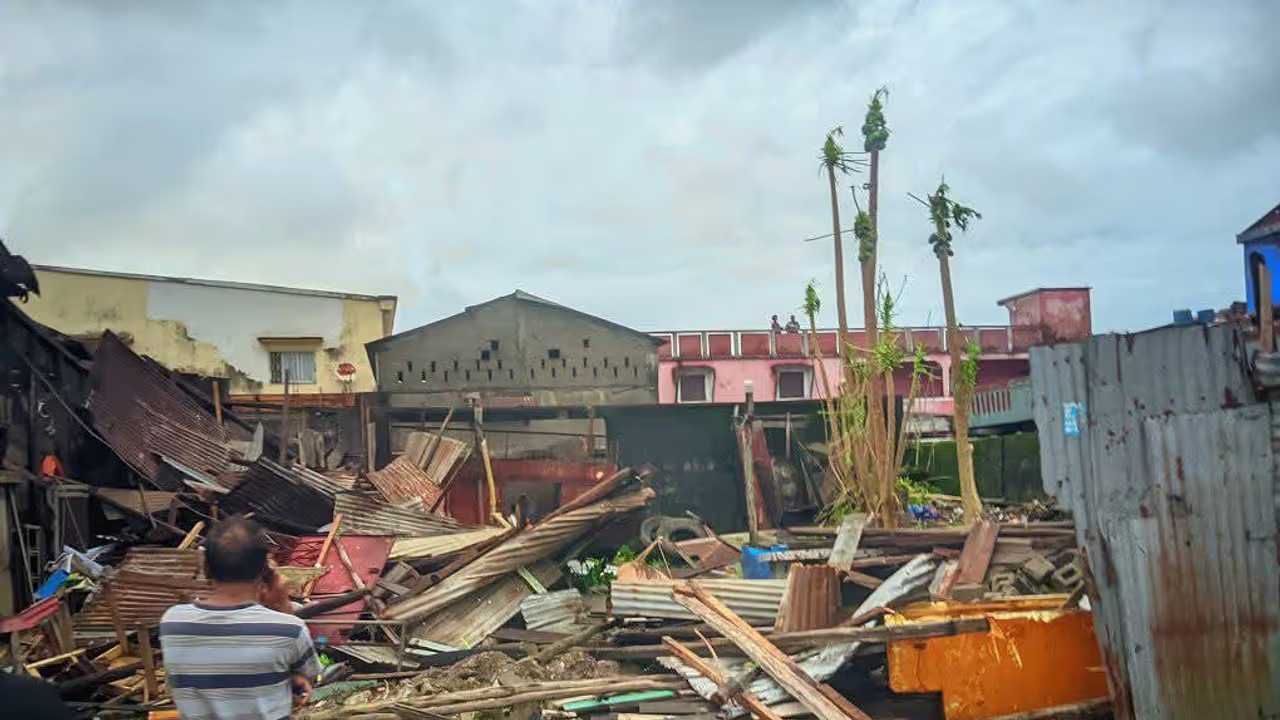
Cyclone Gezani struck Madagascar’s second-largest city, Toamasina, with winds of 250 km/h, killing at least 20 people and leaving 15 missing. Authorities say nearly 75% of the city has been destroyed, with severe flooding and homes flattened.
At least 20 people have died after Cyclone Gezani struck Madagascar with powerful winds and heavy rain. The country’s disaster management authority confirmed the deaths on Wednesday, saying many victims were killed when their homes collapsed.
The cyclone made landfall on Tuesday, hitting the east coast city of Toamasina with winds reaching 250 kilometres per hour (155 mph).
Toamasina ‘75 Percent Destroyed’
Toamasina, Madagascar’s second-largest city, suffered severe damage. The city has a population of around 400,000 and lies about 220 kilometres northeast of the capital, Antananarivo.
Colonel Michael Randrianirina, the country’s new leader who took power in October, travelled to Toamasina before the storm hit. After seeing the destruction, he said nearly 75 percent of the city had been destroyed.
“The current situation exceeds Madagascar’s capabilities alone,” he said, calling on international partners and donors to help the island nation.
Drone footage shared by the National Office for Risk and Disaster Management (BNRGC) showed large areas underwater. Residents were seen wading through floodwaters, while many buildings had lost their roofs. Streets were blocked by fallen trees and debris.
Missing And Injured
The BNRGC said 15 people are still missing and at least 33 others have been injured. Officials are continuing to assess the damage in Toamasina and the wider Atsinanana region, which has also been badly affected.
Rija Randrianarisoa from the humanitarian group Action Against Hunger described the situation as “total chaos”. He said up to 90 percent of house roofs had been partly or completely blown off. Roads were blocked by fallen trees and twisted sheets of metal, making access difficult.
One Of The Strongest Storms In Years
The CMRS weather service on France’s Reunion island said Toamasina was hit by the most intense part of the storm. It described the landfall as possibly one of the strongest recorded in the region during the satellite era.
The forecaster compared Gezani to Cyclone Geralda in 1994, which killed at least 200 people and affected half a million others.
A local resident told AFP by phone that strong winds had knocked down solid walls. “It’s monstrous,” the resident said.
Rescue Efforts Underway
Commercial flights to Toamasina have been suspended, except for humanitarian and military operations. Fifteen members of the army’s civil protection unit have been sent to help with rescue efforts.
Although the storm weakened after landfall and was downgraded to a tropical storm, it continues to move across Madagascar, bringing heavy rain and the risk of further flooding.
Forecasters say it may regain cyclone strength in the Mozambique Channel and could strike southern Mozambique from Friday evening. Mozambique has already suffered severe flooding earlier this year.
History Of Deadly Cyclones
Madagascar often faces powerful storms during the cyclone season, which runs from November to April. Around a dozen storms form in the southwest Indian Ocean each year.
Past cyclones have caused heavy loss of life. Cyclone Gretelle killed 152 people in 1997 and displaced 60,000. Cyclone Gafilo left 241 dead and affected more than 300,000 people.
More than 70 percent of homes in Madagascar are built from fragile materials such as clay, branches and foliage, according to the national statistics institute. This makes many communities especially vulnerable when powerful storms strike.
(With AFP inputs)