
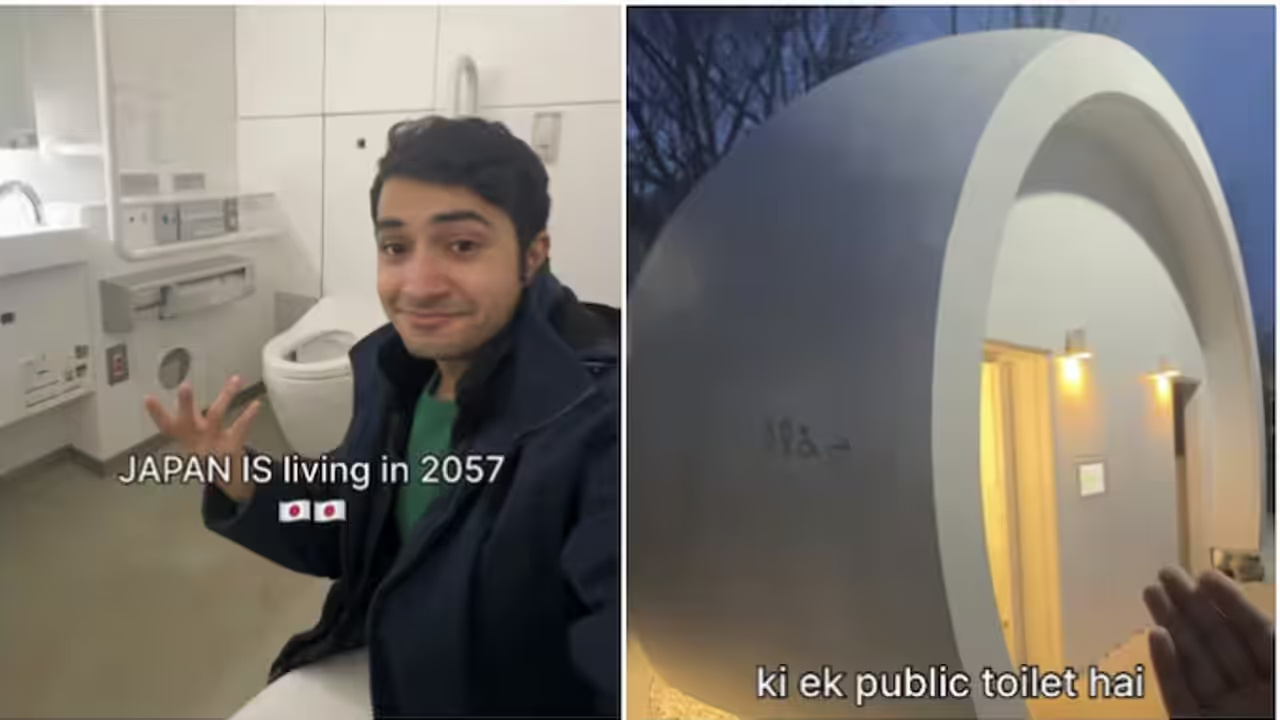
A content creator from Mumbai gained attention for sharing a video of a futuristic public toilet in Japan. The unique facility features advanced technology, including QR code access, automatic doors, taps activated by voice, bilingual instructions, and music playback.
A Mumbai-based content creator’s recent video exploring a futuristic public toilet in Japan has caught attention online, thanks to its unusual mix of technology and everyday convenience. Sarthak Sachdeva, who has more than two million followers, shared an Instagram video offering viewers a glimpse inside the high-tech facility and highlighting features that are far removed from the usual public toilet experience.
Sachdeva began the video with an introduction that immediately set the tone for his experience. “Come, let me show you how futuristic Japan's toilets are,” he said before entering the facility.
One of the first features he demonstrated was a voice-activated tap. Instead of manually turning on the water, Sachdeva simply said, “Turn on the sink,” and water immediately started flowing from the tap. The demonstration showed how voice commands had been integrated into the facility.
Watch the viral video here:
He then stepped outside to give viewers a look at the structure itself. The public toilet was housed inside a distinctive dome-shaped building, adding to its futuristic appearance.
But the technology did not stop at the sink. Sachdeva explained that visitors needed to scan a QR code to gain access to the toilet. Once the code was scanned, the door would automatically unlock. Inside, the walls featured a list of commands written in both Japanese and English, helping visitors understand how to operate the different facilities.
Another detail that surprised viewers was the ability to play music while using the toilet. Sachdeva mentioned this in the caption accompanying his Instagram video, writing, “You can play music while using it Japan is living in 2057.”
By the end of the clip, he summed up his reaction with another futuristic comparison: “Japan is really living in the year 2057.”
The video also prompted discussions among viewers about Japan’s public infrastructure and the role of rules and regulations in maintaining such facilities. Some users discussed whether similar technology and systems could improve public facilities in India, while others simply expressed amazement at the level of technology incorporated into an everyday public utility.
The video’s combination of voice commands, QR-code access, bilingual instructions and music playback has turned an ordinary public toilet visit into a social media talking point, with Sachdeva’s experience offering viewers a glimpse of Japan’s technology-driven public facilities.
