Following her death in 2025, attention turned to former Bangladesh PM Khaleda Zia’s wealth. Her last public disclosure in 2018 reported an annual income of 1.52 crore BDT and bank assets of 4.78 crore BDT.
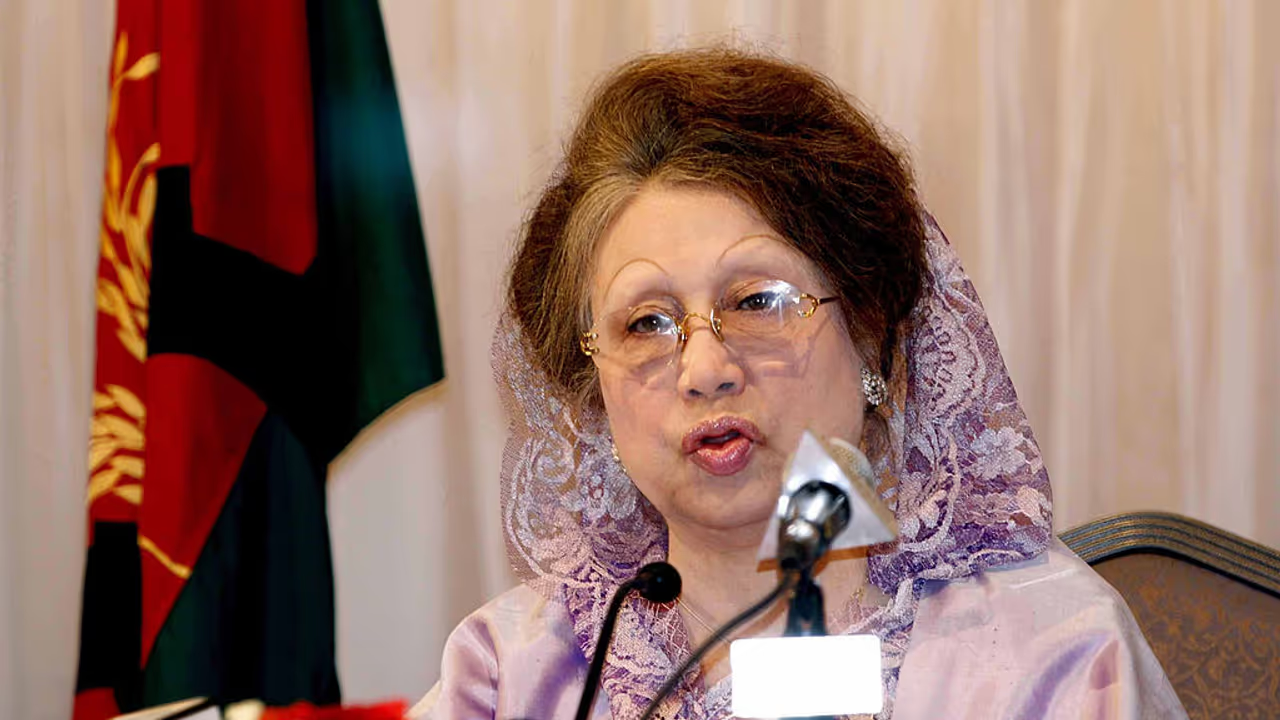
Former Bangladesh Prime Minister and long-time Bangladesh Nationalist Party (BNP) leader Khaleda Zia died on December 30, 2025, at Dhaka's Apollo Hospital. She was 80. As tributes poured in from across the country, attention once again turned to her controversial political life and the often-debated question of her personal wealth.
There is no single official figure for Khaleda Zia's net worth at the time of her death. However, her past financial disclosures and the political allegations surrounding her family provide some insight into her financial standing.
What her 2018 affidavit revealed about her income
Khaleda Zia last publicly disclosed her finances in 2018 while filing her nomination papers for the general election.
Related Articles

At the time, she reported an annual income of around 1.52 crore Bangladeshi taka, equivalent to roughly $127,000 today.
Her income sources were mainly split between:
- 67.31 lakh taka earned as rent from apartments and shops
- 85.10 lakh taka from bank deposits, shares and savings certificates
Cash, bank balances and vehicles
The affidavit also listed her personal assets:
- Cash in hand: 50,300 taka
- Money in bank accounts: 4.78 crore taka
- Vehicles: Valued at 48.65 lakh taka
At the same time, she disclosed outstanding liabilities of about 1.58 crore taka, largely due to unpaid rent.
Political allegations that followed her for years
Khaleda Zia's wealth was often the subject of political controversy. In 2017, Awami League General Secretary Obaidul Quader alleged that the Zia family, including Khaleda Zia and her sons, had invested nearly $12 billion across 12 countries, including Saudi Arabia and Qatar.
These claims were never proven in court and remained unverified political allegations.
Acquitted before her death
In 2025, months before her passing, Khaleda Zia and her son Tarique Rahman were acquitted in the Zia Orphanage Trust and other corruption cases by the interim government led by Muhammad Yunus. The decision brought an end to a long chapter of legal battles that had defined much of her later political life.