Kazakhstan has banned face-covering garments in public, joining a list of nations citing security and cultural identity. Here's a look at 10 countries with similar laws and their reasons
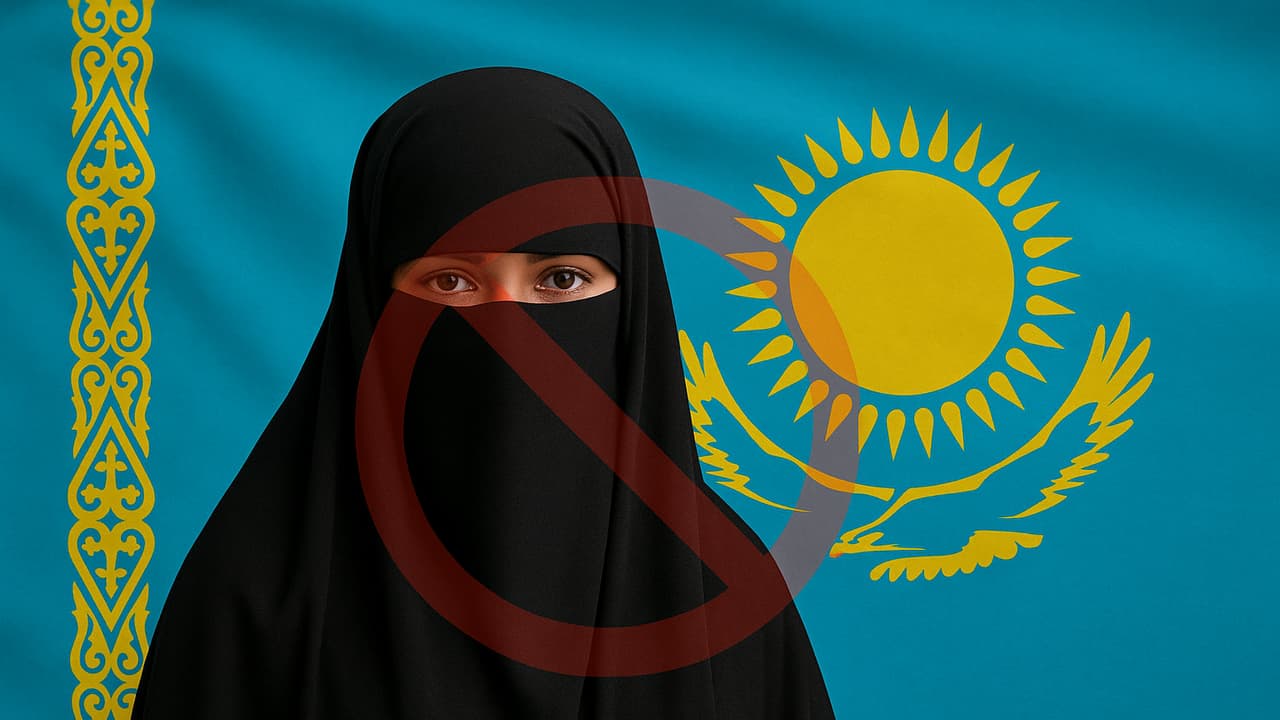
In a move that might surprise many, Kazakhstan has banned face-covering garments in public spaces. The government in Almaty joined the list of countries to impose such restrictions. The news comes as a shock to many because Kazakhstan is a country where almost 70 percent of the population is Muslim.
On Monday, after signing the bill into a law, President Kassym-Jomart Tokayev marked a significant shift in the nation's public dress code policy.
Though the law falls short off explicitly mentioning religious garments, the intention lies bare. The president urged people to wear 'clothes in the national style' and asked them to abandon 'face-concealing black robes'. Though there are exemptions for medical reasons, weather conditions and certain events, the law is seen as a part of a larger trend in Central Asia and beyond where governments are tightening controls on Islamic attire. This comes amid concerns over religious extremism, national identity and public safety.
Related Articles

Timeline of the Ban
Kazakhstan had banned hijabs in schools in 2017 and in 2023 and asked educators too also adhere to the regulation. These moves triggered nation wide protests by women's rights groups. But it is not only in Kazakhstan, many Central Asian countries, European countries have implemented similar laws. Here's a look at some countries with similar laws
- Kyrgyzstan
Earlier this year in January, another Central Asian country, Kyrgyzstan enforced similar laws where it banned the niqab. It even enforced a fine of around $230. To top it all, the country's top Islamic authority supported the move, citing that Niqab is alien to the culture of the country and raises a security concern. The president Sadyr Japarov put forward that it as a necessary measure to protect national identity.
- Uzbekistan
With a 90% Muslim population, Uzbekistan banned garments with face-covering in 2023. It also implemented a fine of over $250 for people not adhering to the rules. The laws were implemented keeping in my national security and national integration.
- Tajikistan
Tajikistan, another Muslim majority country with almost 97 percent Muslim population had banned Niqab in 2023. The government has long advocated national secular identity.
- Sri Lanka
Aftermath of the Easter bombings in 2019, Sri Lanka banned face-covering garments in 2021. The officials cited national security as a reason.
- France
Among European countries, France led the charge against face-covering veils. As early as in 2011, France banned all forms of face-coverings in public including the burqa. The country is rooted in staunch secular principles and frowns upon religious symbols in schools and government institutions.
- Belgium
Following France's ban, Belgium became the second European country to ban the burqa citing public safety.
- Bulgaria
In 2016, Bulgaria followed France and Belgium's steps to ban Burqas from public spaces. The country has a 10 percent Muslim population. Violation of the law empowered the government to revoke social security benefits.
- Denmark, Norway, Switzerland
Denmark in 2017, Norway in 2018 by a referendum and Switzerland in March 2021 a similar ban of the burqa in public spaces.
The rationale behind these laws typically centers on national security, social cohesion, and gender equality. Proponents argue that full-face veils can hinder identification and have been misused by extremists to carry out violent acts. Some governments see these bans as vital to strengthening secularism and national identity, particularly in increasingly multicultural societies.
However, critics argue that such laws violate fundamental human rights, particularly those enshrined in Article 18 of the International Covenant on Civil and Political Rights (ICCPR), which protects religious expression. The United Nations Human Rights Committee has affirmed that wearing religious attire is a part of religious freedom. Opponents contend that these policies disproportionately affect Muslim women, perpetuate Islamophobia, and marginalize communities under the guise of security and assimilation.
The debate over face-covering garments reveals the tension between security and freedom, cultural integration and religious identity. As Kazakhstan steps into this controversial territory, the global community continues to grapple with finding the balance between public order and personal liberty.