
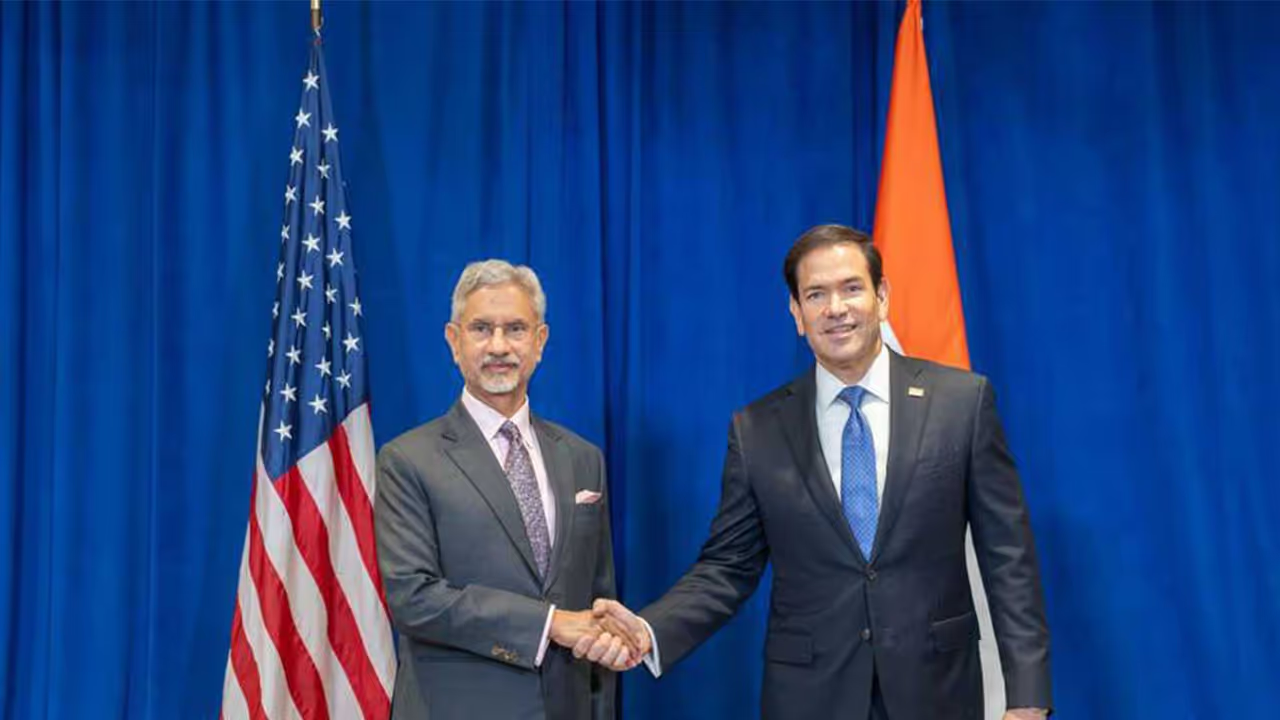
External Affairs Minister S Jaishankar met US Secretary of State Marco Rubio in New York, raising India's concerns over a proposed US bill, the SRIA, which targets major buyers of Russian energy with potential steep tariffs.
External Affairs Minister S Jaishankar met with US Secretary of State Marco Rubio on Wednesday (local time) on the sidelines of the 81st United Nations General Assembly High-Level Week in New York, raising India’s crucial economic and strategic concerns regarding proposed legislation targeting buyers of Russian energy.
During the bilateral talks, Jaishankar directly addressed the Sanctioning Russia and Iran Act (SRIA), a bill aimed at imposing steep tariffs of up to 100% on major purchasers of Russian oil and gas. Sharing an update in a post on X, Jaishankar highlighted the core issues discussed during their interaction. "Good to meet @SecRubio of the US #UNHighLevelWeek," Jaishankar posted. "Reiterated India's interests and concerns with regard to SRIA. Also discussed the Gulf and Ukraine situations." Good to meet @SecRubio of the US #UNHighLevelWeek Reiterated India’s interests and concerns with regard to SRIA. Also discussed the Gulf and Ukraine situations. 🇮🇳 🇺🇸 pic.twitter.com/163YRVlMZG — Dr. S. Jaishankar (@DrSJaishankar) September 23, 2026
The discussion comes at a critical juncture as India continues to balance its strategic autonomy and energy security amid evolving global geopolitical dynamics.
Details of the Sanctioning Russia and Iran Act
President Trump has endorsed the Lindsey O. Graham Sanctioning Russia and Iran Act of 2026, subsequent to its approval in both legislative houses of Congress. The administration noted that the statute broadens formal sanctions, import duties, and trade restrictions concerning Russia while prolonging current economic penalties on Iran.
The regulatory framework focuses on Russia's petroleum and military sectors, Russian administrators and banking institutions, alongside its designated “shadow fleet” of maritime vessels deployed to bypass limitations on Russian crude shipments.
For India, the legislation establishes a statutory pathway that could allow Washington to impose tariffs of up to 100 per cent on Indian imports in response to continued purchases of Russian energy. However, the bill does not itself impose a 100 per cent tariff on Indian goods. Instead, it gives the executive branch authority to impose such tariffs under specified statutory conditions if the legislation is enacted and subsequently invoked by Trump.
India and China are among the major purchasers of Russian crude, making their continued energy trade with Moscow a significant element of the debate surrounding the legislation.
India's Official Stance
In a statement issued following the passing of the legislation, the Ministry of External Affairs said that New Delhi made clear its determination to protect its trade and economic interests while monitoring further developments on the matter Reiterating India's position on energy security, the ministry said, "As stated on several earlier occasions, India remains firmly committed to ensuring energy security for its 1.4 billion people. It will continue to do so through diversified sourcing and on the basis of evolving market dynamics."
MEA added that the government was “monitoring further developments."
Ongoing Trade Negotiations
Meanwhile, the US and India are continuing negotiations toward a bilateral trade agreement, with further talks expected on the sidelines of the G20 Trade Ministers’ meeting in Wisconsin later this month. (ANI)
(Except for the headline, this story has not been edited by Asianetnews Editorial staff and is published from a syndicated feed.)