A PhD student from the country has sparked a debate after critically examining present-day Pakistan, under Prime Minister Shehbaz Sharif and army chief and de facto power centre Asim Munir, without naming either directly.
A provocative article by a Pakistani PhD student has ignited a fierce debate online, with many asking whether the country’s long-simmering youth discontent is quietly turning into a Gen Z uprising. Without directly naming, the piece delivers a critique of present-day Pakistan under Prime Minister Shehbaz Sharif and army chief — and de facto power centre — Asim Munir.
The article contrasts Pakistan’s entrenched “boomer” ruling elite with a digitally aware, politically restless Gen Z-Alpha population. It has gone viral, becoming a flashpoint for what many are calling a silent rebellion against an establishment seen as rigid, outdated and disconnected.
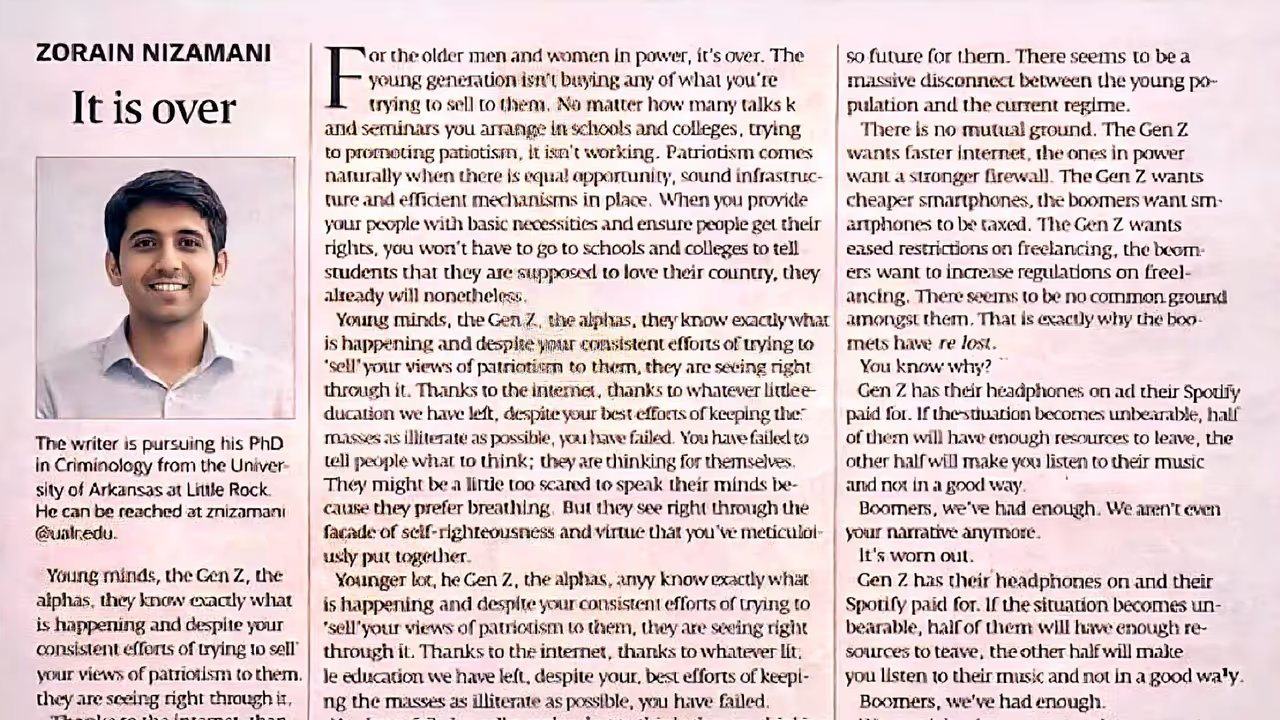
It is Over: Gen Z Article That Shook Pakistan
Titled “It is over,” the article was authored by US-based PhD student Zorain Nizamani and published in The Express Tribune on January 1. It was later taken down, reportedly following pressure from the Pakistani military.
Related Articles

“For the older men and women in power, it's over. The young generation isn't buying any of what you're trying to sell to them. No matter how many talks and seminars you arrange in schools and colleges, trying to promote patriotism, it isn't working,” Nizamani wrote.
Speaking directly from the perspective of Gen Z and Generation Alpha, Nizamani dismantled what he described as a hollow, imposed version of patriotism — one that no longer resonates with young Pakistanis raised amid economic instability, censorship and digital exposure to global realities.
“Young minds, the Gen Z, the alphas, they know exactly what is happening, and despite your consistent efforts of trying to 'sell' your views of patriotism to them, they are seeing right through it. Thanks to the internet, thanks to whatever little education we have left, despite your best efforts of keeping the masses as illiterate as possible, you have failed. You have failed to tell people what to think, they are thinking for themselves. They might be a little too scared to speak their minds because they prefer breathing,” Nizamani wrote.
The article argues that speeches, seminars and symbolism cannot substitute justice, opportunity and basic rights. According to Nizamani, Pakistan’s youth can clearly see corruption, inequality and institutional hypocrisy — even as censorship and propaganda attempt to mask them.
Highlighting the economic fault lines between generations, Nizamani pointed to the clash over digital livelihoods, writing, “The Gen Z wants erased restrictions on freelancing, the boomers want to increase regulations on freelancing.”
The piece ends with a blunt message to Pakistan’s power brokers: “Boomers, we have had enough. We aren't buying your narrative anymore. It's worn out.”
The article found strong backing among supporters of former prime minister Imran Khan, who remains incarcerated. The Canada wing of Khan’s Pakistan Tehreek-i-Insaaf (PTI) shared the piece on X, underscoring its central argument.
“Zorain Nizamani's article ‘It is Over’ was removed from eTribune most likely for exposing the reality: DG ISPR's university visits are futile. The youth see through propaganda and are no longer easy to mislead or control,” the PTI Canada wing said.
Pakistani activist Mehlaqa Samdani also linked the article’s disappearance to systemic censorship. “Not surprisingly, this article is no longer accessible through the Express Tribune's digital edition, exactly the kind of censorship Zorain talks about,” she wrote.
The episode has since intensified an already heated online conversation: Is Pakistan’s younger generation merely disillusioned — or is it inching toward open resistance against an entrenched establishment widely viewed as out of touch with the realities of a new generation?