
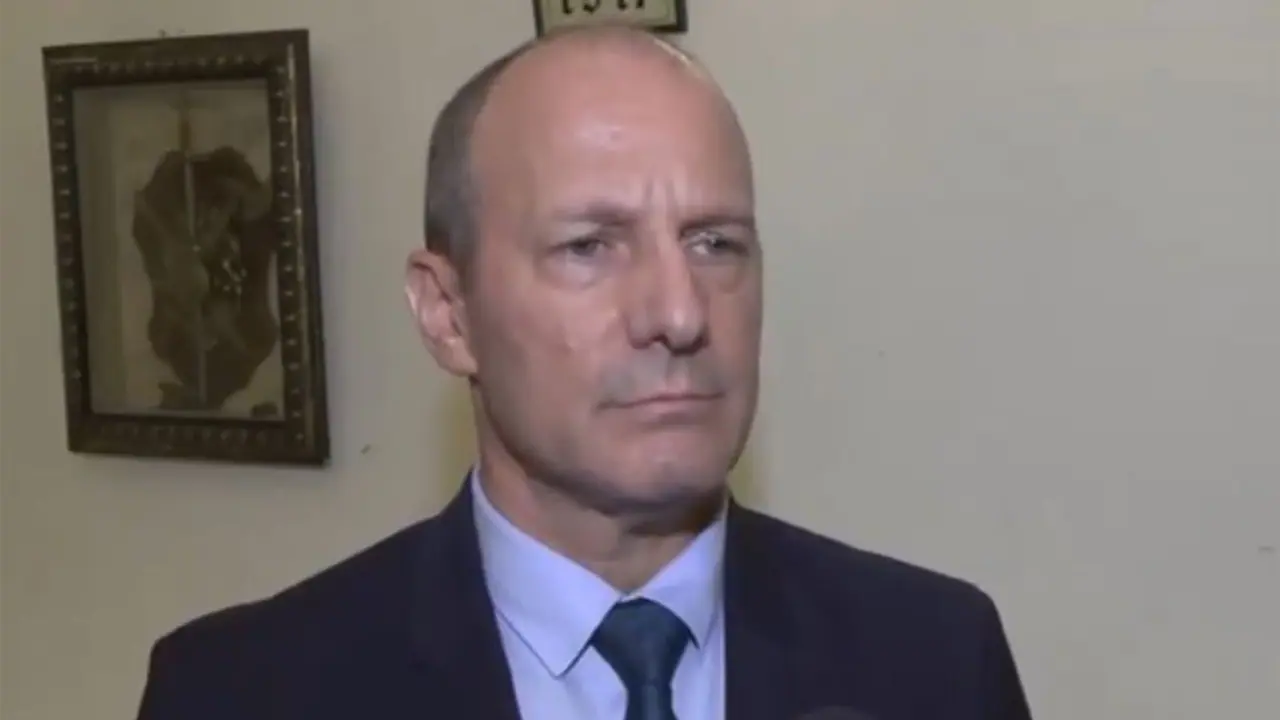
Israeli Ambassador Reuven Azar is optimistic about Lebanon talks but says Hezbollah's dismantlement is non-negotiable. He noted a consensus between Israeli and Lebanese governments and support for a US-brokered framework to ensure stability.
Highlighting a critical turning point in West Asian diplomacy, Israel's Ambassador to India, Reuven Azar, on Tuesday expressed strong optimism over concluded negotiations with the Government of Lebanon, while firmly asserting that the total dismantlement of Hezbollah remains non-negotiable for long-term regional stability.

Speaking to ANI on the current situation in West Asia, Ambassador Azar emphasised a rare moment of bilateral and international consensus regarding the future of Lebanon's sovereignty. Ambassador Azar noted that both the Israeli and Lebanese governments, alongside global powers, are aligned on the path forward. "We had a very good conclusion of the negotiations with the Govt of Lebanon. We support the restoration of full sovereignty by the elected Govt of Lebanon," Azar stated. "Of course, to that, Hezbollah has to be dismantled and we are happy that we have consensus both in Israel and in Lebanon by both Govts that this is a must."
US-Brokered Trilateral Framework
Azar said that Israel has "no territorial aspirations" in Lebanon and remains committed to supporting the implementation of the US-brokered trilateral framework aimed at restoring stability, strengthening the Lebanese government's authority, and advancing peace between the two neighbours. "We have no territorial aspirations in Lebanon; we want to cooperate with the plans that are going to start for the Lebanese Army to take over chunks of South Lebanon. We will continue doing that until we achieve peace in our region," Azar said.
The remarks come in the context of the US-brokered trilateral framework, under which Israel, Lebanon and the United States have sought to maintain the ceasefire mechanism and advance arrangements aimed at restoring security and state authority in southern Lebanon.
The US announced the Trilateral Framework with Israel and Lebanon last week after several rounds of talks between the two sides aimed at ending decades of conflict and establishing a path toward lasting peace, security and normal neighbourly relations between the two countries.
According to the US Department of State, the framework commits Israel and Lebanon to pursue a comprehensive peace through direct negotiations with US mediation. The State Department noted that Lebanon has pledged to restore full state authority across its territory by ensuring the Lebanese Armed Forces assume exclusive responsibility for the country's security and by achieving the verified disarmament of all non-state armed groups, particularly Hezbollah.
In return, Israel has said it will progressively redeploy its forces from Lebanese territory as agreed security conditions are met, reiterating that it has no territorial ambitions in Lebanon. The agreement also envisages a phased transfer of security responsibilities in southern Lebanon to the Lebanese Armed Forces, backed by US verification and international support, alongside reconstruction efforts and the safe return of displaced civilians.
The United States has committed to supporting the implementation of the framework, strengthening Lebanon's security institutions, and mobilising international assistance for the country's reconstruction and economic recovery. The three parties said the framework is intended to serve as the basis for a future comprehensive peace and security agreement, with both Israel and Lebanon committing to continue negotiations in good faith toward achieving lasting regional stability.
Concerns Over Iranian Influence
Azar also accused Iran of attempting to influence Lebanon's future through Hezbollah and said Israel would continue to oppose Tehran's role in the country. "Iran has been trying to change the equation and dictate to the Lebanese Government what will be the future of Lebanon. I think this mustn't be allowed," he said.
"We are going to continue being stubborn that Iran stays out of the equation in Lebanon because the agenda of Tehran is to continue to use Lebanon as a platform to attack Israel. We are not going to allow that," he added.
Broader Regional Security Concerns
Commenting on wider regional diplomacy, Azar referred to ongoing US engagement with Iran and said any future agreement should comprehensively address Israel's security concerns. "At the end of the day, we have to address all the concerns that we have - a complete removal of the military nuclear threat, caps on the ballistic missiles of Iran that have been throwing havoc throughout the region and stopping this support for the proxy terror armies of Iran that are destabilising countries all around the region," he said.
He said resolving those issues would help restore stability in West Asia and pave the way for a broader regional peace.
"So, if all these things are solved, I think that we can restore stability in the region and the US will be able to reach a final agreement that actually will secure a much more peaceful region in the future," Azar added. (ANI)
(Except for the headline, this story has not been edited by Asianet Newsable English staff and is published from a syndicated feed.)