SIPRI's report outlines that 12,241 nuclear warheads are currently held by nine nations — the US, Russia, UK, France, China, India, Pakistan, North Korea, and Israel.
A new report by the Stockholm International Peace Research Institute (SIPRI) warns that artificial intelligence may soon be handed the reins in determining whether or not nuclear war is unleashed. According to SIPRI, the once-steady decline in nuclear arsenals has flatlined. Instead, nations are now racing to modernize, upgrade, and rapidly deploy their nuclear stockpiles.
“We see the warning signs of a new nuclear arms race at a particularly dangerous and unstable moment for geopolitics,” said Dan Smith, Director of SIPRI.
“If the decision to launch nuclear weapons is ever fully handed over to AI, we'd be approaching true doomsday scenarios,” he added.
Related Articles

Israel-Iran war
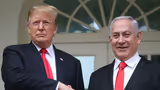
The report lands amid soaring tensions following Israel’s recent strike on Iran’s nuclear and missile facilities, an act that has sparked fears of an impending World War III. While the White House distanced itself from the assault, President Donald Trump claimed Iran provoked it by rejecting terms to curb its nuclear ambitions.
Though Iran is not yet a nuclear-armed state, its powerful allies — Russia and China — collectively control over 6,000 nuclear warheads. The situation escalated further when, on Thursday, the White House confirmed that Trump would decide within two weeks whether to order a direct military strike on Iran.
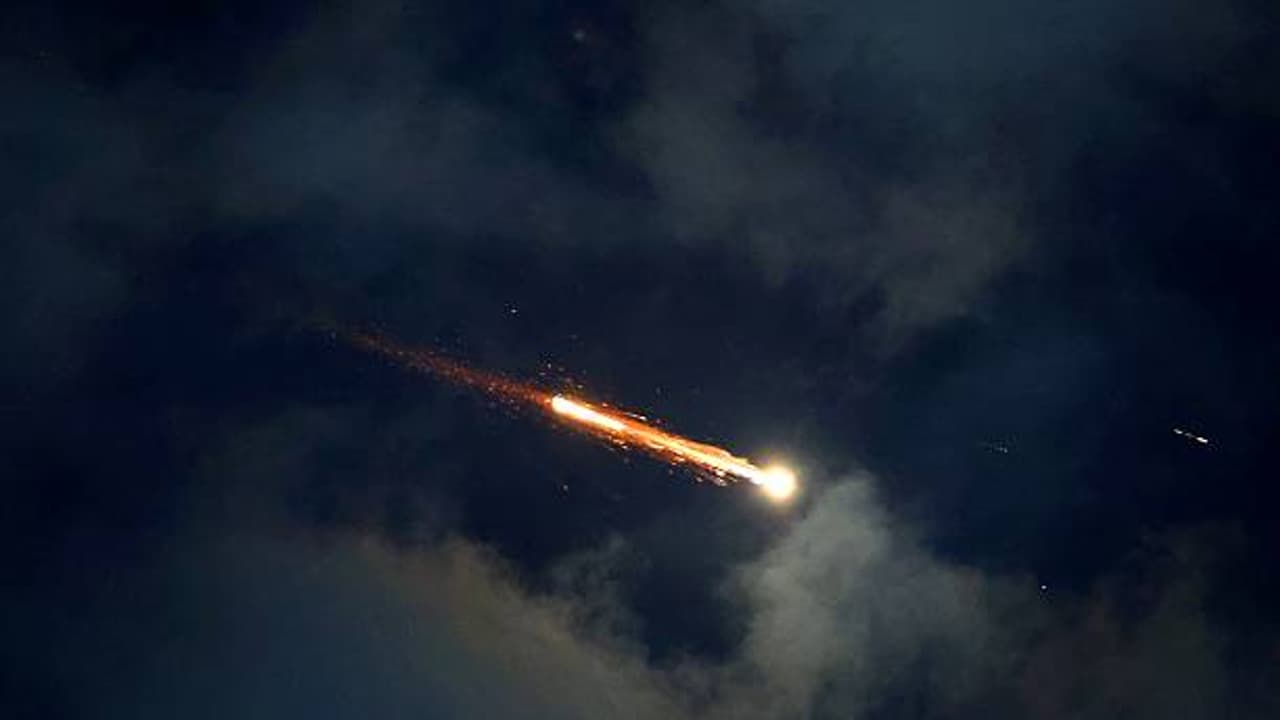
Meanwhile, Israel and Iran continue to trade blows — with missiles and drones darkening skies for the seventh straight day.
Who will launch nukes first amid WW3 fears?
SIPRI's report outlines that 12,241 nuclear warheads are currently held by nine nations — the US, Russia, UK, France, China, India, Pakistan, North Korea, and Israel. Of these, 9,614 warheads are believed to be in active military stockpiles, and 2,100 are poised for immediate deployment — ready for launch from submarines, ships, or aircraft at a moment’s notice.
What’s more alarming is the surge in AI integration within nuclear systems. While governments are lured by the allure of lightning-fast data processing, experts warn this might come at the expense of human oversight — and ultimately, global safety.
“One component of the coming arms race will be the attempt to gain and maintain a competitive edge in artificial intelligence, both for offensive and defensive purposes,” Smith explained.
“AI has a wide range of potential strategic utility; there are benefits to be found, but the careless adoption of AI could significantly increase nuclear risk,” he warned.
In September 1983, a Soviet early-warning system mistakenly detected incoming US missiles. But Lieutenant Colonel Stanislav Petrov, trusting his instincts over the system’s data, opted not to escalate the alert. His decision is now regarded as one that averted a global catastrophe.
“Had he believed the information, he would have passed it up the line and, though there is no certainty either way, his superiors, wrongly thinking they were under attack, might have decided upon retaliation,” Smith wrote.
With AI’s speed eclipsing human reaction times, the question remains — in the next such incident, will there be another Petrov, or only cold, unflinching code?
The SIPRI report also highlighted a dramatic build-up of nuclear arms, especially in China, which has been adding nearly 100 warheads per year since 2023. By 2025, China’s arsenal stood at 600 nuclear bombs, with projections that it could rival the US or Russia in intercontinental missile capacity by the 2030s.
Data from the Federation of American Scientists (FAS) revealed that five nations — China, Pakistan, India, Israel, and North Korea — have collectively expanded their nuclear stockpiles by over 700 warheads in the past four decades.
Even as Russia and the US maintained relatively stable stockpile sizes in 2024, SIPRI noted both are investing heavily in modernization programs that could soon expand their arsenals.
“The era of reductions in the number of nuclear weapons in the world, which had lasted since the end of the Cold War, is coming to an end,” SIPRI stated in the report.
“Instead, we see a clear trend of growing nuclear arsenals, sharpened nuclear rhetoric and the abandonment of arms control agreements.”