
Israel records its highest voter turnout since 1973 as citizens cast ballots in a critical election. Prime Minister Benjamin Netanyahu faces a major challenge from Gadi Eisenkot amidst profound political and social divisions in the country.
Record-Breaking Voter Turnout in Israel
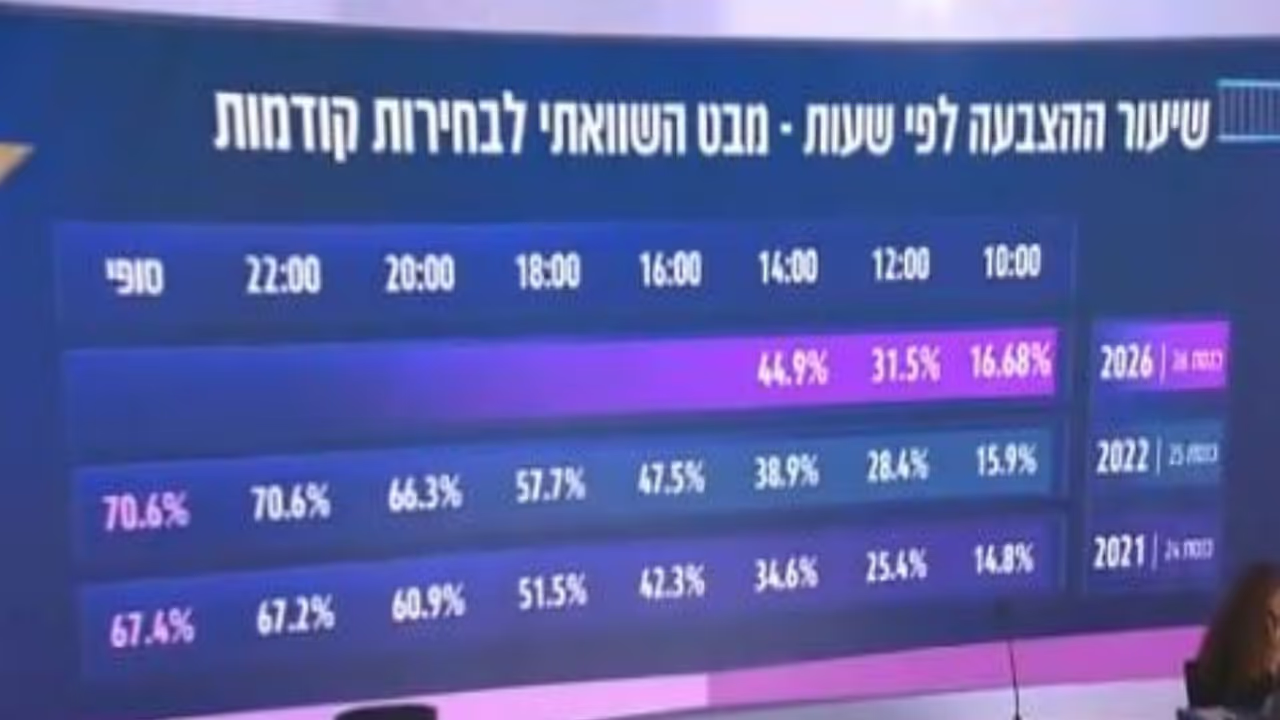
Jerusalem [Israel], October 27 (ANI): As the polling in the nail-biting Israeli elections continues, voter participation reached a record-shattering 55.7% by 4 PM local time, according to official figures released by the Central Elections Committee. The late-afternoon turnout reflects a sharp 8.2 percentage-point increase over the 47.5% recorded at the same hour during the 2022 general election. According to election authorities, the 55.7% figure marks the highest voter turnout ever recorded at 4 PM since the Central Elections Committee first began tracking hourly participation metrics in 1973. The surging mid-day participation continues an unprecedented trend seen throughout election day, with polling stations across the country reporting long queues as citizens turn out in record numbers ahead of the 10 PM poll closures.
Earlier, by 2 PM (local time), the national turnout reached 44.9 per cent, according to figures released by the Central Elections Committee. The mid-afternoon figure marks a notable surge from the 38.9 per cent recorded at the same hour during the 2022 general election, Times of Israel reported. The previous PM record was set during the 1988 election, coming in 2.7 percentage points lower than the current turnout. The participation level represents the highest turnout recorded at this hour since the Central Elections Committee first began tracking hourly participation metrics in 1973. The previous turnout at 12 PM (local time) reached 31.5 per cent, according to the Central Elections Committee. The Times of Israel reported that this participation figure marks the highest voter turnout recorded at midday since 1973, in the first election held after the Yom Kippur War, highlighting exceptionally high voter engagement across the country. The strong surge at the polls follows heavy morning participation, reflecting intense interest from the electorate as citizens cast their ballots across more than 12,000 polling stations nationwide.
Political Leaders Call for Votes
Netanyahu and Eisenkot's Appeals
Meanwhile, Israeli Prime Minister Benjamin Netanyahu issued an urgent rally call to his supporters on election day, urging right-wing voters to head to the polling stations immediately and vote for his Likud party (Machal). In a series of posts on X, Netanyahu characterised the vote as an existential crisis, explicitly warning of high turnout among Arab Israeli voters and accusing political rivals of jeopardising the country's governance "We're at war for our home. Muslim Brotherhood supporters are raiding the polling stations and stealing the elections. Go out and vote, recover it!!" Netanyahu stated in a post.
On the other hand, Yashar Party chairman Gadi Eisenkot, along with his wife Hannah, cast their votes in the Knesset elections on Tuesday, pledging to take the country on a “new path”. After casting his ballot, Netanyahu's principal rival, Eisenkot, expressed his commitment to bringing political change to the country. “Taking Israel onto a new path. We will be worthy. I commit,” he said.
The Path to Forming a Government
After the votes are tallied on Tuesday, President Isaac Herzog will consult the leaders of the elected parties before tasking the lawmaker he believes has the best chance of forming a government. That candidate will have 28 days to cobble together a coalition, with a possible 14-day extension. If those efforts fail, a second party leader may be given 28 days (without an extension) to try, and if that attempt falls short, a majority of 61 MKs can request that the president assign the task to a particular lawmaker within a further 21-day period.
Today's vote, the first since the Hamas-led massacre of October 7, 2023, comes amid profound divisions on issues including accountability for the failures that allowed the attack and independence of Israel’s democratic institutions and judiciary. Netanyahu, who has been at the centre of power for 19 years, has managed to keep his coalition in power for a full 4-year term, a rarity in Israel's politics. Now, he faces a formidable challenge in the form of former IDF Chief of Staff Gadi Eisenkot and his Yashar party, which lead in the various opinion surveys ahead of the vote. (ANI)
(Except for the headline, this story has not been edited by Asianetnews Editorial staff and is published from a syndicated feed.)