
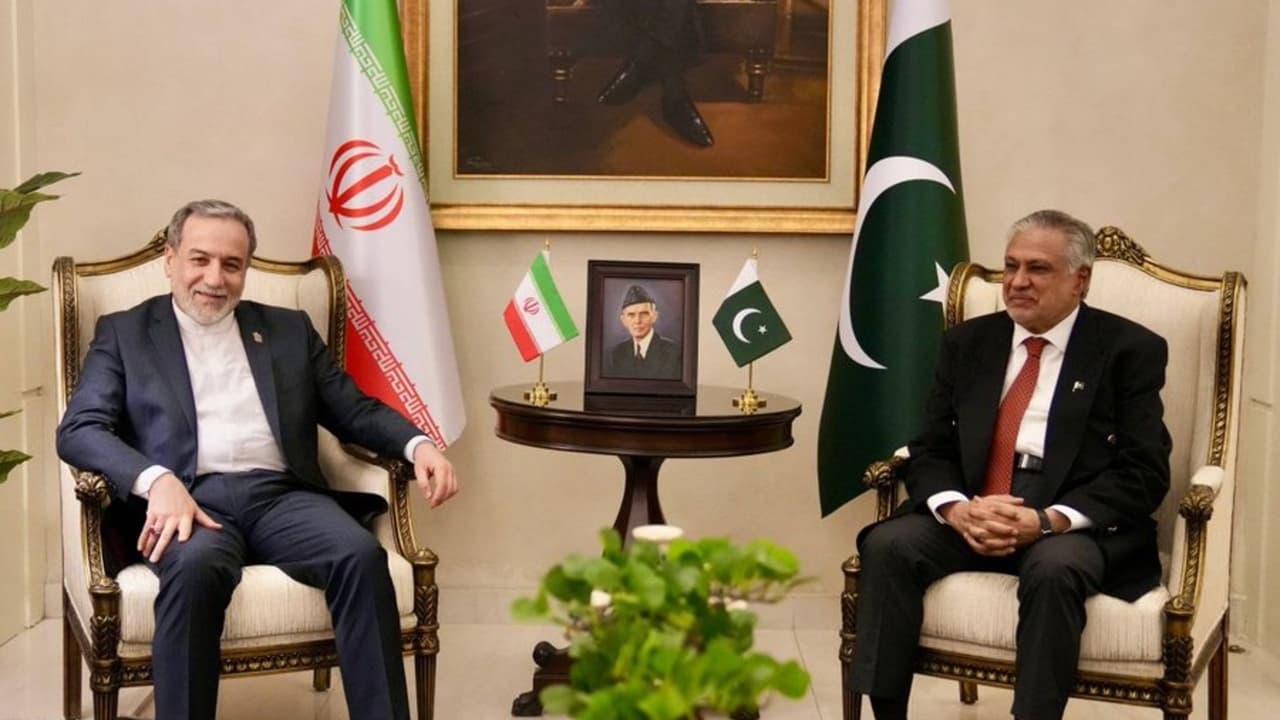
Iranian FM Abbas Araghchi visited Islamabad, highlighting Pakistan's growing role as a mediator between Tehran and Washington. Despite speculation, Iran has explicitly denied any direct meetings with US officials during the visit. Instead, the talks focus on using Pakistan as a channel for indirect communication to de-escalate regional tensions.
Iranian Foreign Minister Abbas Araghchi arrived in Islamabad on Friday, underscoring Pakistan’s growing role as a diplomatic intermediary in the increasingly delicate relationship between Tehran and Washington. While speculation had mounted that a second round of face-to-face negotiations between Iran and the United States could take place in Pakistan’s capital, Tehran moved quickly to dismiss those reports, stressing that no direct meeting with American officials was on the agenda.
Araghchi’s visit comes at a critical moment in regional diplomacy, with tensions between Iran and the United States remaining unresolved despite multiple backchannel efforts by regional powers. Pakistani officials have been working quietly for days to create conditions for renewed engagement, hoping Islamabad could serve as neutral ground for communication between the two long-time adversaries.
‘No meeting with American side’
According to Iranian Foreign Ministry spokesperson Esmail Baghaei, the delegation’s visit is focused on consultations with Pakistani leadership rather than any formal negotiation with Washington. Baghaei made Tehran’s position clear, saying, “No meeting is planned with the American side during this visit.”
Instead, Iranian officials indicated that Pakistan would continue acting as a channel for indirect communication. Tehran appears willing to keep diplomatic doors open, but only through intermediaries, a stance that reflects both caution and internal political sensitivity within Iran over direct engagement with the United States.
Araghchi is expected to hold meetings with Pakistani Prime Minister Shehbaz Sharif and Army Chief Syed Asim Munir during the visit. Pakistani authorities view the talks as an opportunity to reinforce the country’s emerging role in regional conflict resolution, particularly at a time when geopolitical instability across West Asia continues to threaten broader security and energy markets.
At the same time, the United States is reportedly preparing its own diplomatic outreach. American envoys, including Special Envoy Steve Witkoff, are expected to travel to Pakistan, although Washington has not publicly confirmed whether any indirect or future direct engagement with the Iranian delegation could still materialize. Some reports suggest a US logistical and security team has already arrived in Islamabad in anticipation of possible developments.
Despite those preparations, Tehran has maintained a firm public line. Iranian officials appear intent on managing expectations while avoiding any perception that they are negotiating under pressure. The decision to communicate through Pakistan rather than engage directly also allows Iran to preserve strategic ambiguity as discussions continue over sanctions relief, regional security, and nuclear concerns.
The visit has attracted significant attention because it follows earlier failed attempts to restart dialogue between the two countries. Previous rounds of discussions did not yield a breakthrough, leaving Pakistan to intensify mediation efforts behind the scenes. Islamabad’s involvement has become increasingly important as both sides seek a way to avoid further escalation without appearing politically weak.
Analysts say the symbolism of Araghchi’s arrival in Islamabad is as important as the meetings themselves. Even without direct talks, the presence of senior Iranian officials in Pakistan signals that diplomatic channels remain active. For Pakistan, the visit also highlights its ambition to position itself as a credible mediator in one of the world’s most sensitive geopolitical disputes.
Whether the Islamabad meetings lead to substantive progress remains uncertain. For now, Iran has made one message unmistakably clear: while diplomacy is still alive, any engagement with the United States will happen on Tehran’s terms—and through Pakistan’s mediation, not across a negotiating table in public view.
