The Israel-Iran conflict reflects deeper geopolitical shifts tied to energy politics, multipolarity, and global power realignments beyond the battlefield.
By Dr Aparaajita Pandey: The conflict between Israel and Iran has and is being scrutinized from all possible perspectives, while some would argue that it fits the template for Huntington’s Clash of Civilizations, some would say that these are the modern day crusades, some would even say that it is a function of the military industrial complex , or a proxy for an actual war between the great powers. It is, however, as difficult to disregard one of these theories as it is to specify one precise theory as the reason behind this conflict. Nevertheless, all scholars agree that this conflict is a part of greater dynamics and will have a global impact.
The Israeli stance against Iran which is also supported by the US should be seen as a part of the larger contention that has existed between the east and the west. The growing challenges to the conventional hegemony and dominance of the global north and the proverbial western civilization since the roughly the second world war, are now continuously being challenged by several factors. They range from the rise of China as a global power, a move towards de-dollarisation, burgeoning economic power of the global south, and to the declining population growth rates in a majority of European countries. While the mentioned factors don’t scream Iran in the most obvious manner, as an energy rich nation that is strategically located Iran does play a significant role in the move towards an increasingly multipolar world.
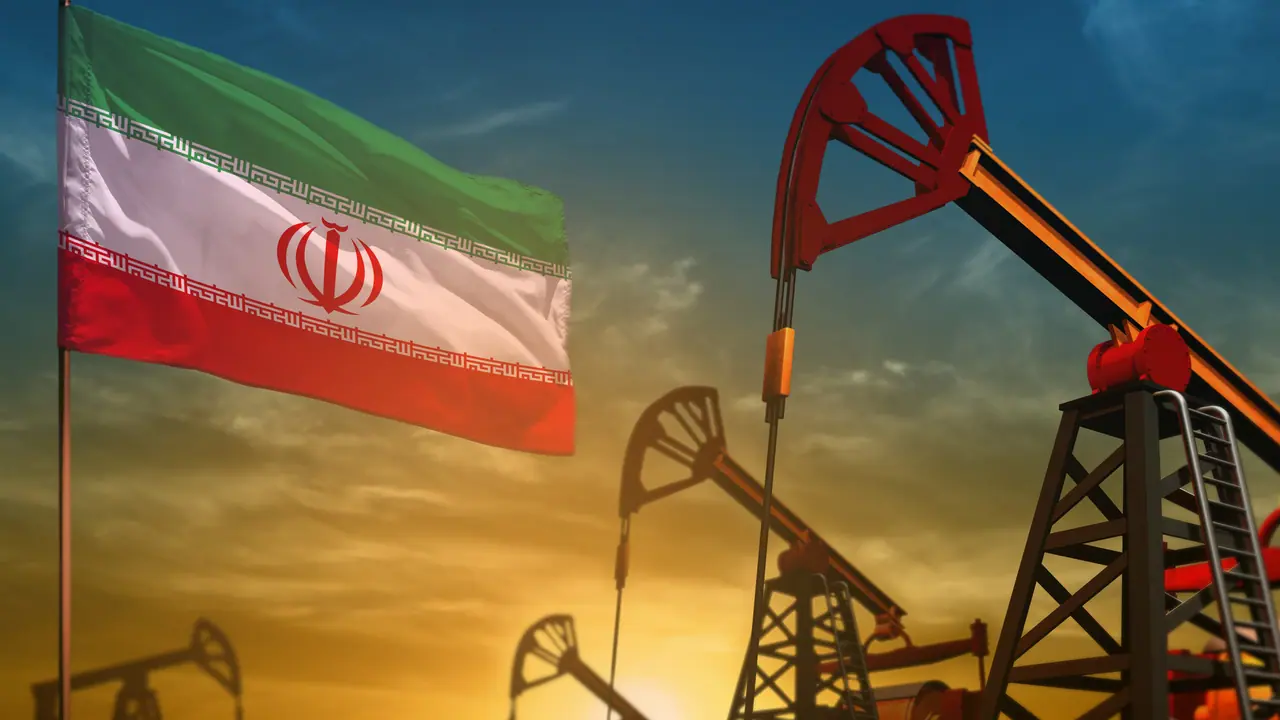
Iran is one of the largest producers of crude oil and natural gas. It has been estimated that it houses the fourth largest reserves of crude oil and that it controls 12 per cent of all the global natural gas reserves. These resources give Iran great strategic strength, it is also well located geographically which makes the country accessible via an oceanic route through the red sea and the Indian ocean, and is well connected with central Asia and eastern Europe. This availability of crude oil and natural gas and the provision for easy transportation is something that India, China, and Russia recognized along with the rest of the world. While India and China have both been customers of Iranian crude for a long time and China has made Iran one of its principal suppliers, Russia saw a bigger opportunity in collaboration with Iran.
Related Articles

With Russia being a producer of crude oil and natural has itself, a collaboration with Iran in the sector would have given both countries, larger reach, greater stability, and a bigger market in addition to letting both countries also cooperate in technology and engineering to harvest energy resources in the most efficient manner. It would neither be the first time nor the first sector where Iran and Russia would have collaborated. Russia was spearheading the idea of building an energy hub in Makran in Iran and building pipelines though Azerbaijan after it was found that pipelines below the Caspian would have not been feasible.
These developments of the surface don’t look concerning for the US at all. However, at closer reflection one finds that these developments would translate to greater access to energy resources for all of Asia and progressively for Europe through the Russian supply which is already well established.
The inflow of cash would also manifest in diminishing of the impact of US’ sanctions on Iran. It is also important to note that after the expansion of BRICS to BRICS+ , Iran has also become a part of the grouping that is famously touted as the global south’s answer to the hegemony of the west in global economics and economic institutions. It is now a grouping that has added members who clearly have a tilt towards China, which has not only led to a change in the internal dynamics of the group and has also led to it being painted as ‘anti-west’ although such claims can be debated.
While India has shown its reluctance towards a BRICS currency quite clearly, and the feasibility of such a currency has also been questioned, there is a push within the group by some countries to trade in a currency other than the USD, which the US has cautioned against time and again. A better-connected Iran that was also an energy supplier to most of the world with a Russian backing that was willing to trade in a currency other that the USD would have meant a clear move towards a shift in the global centre of power.
This conflict has not only halted progress in the greater connection between Iran and Eurasia, it has also sent a clear message to the world that there would be no quiet stepping into a new world order. States often return to the most rudimentary parameters of power when they feel threatened, such a return has happened in this case as well. While the nature of warfare has changed and modernized, it is still warfare that states return to in order to establish supremacy, to project potential military and economic might, as well as grand posturing. This is not to say that Israel’s role in this conflict should be diminished or that other factors should be disregarded. It is to say that the greater game must also be recognized so adequate preparations and course correction in strategy can be made if there is a need.
(The author is an Asst Professor at Amity Institute of Defence and Strategy , Amity University NOIDA.)
Disclaimer: The opinions expressed are solely those of the author and do not reflect the views or stance of the organization. The organization assumes no responsibility for the content shared.