
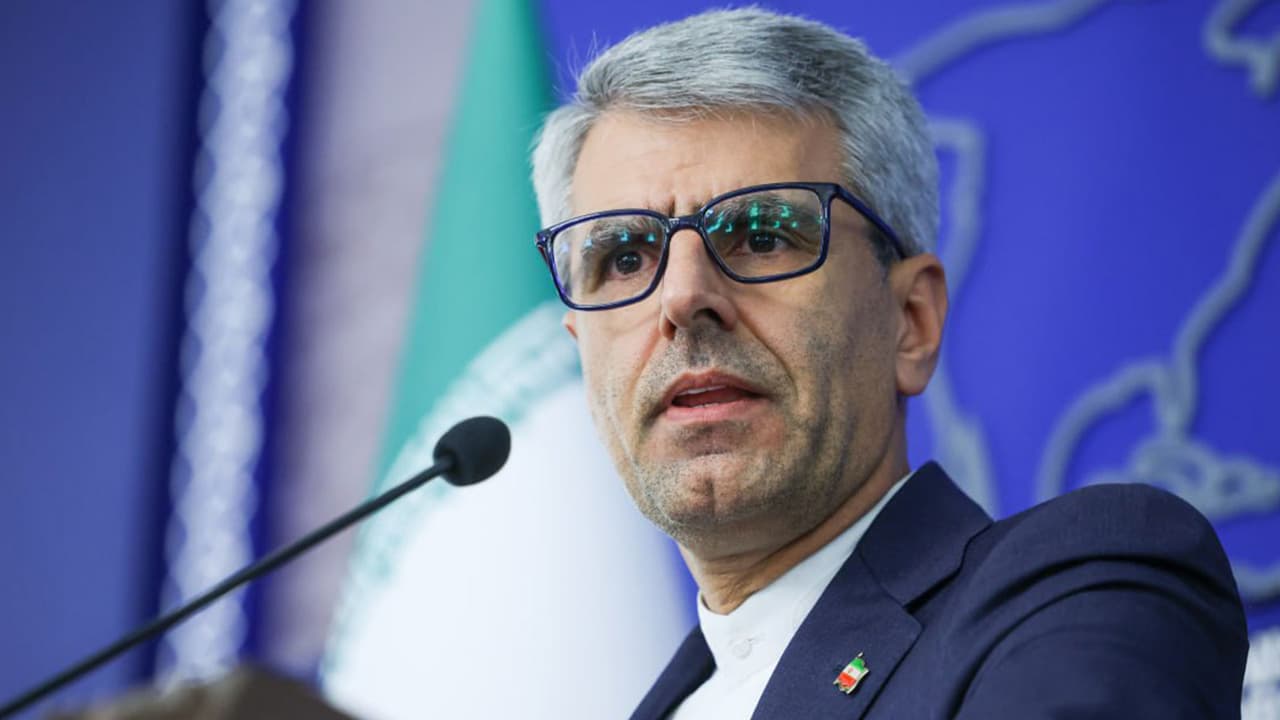
Iran rebukes the UN nuclear watchdog chief for bias amid a sharp military escalation with Israel. The conflict, involving direct strikes and regional friction, threatens Donald Trump's last-ditch efforts to negotiate a nuclear deal with Tehran.
Iran Slams IAEA Chief
Addressing the broader diplomatic fallout of the agency's recent assessments, the ministry asserted that the Director General's operational posture threatens to permanently damage the fundamental status of the verification authority. Foreign Ministry spokesperson Esmaeil Baghaei said Grossi's stance on the conflict and Iran's nuclear programme was undermining the credibility and legitimacy of the UN nuclear watchdog.
Military Escalation Threatens Regional Truce
This escalating diplomatic standoff over Tehran's nuclear ambitions comes at an exceptionally volatile moment, unfolding alongside a sharp military escalation across West Asia. On Monday, marking the war's 100th day, Israel and Iran officially traded direct fire, putting the region's already fragile truce in serious jeopardy and threatening to reignite an all-out regional war.
Compounding this maritime and military friction across regional choke points, the Iran-backed Houthis announced they were banning Israeli shipping on the Red Sea, a key shipping lane, The Jerusalem Post reported. This latest round of multi-front kinetic actions included a strike on an Iranian petrochemical complex and what Iran's Revolutionary Guard confirmed was the targeting of two Israeli bases.
These severe hostilities erupted just hours after US President Donald Trump reportedly called on Israel to refrain from retaliating against Tehran's missiles. The foundational breakdown of the cross-border truce infrastructure originally escalated after Israel launched airstrikes at Beirut's southern suburbs on Sunday. This initial action led to Iran retaliating with its own strike on Israel, ultimately triggering Monday's intense round of attacks and counterattacks.
This sudden re-eruption of hostilities has cast a foreboding shadow over diplomatic efforts to permanently end the war, which originally commenced on February 28.
Trump's Diplomatic Push to Avert War
Crucially, the kinetic escalation severely threatens to derail President Trump's last-ditch efforts to establish an off-ramp by negotiating a comprehensive nuclear deal with Tehran. The intense battlefield friction directly challenges Trump, who had been actively pressuring Israeli Prime Minister Benjamin Netanyahu to exercise maximum military restraint. The US President recently affirmed his supreme authority over the ongoing international mediation, stating in an interview that he "calls the shots".
Trump indicated that Netanyahu would ultimately have to accept the negotiated terms to stop the conflict, warning that a continuous cycle of retaliation would trap the region in a perpetual state of violence. "If Bibi strikes them back, it's just going to keep going like the last 47 years, or the last 3,000 years," Trump warned.
The expanding regional volatility materialised precisely as Trump was utilising multiple media channels to urge both state actors to de-escalate. Speaking to Fox News, the US President expressed immense frustration over the timing of the strikes, noting that diplomatic breakthroughs were imminent. "We're very close. I would say an agreement would be signed on Monday, Tuesday or Wednesday of this coming week. And now this takes place," Trump told Fox News. He then directly addressed the leadership in Tehran, stating, "You've shot your missiles, that's enough. Get back to the table and make a deal."
To protect the collapsing diplomatic framework, Trump held an immediate phone call with Netanyahu shortly after the initial Iranian salvo in a direct bid to prevent a broader multi-front war, Axios reported. Citing a US official, the report noted that Trump publicly minimised the tactical impact to reduce political pressure on Israel to retaliate, telling Axios, "The Iranian strikes didn't hurt anybody. Hopefully Israel is not going to retaliate." Meanwhile, talking to the Financial Times, Trump reiterated that Netanyahu would lack the political leverage to block a broader bilateral agreement between Washington and Tehran, confidently asserting, "He won't have any choice." (ANI)
(Except for the headline, this story has not been edited by Asianet Newsable English staff and is published from a syndicated feed.)