
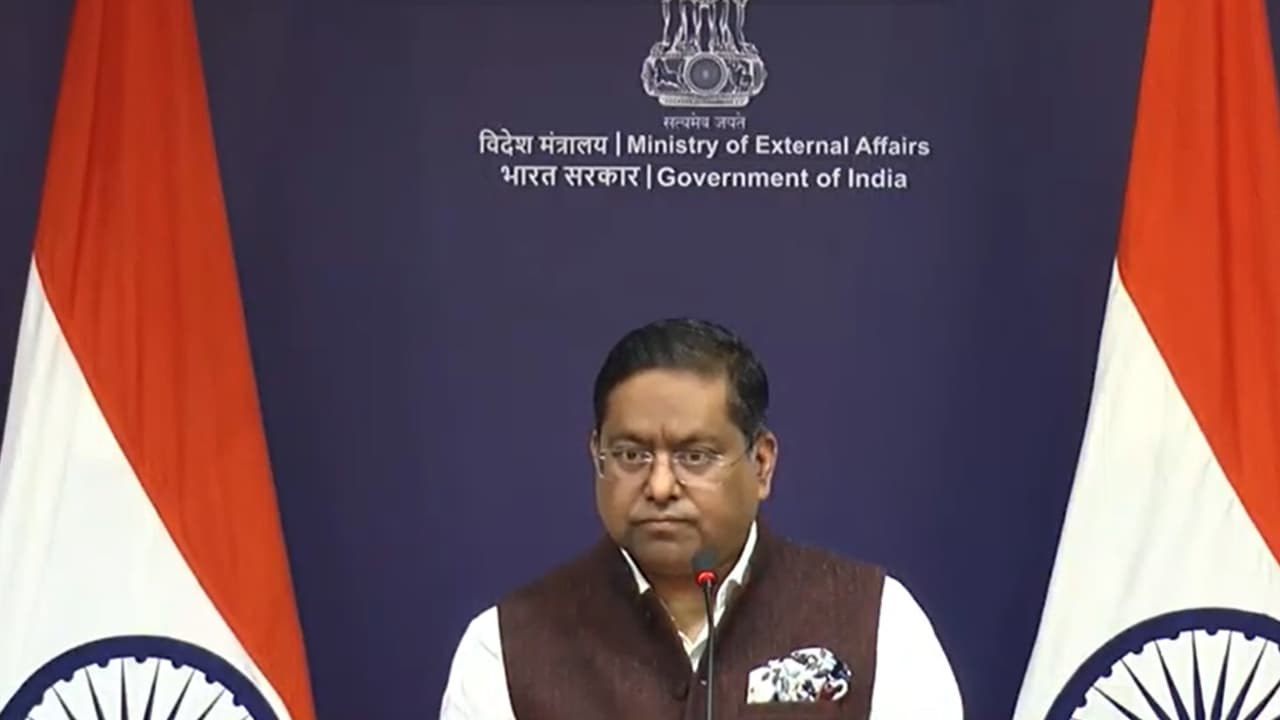
India demands safe passage through the Strait of Hormuz amid regional instability and continues diplomatic efforts to provide consular support and legal assistance for Captain Ajay Pant, currently held in custody in the United Kingdom.
India Calls for Safe Passage in Strait of Hormuz
India on Tuesday reiterated its call for safe, free, and unimpeded navigation through the Strait of Hormuz amid ongoing regional tensions and risks to civilian shipping, as well as pledged full support for detained Indian Merchant Navy Captain Ajay Pant, who is in judicial custody in the United Kingdom. Addressing a biweekly media briefing here, the Ministry of External Affairs spokesperson Randhir Jaiswal reaffirmed India's firm stance on maintaining open global sea lanes in the Strait of Hormuz, while outlining ongoing diplomatic interventions for the legal release and well-being of Ajay Pant.
India's High Commission in London and the MEA in New Delhi have maintained continuous diplomatic engagement with British authorities, legal counsel, and the family of the shipmaster to ensure his safety and fair legal representation.
Consular Assistance for Captain Ajay Pant
Detailing the consular assistance extended to Captain Pant, Randhir Jaiswal said, "We have been in touch with the lawyers of Captain Pant as well as his family. The High Commission has paid several visits to Captain Pant to check on his well-being. We have also facilitated the visit of his family members, his wife in particular. The last such visit by his wife took place on 9th of November. We have been in touch with the UK High Commission here as well as the UK Foreign Office in this particular matter. We are trying to do our best for his safety and well-being..."
Ajay Pant has been held in the United Kingdom following the June 14 interception of the oil tanker MV Smyrtos by British forces over alleged breaches of Russian oil sanctions. The MEA and the Indian High Commission in London are in regular contact with Captain Pant, his legal counsel, his family, the UK Foreign Office, and the UK High Commission. Consular visits have been facilitated, including a visit by his wife on November 9, as authorities work to ensure his safety and legal representation ahead of his scheduled trial.
MEA spokesperson Randhir Jaiswal, in August, said that the matter was legal in nature but confirmed that the Indian High Commission in London was providing consular assistance to Pant and had also raised the issue with British authorities. "I would say that this is a legal matter, but we are closely following this particular issue. We continue to be in touch with the lawyers of Captain Ajay Pant, as well as his family. Our High Commission paid a consular visit to him on 24th June to enquire about his well-being. We are also in touch with the UK High Commission here on this particular matter as well as with the UK Foreign Office so as to ensure the well-being of Captain Pant. I shall keep you updated on this particular issue," Jaiswal said.
According to information shared earlier by the Uttarakhand Chief Minister's Office on June 25, Pant, a resident of Uttarakhand, is currently lodged in judicial custody at HMP Winchester. The High Commission has also taken up the matter with the UK's Foreign, Commonwealth and Development Office (FCDO), seeking to ensure that Pant receives timely consular assistance and that his safety, health and legal rights are protected.
Maritime Security and Global Trade
Meanwhile, amid rising regional instability threatening vital energy and trade chokepoints in West Asia, India has called for restraint and strict adherence to international maritime law to protect merchant vessels and Indian crew members traversing critical transit corridors. Addressing concerns over threats to commercial vessels operating in the Strait of Hormuz, MEA Spokesperson Randhir Jaiswal said, "We continue to call for safe, free and unimpeded navigation through the Strait of Hormuz. We are in touch with all concerned parties to avoid attacks on civilian shipping and seafarers, including Indian vessels which are under the Indian flag as well as Indian seafarers. So that is where we are on the issue of the Strait of Hormuz."
The Strait of Hormuz is a global energy chokepoint through which approximately 20% of global petroleum passes. India depends heavily on this corridor for crude imports, and Indian seafarers constitute nearly 10–12% of the global maritime workforce. New Delhi is actively communicating with all concerned parties to protect civilian shipping, seafarers, and Indian-flagged vessels. (ANI)
(Except for the headline, this story has not been edited by Asianet Newsable English staff and is published from a syndicated feed.)









