
As geopolitical tensions threaten critical shipping lanes, policymakers are increasingly examining an alternative trade corridor that could reshape energy logistics, strengthen supply resilience and alter long-term strategic planning.
Growing instability around key maritime chokepoints is renewing attention on India's energy security and driving interest in alternative trade routes capable of reducing exposure to geopolitical disruptions.
The latest concerns stem from tensions affecting the Strait of Hormuz, along with attacks linked to the Red Sea and Bab-el-Mandeb corridor. These waterways remain central to global energy flows and are particularly important for India, one of the world's largest energy-importing nations.
India is currently the world's third-largest energy consumer and second-largest energy importer. The country imports roughly one-third of its overall energy requirements, including the vast majority of its crude oil demand. Oil import dependency stands at around 85-90 per cent, while liquefied natural gas and liquefied petroleum gas imports also account for substantial portions of domestic consumption.
This import structure creates a heavy dependence on maritime transportation networks. The challenge is compounded by the concentration of energy infrastructure on India's western coastline.
A majority of crude oil imports, LNG imports and refining capacity are located along the west coast, making the country's energy system heavily dependent on shipping routes through the Arabian Sea and vulnerable chokepoints such as Hormuz and Bab-el-Mandeb.
The concentration also creates strategic concerns because key refining facilities, including Jamnagar and Vadinar, account for a significant share of national refining output.
At the same time, Russia has become a major energy supplier for India.
Since 2023, Russian crude has accounted for roughly 30-40 per cent of India's total oil imports. In 2026, imports from Russia reached even higher levels during some months, reinforcing Moscow's position as a critical supplier.
However, while supply sources have diversified, transportation routes have not.
Much of the Russian oil reaching India still travels from Baltic ports through the Suez Canal before arriving at western Indian ports, leaving shipments exposed to many of the same geopolitical risks affecting other energy flows.
Eastern Maritime Corridor Gains Strategic Importance
Against this backdrop, policymakers are paying closer attention to the Chennai-Vladivostok Maritime Corridor, also known as the Eastern Maritime Corridor (EMC).
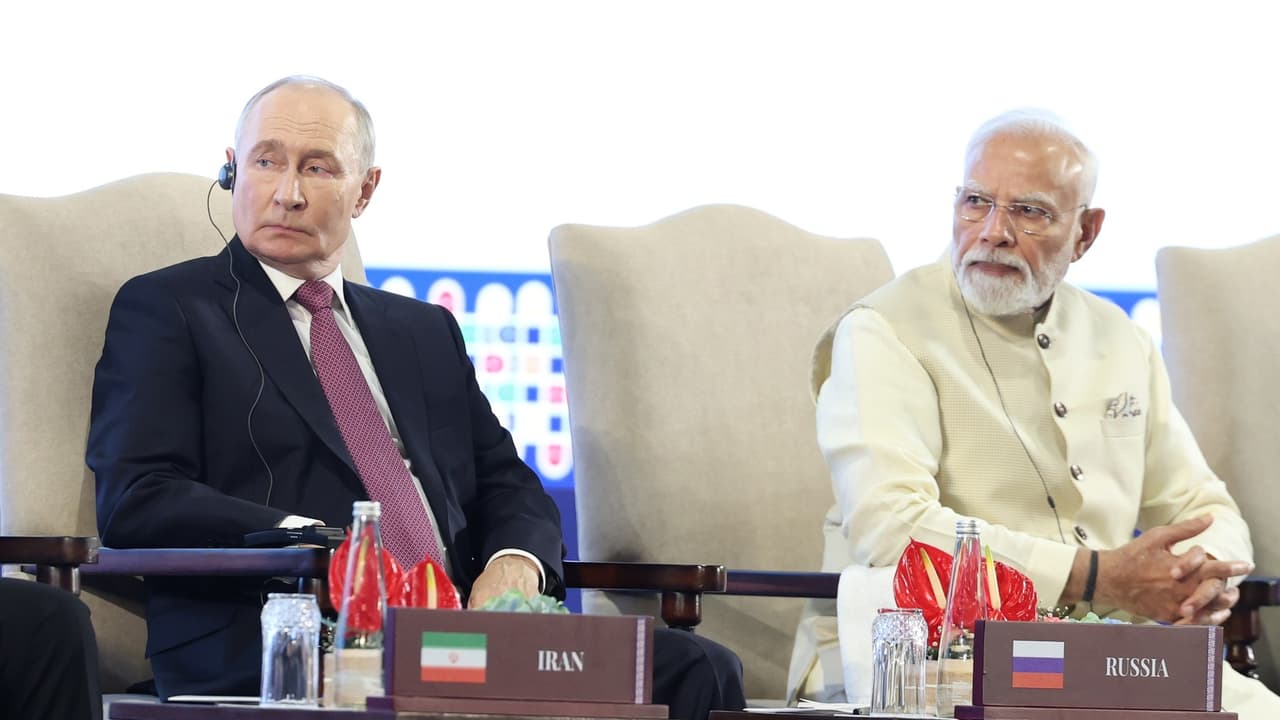
First announced in 2019 by Prime Minister Narendra Modi and Russian President Vladimir Putin, the corridor forms part of broader efforts to strengthen connectivity between India and Russia's Far East.
The route links Chennai with Vladivostok and offers significantly shorter travel distances compared with traditional routes connecting India to European Russia through the Suez Canal.
Supporters argue that the corridor could help diversify India's logistics options while reducing dependence on vulnerable maritime chokepoints. The route is also viewed as a gateway to Russia's Far East and Arctic regions, which contain substantial reserves of oil, natural gas, minerals and rare earth elements.
The potential benefits extend beyond energy security.
Officials from both countries have linked the corridor to broader efforts aimed at increasing bilateral trade to $100 billion annually by 2030. Reduced transportation distances and the avoidance of canal transit charges could also lower shipping costs significantly.
Despite these advantages, major obstacles remain.
The biggest challenge is the absence of a regular direct liner shipping network between India and Russia's Far East. Cargo currently moves through the corridor, but many shipments still rely on indirect transhipment routes through third-country ports, creating delays and uncertainty.
This lack of predictable scheduling discourages exporters and shipping companies alike, creating a cycle where demand and service availability struggle to grow simultaneously.
Industry observers argue that overcoming these bottlenecks will require coordinated action, including shipping partnerships, cargo commitments, infrastructure upgrades and logistical incentives.
