New footage shows IS-linked militants attacking Niamey airport, roaming the tarmac, firing weapons and destroying aircraft, including a helicopter and drone. The assault triggered international alarm and a US evacuation of non-essential staff.
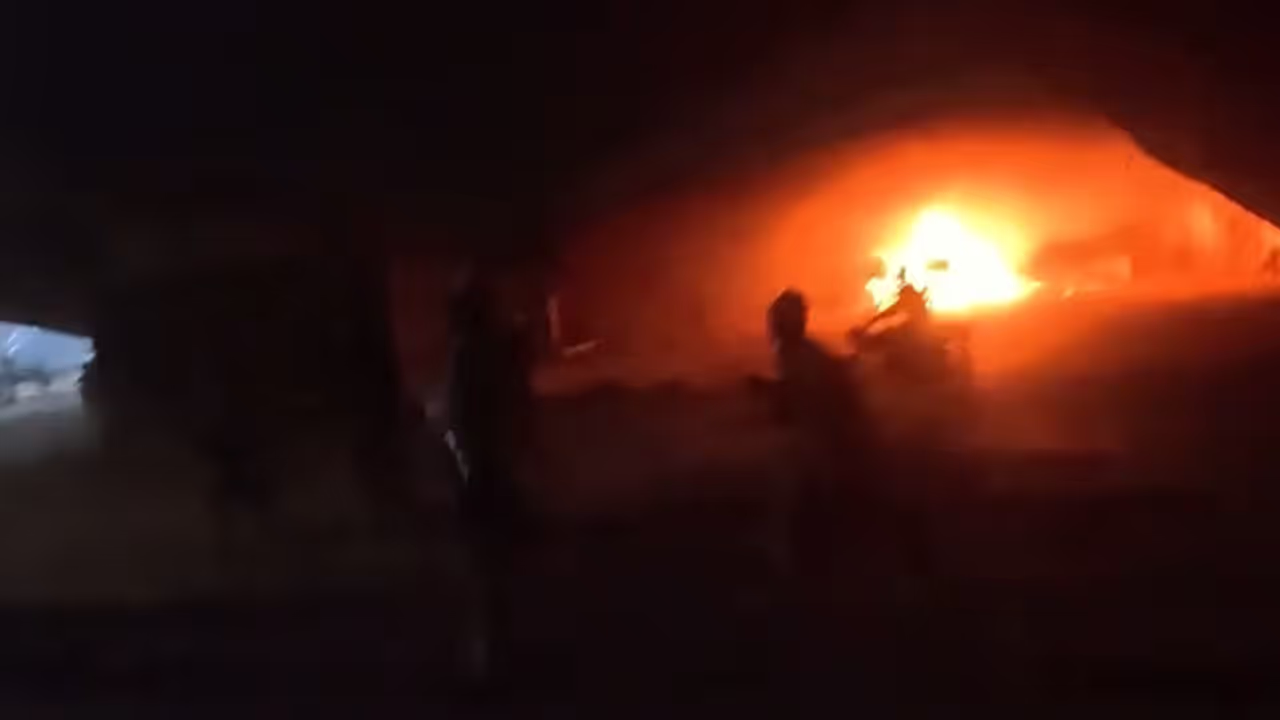
Newly released footage shows Islamic State-linked militants roaming freely among aircraft on the tarmac at Niger’s main international airport, firing weapons and setting off explosions during a coordinated assault that shook the capital, Niamey.
The disturbing visuals, distributed by SITE Intelligence Group and analysed by security experts, depict armed fighters moving near passenger planes and detonating explosives beside an unmanned aerial vehicle and a helicopter that later burned fiercely.
The attack, which unfolded late one evening and continued into the early morning hours, has raised significant international alarm over Niger’s security situation. As a result of the incident, the United States ordered non-essential diplomatic personnel and family members to leave the West African nation, citing heightened risk to foreign staff.
Authorities in Niger reported killing 20 of the attackers and injuring 11, though the Islamic State affiliate responsible did not disclose casualty figures. The assault also inflicted minor damage on civilian aircraft belonging to ASKY Airlines and Air Cote d’Ivoire, although no passengers or crew were harmed because the incident occurred outside regular airport operations.
Related Articles

In the wake of the violence, Niger’s military leader accused the governments of France, Benin, and Ivory Coast of sponsoring the attack, allegations those countries have denied or condemned.
The assault marks a stark reminder of the persistent threat posed by jihadist groups in the Sahel region, where Niger, Mali and Burkina Faso continue to grapple with insurgencies tied to al Qaeda and Islamic State affiliates. The attack not only jeopardises regional stability but also underscores the challenges facing global efforts to counter violent extremism in one of Africa’s most volatile zones.