A turbulent Middle East enters 2026 with fragile peace attempts, looming conflicts, and uncertain leadership shifts.
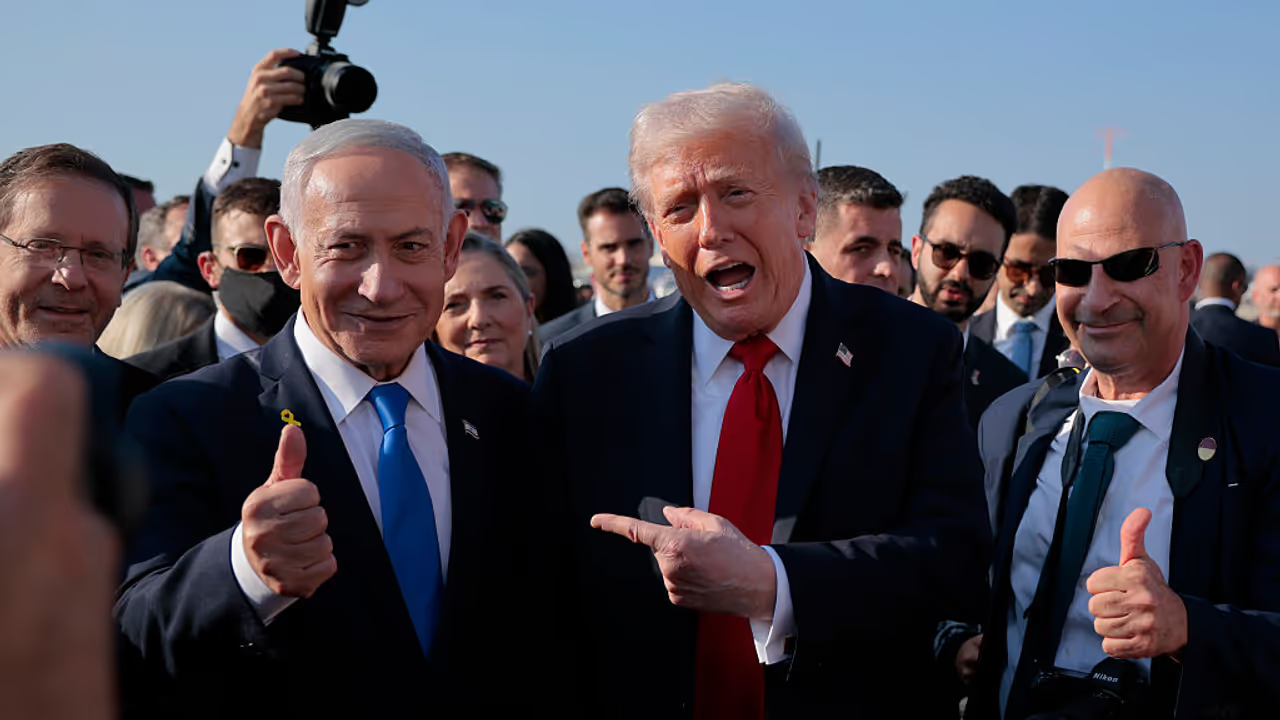
The Middle East enters 2026 at a decisive juncture, balancing fragile peace efforts against the risk of renewed conflict. Recent years have validated pessimistic forecasts, yet glimpses of stability have emerged. Donald Trump’s peace initiative brought temporary relief to Gaza, strikes on Iran avoided wider war, and Syria has not collapsed into full sectarian conflict.
Best‑Case Scenario
Optimists envision progress beginning in Gaza. A shaky truce holds, with Trump continuing to back his plan. Arab and Muslim states, reassured by the stability, commit peacekeeping troops to form an International Stabilisation Force. Islamist factions disarm to enable reconstruction, funded by Gulf states. Leadership changes follow, with Mahmoud Abbas replaced by Marwan Barghouti, who begins reforming the Palestinian Authority. Israel allows Gaza’s administration to take responsibility.
Related Articles

In Israel, opposition parties unite against Prime Minister Binyamin Netanyahu’s coalition. Elections deliver a broad, moderate government, sidelining far‑right. The new leadership signs non‑aggression pacts with Syria and Lebanon, while committing to a peace process with Palestinians. These steps open the door to normalisation with Saudi Arabia.
Elsewhere, Iran undergoes dramatic change. The death of Supreme Leader Ayatollah Ali Khamenei ushers in Hassan Rouhani, a reformist successor. He initiates modernisation, relaxes religious restrictions, and releases political prisoners. Rouhani agrees to dismantle Iran’s nuclear programme in exchange for normalised ties with the United States. Trump, in this scenario, accepts a Nobel Peace Prize for his role.
Worst‑Case Scenario
Pessimists warn of collapse. Support for a Palestinian state has waned, with only a fifth of Israelis backing it and most Palestinians opposing Hamas’s disarmament. Hamas refuses to surrender weapons, retaining control of Gaza and recommitting to armed resistance. Without pledges of peacekeeping troops, Israel resumes military operations. Trump, frustrated, withdraws attention, while refugees flee to Egypt, prompting remilitarisation of the Sinai.
Netanyahu exploits the distraction to launch further strikes on Iran. This time Tehran retaliates with missiles against Bahrain and the UAE. The Abraham Accords unravel as Gulf states suspend ties with Israel. Khamenei is killed during the conflict, replaced by a hardliner from the Revolutionary Guard Corps who secretly pursues nuclear weapons. Syria faces renewed sectarian violence, with Kurds and Druze attempting secession. Netanyahu postpones elections, deepens reliance on far‑right allies, and cracks down in the West Bank, sparking a new intifada.
Most Likely Outcome
Between these extremes lies a more probable scenario. Gaza avoids full‑scale war but reconstruction stalls. No peacekeeping force materialises, and sporadic clashes persist. A technocratic government rules in name only, while Israel retains partial control of Gaza, Lebanon, and Syria. Refugees trickle into Egypt, but most Gazans remain trapped.
Israel’s elections end in stalemate. Netanyahu lacks a majority yet continues as caretaker, with the opposition unable to form a coalition. A minority government signs a non‑aggression pact with Syria, but fails to reach Lebanon or Saudi Arabia. Nuclear talks between Iran and the United States remain inconclusive, with Khamenei overseeing half‑hearted negotiations. Israel presses Trump to strike Iran again, but he declines. Outlook For 2026
The year ahead will not deliver sweeping breakthroughs, nor is it likely to descend into the worst chaos. The region remains fragile, with peace efforts undermined by mistrust and political deadlock. Yet amid uncertainty, voices continue to call for reconciliation.