Iran’s ambassador to India, Mohammad Fathali, denied reports that Indian nationals were arrested during protests in Iran. Calling the claims “totally false,” he urged reliance on credible sources and reassured families and student groups in India.
In the midst of widespread anti-government protests sweeping across Iran, reports circulating on social media claiming that Indian nationals had been arrested during the unrest have been firmly denied by Iran’s ambassador to India, Mohammad Fathali.
The clarification comes amid heightened anxiety in New Delhi and among families of Indian students in Iran, with misinformation on platforms such as X (formerly Twitter) prompting diplomatic rebuttals and fact-checking efforts from multiple news outlets.
The online claims suggested that Iranian police had detained a group comprising “10 Afghan and 6 Indian nationals, along with their Iranian accomplices” in connection with the protests. However, Ambassador Fathali described these reports as “totally false” and urged the public to rely on verified and credible sources for updates on developments in Iran.
Related Articles

He wrote on X, “The news circulated on some foreign X accounts about Iran’s developments, is totally false. I request all interested people to get their news from the reliable sources.”
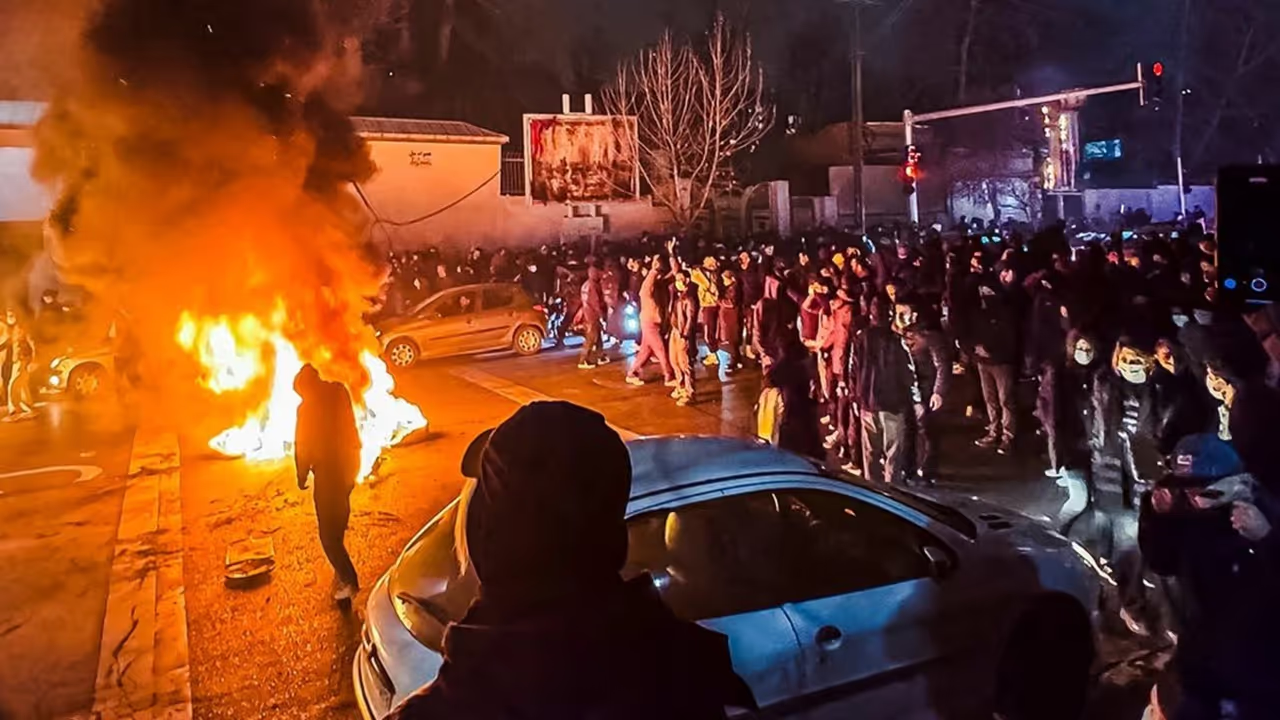
Fathali’s statement reflects ongoing efforts by Tehran to counter misinformation about the rapidly evolving situation on the ground as protests intensify. The unrest, which began in late December, has triggered nationwide demonstrations over economic grievances and political discontent, prompting a forceful response by Iranian security forces.
According to human rights groups such as the US-based Human Rights Activists News Agency (HRANA), over 500 protesters have been killed and more than 10,000 detained during the crackdown — although Iranian authorities have not released official casualty figures.
The denial of Indian arrests comes against the backdrop of growing international scrutiny of Iran’s handling of the unrest, as well as deep global concern for the safety of foreign nationals residing in the country.
In India, families of medical students studying in Iran had expressed unease after the social media claims spread rapidly online. Responding to these concerns, two Indian student organisations -- the All India Medical Students Association (AIMSA) and the Federation of All India Medical Associations (FAIMA) -- echoed the reassurance that Indian students in Iran were safe and that there was “no need to panic.”
They stated that students had been contacting them directly to confirm their wellbeing, and that the Indian Embassy in Tehran was in constant communication with local authorities.
The misinformation debate underscores the challenges in reporting and understanding developments in a country where internet access and communication have been intermittently restricted. With phone lines and online services disrupted in parts of Iran, accurate real-time information from inside the country has become difficult to verify independently, leaving a reliance on secondary sources and activist networks.
Iran’s diplomatic pushback against the arrest claims also highlights broader sensitivities in bilateral relations between Tehran and New Delhi. India has a significant number of students and expatriates living in Iran, many of whom have been caught up in concerns over personal safety amid rising tensions.
The ambassador’s call for calm and reliance on credible reporting was clearly intended to ease anxiety among Indian families and prevent the spread of unverified narratives that could strain diplomatic ties.
As protests continue to draw attention worldwide, the Iranian government has repeatedly accused foreign media and overseas actors of spreading misleading or exaggerated information about events within the country. This pattern of dispute over reporting accuracy reflects broader controversies in how the Iranian protests are covered internationally, with Tehran urging audiences to cross-check news with official or established sources.
In summary, despite social media claims that Indian and Afghan nationals had been detained amid the unrest, Iran’s ambassador to India has unequivocally rejected those reports as false, urged caution in consuming information from unverified outlets, and confirmed that Indian students are safe. The incident highlights the complex media environment surrounding the Iran protests, where misinformation and diplomatic reactions are unfolding alongside the deeper, ongoing political crisis in the Islamic republic.