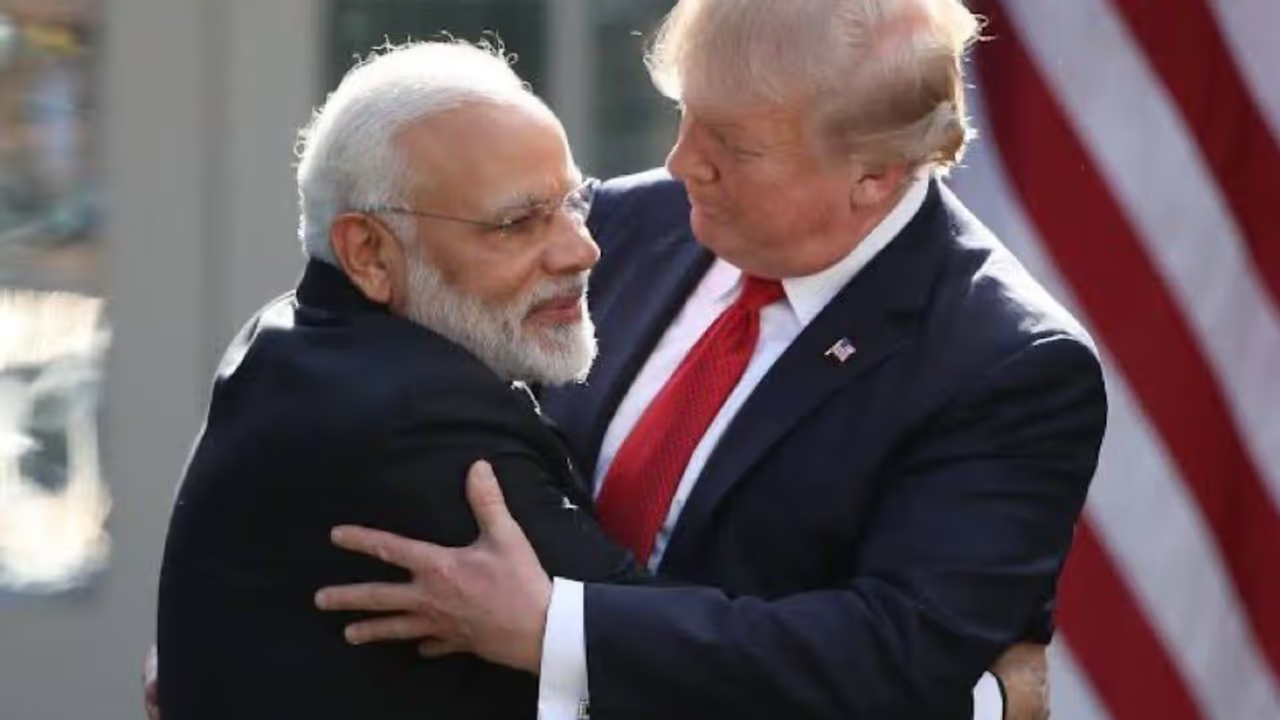
To advance a trade deal with India, the US is easing its stance on long-standing irritants, using softer language on tariffs, market access and agriculture to accommodate India’s domestic sensitivities.
As India and the United States move closer to finalising a long-anticipated trade agreement, Washington appears to be quietly smoothing over long-standing irritants that have complicated bilateral negotiations for years. Recent revisions to official US trade communication, including changes to a government fact sheet, point to a more calibrated and pragmatic approach under former president Donald Trump as both sides prepare the ground for a deal.
At the centre of the shift is a noticeable softening of language around tariffs, market access and agricultural commitments — areas that have historically triggered friction between the two economies. While public messaging has projected confidence about a breakthrough, the fine print suggests the US is choosing flexibility over confrontation to keep talks on track.
A Subtle Rewrite With Bigger Signals
One of the most telling developments has been the revision of a US trade fact sheet shortly after its initial release. References to specific Indian commitments, particularly in agriculture and pulses, were either diluted or removed altogether. Words implying binding obligations were replaced with more tentative phrasing, signalling intent rather than enforcement.
Related Articles

This recalibration has drawn attention because it reflects an understanding of India’s domestic sensitivities, especially around farming and food security. Agriculture has long been a red line for New Delhi, and previous trade discussions faltered when Washington pushed for rapid and broad-based concessions.
By tempering its language, the US appears to be signalling that it is willing to prioritise momentum over rigid demands.
Managing Tariff Tensions
Tariffs remain one of the most politically charged aspects of India-US trade relations. Over the years, both sides have imposed retaliatory duties, particularly on steel, aluminium and agricultural goods. While recent announcements have hinted at tariff reductions, closer scrutiny suggests these will be selective, phased and subject to further negotiation.
Rather than announcing sweeping cuts, the current framework outlines a process for gradual easing of duties, giving both governments room to manage domestic political pressures. For India, this means avoiding sudden exposure for sensitive sectors. For the US, it allows room to claim progress without conceding leverage outright.
This approach reflects a broader strategic calculation: removing trade irritants incrementally may be more effective than attempting a grand bargain that risks collapse under political scrutiny.
Agriculture and Pulses: A Careful Balancing Act
Few issues have tested India-US trade talks as persistently as agriculture. American exporters have long sought greater access to India’s vast market, while Indian policymakers have resisted measures that could disrupt rural livelihoods.
The revised US fact sheet’s toned-down references to agricultural purchases underscore this balancing act. Rather than firm commitments, the language now suggests exploratory engagement, leaving space for further talks on volumes, pricing and timelines.
For New Delhi, this shift reduces the perception of external pressure. For Washington, it keeps the door open to future gains without jeopardising the broader deal.
Strategic Timing Ahead of a Deal
The quiet removal of trade irritants comes at a strategically important moment. Both countries see value in projecting progress — economically and geopolitically. India is seeking to diversify trade partnerships amid global supply-chain realignments, while the US views India as a key partner in balancing influence in the Indo-Pacific.
Against this backdrop, smoothing over contentious details before signing helps ensure that negotiations are not derailed by domestic backlash or diplomatic missteps.
The emphasis, for now, appears to be on building trust rather than extracting immediate concessions.
Optics Versus Outcomes
Despite the conciliatory tone, officials on both sides have been careful not to oversell the agreement as a finished product. What is emerging is less a final pact and more a framework that sets the direction for future negotiations.
This distinction matters. By managing expectations, both governments retain flexibility while claiming diplomatic success. It also reflects the reality that trade deals between large economies are rarely resolved in a single stroke.
What Lies Ahead
The real test will come in implementation. Phased tariff adjustments, sector-specific negotiations and continued dialogue on agriculture will determine whether the current goodwill translates into lasting gains.
For now, the US’s decision to quietly ease pressure points suggests a strategic recalibration — one that recognises India’s sensitivities while keeping the larger trade objective intact. Whether this approach delivers a durable agreement will depend on how both sides navigate the unresolved details in the months ahead.
What is clear is that, this time, progress is being driven less by bold announcements and more by careful edits, softer language and incremental compromises — a reminder that in diplomacy, what is left unsaid can matter as much as what is declared.