Analysts say authorities prioritized rapid hiring over thorough vetting, leaving security institutions vulnerable to extremist infiltration. The incident, blamed on the Islamic State, raises concerns about radical elements within the ranks.
A deadly attack on US troops by a member of Syria's security forces has exposed flaws in the new authorities' recruitment drive, which appears poorly designed to filter out extremists, analysts said.
The attack, which Syria and the United States blamed on the Islamic State group, put authorities in a tough spot and raised the question: have they done enough to root out radical elements from within their own ranks?
What flaws?
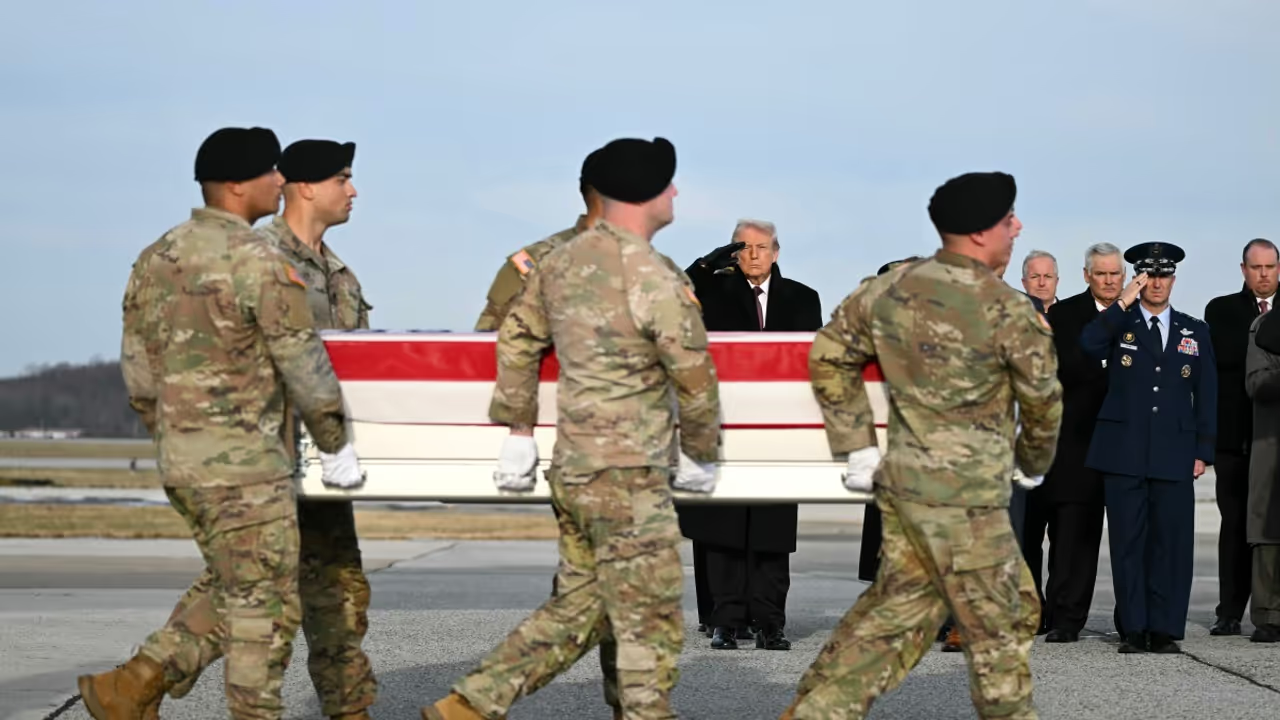
In the first such incident since the overthrow of longtime ruler Bashar al-Assad in December last year, two US troops and an American interpreter were killed in an attack in central Syria's Palmyra.
Related Articles

Interior ministry spokesman Noureddine al-Baba said the perpetrator was a security forces member who was due to be fired for his "extremist Islamist ideas".
He was among more than 5,000 new recruits who joined the security forces in the Syrian desert in recent months, Baba said.
IS, which has not claimed the attack, once controlled the desert areas of Palmyra before its defeat in 2019.
Nanar Hawach, senior Syria analyst at the International Crisis Group, said in a report that "the attack from within Syria's own ranks underscores one of the state's critical vulnerabilities".
After Assad's ouster, the new authorities dissolved security and military institutions and began integrating armed factions into the defence ministry and forming new security forces.
They have also joined the US-led coalition against IS.
Jerome Drevon, a specialist in Islamist militancy at the International Crisis Group, told AFP that authorities had to choose between a time-consuming but strong vetting process for new security personnel, or a shorter process "to recruit more people".
They chose the second option, he said, adding that some recruits may be "more radical, willing to fight US troops, because they oppose the government's decision to reach out to Western countries".
To Hawach, what is concerning is that the attacker may not be the only member with extremist ideas.
"Because authorities have worked so quickly to consolidate disparate armed factions into state structures, vetting, integration and oversight have been uneven, leaving Syria’s reconstituted security institutions vulnerable to infiltration," he said.
President Sharaa's former Islamist group Hayat Tahrir al-Sham (HTS), which has also disbanded, had roots in the Al-Qaeda jihadist network, which fought IS in the past.
A European security source, requesting anonymity, noted some hardline former HTS fighters may be opposed to the shift from armed struggle against Assad to state politics.
Danger from IS?
The source said IS jihadists have come out of the desert since Assad's fall and "re-established themselves, particularly in northwest Syria and Damascus. They are pursuing the goal of destabilising the authorities."
Drevon said there is a "real risk" from IS regarding "how they try to spread in cities, try to recruit, try to exploit the bad economic situation".
There are also "more and more attacks claimed by the group", he added.
Syrian officials told AFP that Syrian forces and the US-led coalition had launched an operation against IS sleeper cells in the desert since the attack, while 11 security personnel were brought in for questioning.
Drevon said the government needed to "increase its efforts in doing counterintelligence", improve monitoring of new recruits and ensure "that people with more radical ideas are expelled".
"They can calm it down, they can limit the consequences, as long as it does not happen again," he added.
Ties with the West?
US President Donald Trump vowed "very serious retaliation" after the attack, which he said occurred "in a very dangerous part of Syria, that is not fully controlled by" the new authorities.
The attack has heightened pressure on Sharaa, who has sought to reset ties with the West in order to end Syria's isolation, build trust and relaunch the economy.
"The incident may accelerate discussions around scaling back US troop presence in Syria" and constraining counter-IS operations "as assets are redirected to force protection", said Hawach from the International Crisis group.
It could also prompt the US "to consider greater emphasis on working with the Syrian Democratic Forces in the country's northeast, which has been the US's local partner for the past decade".
The Kurdish-led SDF spearheaded the offensive that ultimately led to IS's defeat in Syria.
The Kurdish administration has committed to integrating its institutions into the new central government, but the process has stalled.
A Western diplomatic source told AFP that the attack could prompt the Syrian authorities to join forces with the Kurds against IS.
That, however, would be contingent on a "willingness on both sides, and if countries support that", the source added.
(Except for the headline, this story has not been edited by Asianet Newsable English staff and is published from a syndicated feed)