
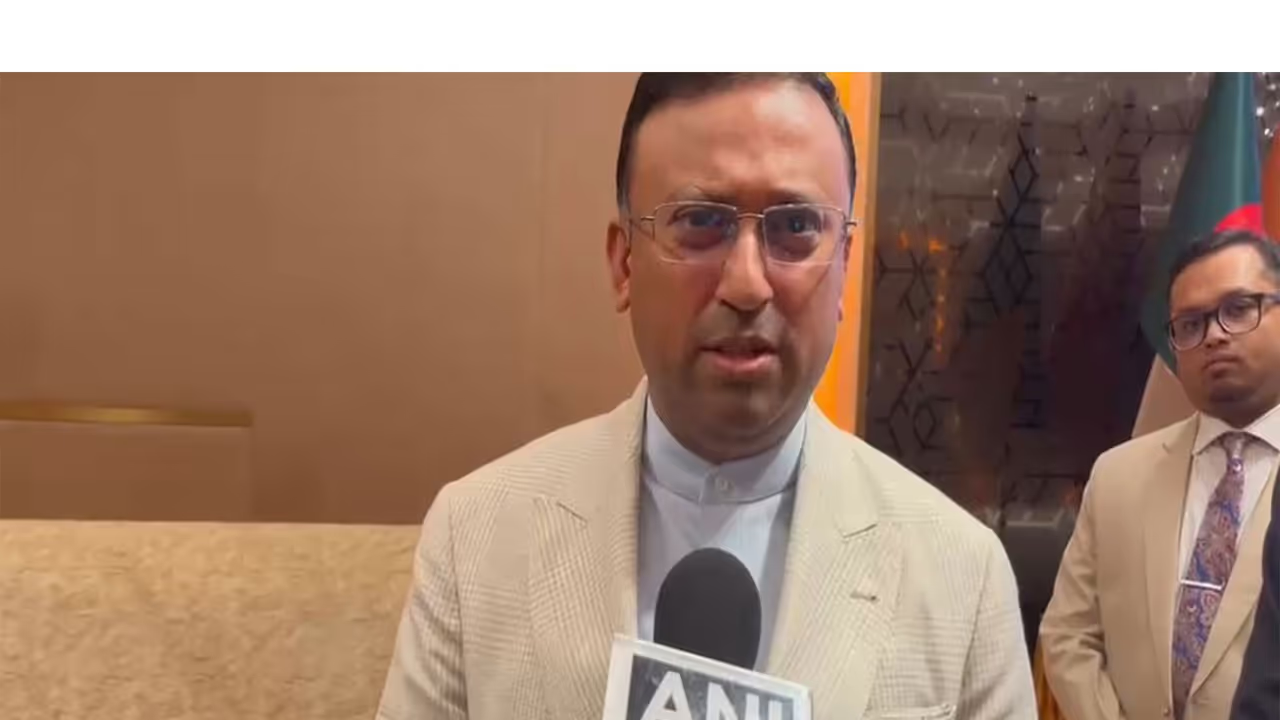
Bangladesh appoints Junior Foreign Minister Humaiun Kobir to lead its delegation at the 2026 Commonwealth Heads of Government Meeting while seeking diplomatic solutions to water-sharing treaties with India.
Bangladesh Appoints Acting Foreign Minister for CHOGM
The government of Bangladesh has appointed Junior Foreign Minister Humaiun Kobir as acting foreign minister to lead Bangladesh’s delegation at the Commonwealth Heads of Government Meeting. "This is to state that Mr Humaiun Kobir, State Minister-1, Ministry of Foreign Affairs, Bangladesh, is conferred with the full authority of a Cabinet Minister as per clause 4 (iii) of the Rules of Business 1996 for the purpose of leading the Bangladesh delegation at the Commonwealth Heads of Government Meeting (CHOGM 2026) to discharge the duties of the Foreign Minister as the acting Foreign Minister", the Bangladesh government said in a notification on Sunday.
Since the election of Khalilur Rahman as President of the UN General Assembly, Humaiun Kobir has been serving as Bangladesh’s state minister for foreign affairs-1.
Water Sharing and Diplomatic Relations
Earlier this month, Bangladesh expressed optimism about resolving the issues related to water sharing with India through dialogue and diplomacy. In this regard, Bangladesh also hopes that international law will support this process. "We hope that through discussion and dialogue, through diplomacy, you know, these things will hopefully be resolved. There is also the position of international law on, you know, water sharing, etc.", Humaiun Kobir, Bangladesh's state minister for foreign affairs, told the reporters on the sidelines of a seminar in Dhaka.
Status of River Treaties
There are 54 common rivers between Bangladesh and India, but only the Ganges River has a 30-year water-sharing treaty. This agreement’s term is set to expire in December 2026. So, there’s a need to either renew or negotiate a new treaty. "The elected government of Bangladesh will seek what is best for Bangladesh and will not seek any less. It will seek what is acceptable from India, and we have the position of international law on those matters," Kobir said at the seminar, replying to a question from the audience. "We have the will of the people also behind us on the negotiation, okay?... Bangladesh Joint River Commission, Joint Water Commission, we asked for meetings, that our counterparts hear and start a dialogue with... so... we need to hear, and I believe we will hear soon. And negotiations better pave the way for the next round of renewing the treaty," he added.
India’s Diplomatic Stance
His remarks come as earlier on Wednesday, India reaffirmed its commitment to maintaining stable and collaborative neighbourly relations, emphasising that its diplomatic engagement with Bangladesh remains rooted in a positive, people-centric vision aimed at mutual growth and regional development. Addressing a press briefing on bilateral ties and regional cooperation, Ministry of External Affairs Spokesperson Randhir Jaiswal outlined New Delhi's constructive framework for diplomatic discussions with Dhaka. Jaiswal underscored that India continues to prioritise practical collaboration and shared economic progress in its high-level dialogues with Bangladeshi authorities, focusing on initiatives that directly benefit the citizens of both nations. "Our approach towards Bangladesh is to have positive, constructive, and forward-looking engagement with a people-centric focus for mutual growth and prosperity," Jaiswal stated. "We remain focused on this objective during our discussions with Bangladesh authorities." The Spokesperson's remarks reflected India's steady strategic posture in the neighbourhood, prioritising sustained economic integration, infrastructural connectivity, and diplomatic stability across shared borders. (ANI)
(Except for the headline, this story has not been edited by Asianetnews Editorial staff and is published from a syndicated feed.)