

Consumer ETFs recovered after several weeks of losses, led by gains in Planet Fitness, MercadoLibre and Genius Sports. Meanwhile, weak delivery figures and lower price targets pressured Lucid, Polestar and Levi Strauss.
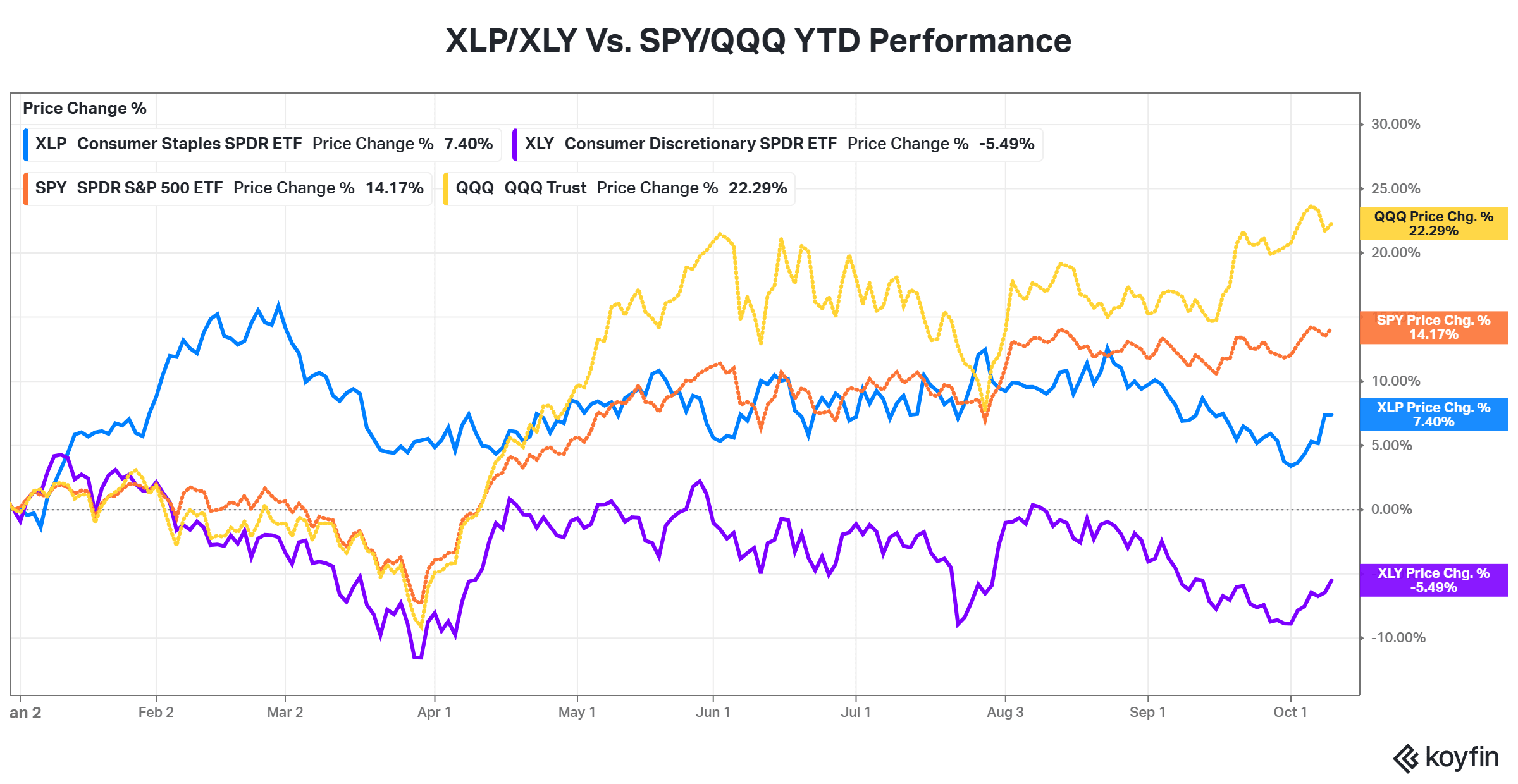
- XLP rose 3.6%, ending a seven-week losing streak, while XLY gained 2.55%, breaking an eight-week slide.
- Planet Fitness climbed13% as UBS said investor sentiment looks “far worse” than fundamentals.
- Lucid delivered 3,806 vehicles in Q3, well below the 5,900 analysts expected.
Consumer stocks finally caught a break last week, with both major sector ETFs snapping long losing streaks. Planet Fitness (PLNT), MercadoLibre (MELI) and Genius Sports (GENI) led the advance on analyst support and institutional buying. Polestar Automotive (PSNY), Lucid Group (LCID) and Levi Strauss (LEVI) declined as earnings and delivery reports disappointed.
During the week of Oct. 5 to Oct. 9, the Consumer Staples Select Sector SPDR Fund (XLP) rose 3.6%, reversing seven straight weeks of losses. The Consumer Discretionary Select Sector SPDR Fund (XLY) gained 2.55%, ending an eight-week skid.
Both funds outpaced the broader market. The SPDR S&P 500 ETF Trust (SPY) advanced 1.16%, while the tech-heavy Invesco QQQ Trust (QQQ) edged up 0.23%.
Planet Fitness, MercadoLibre, Genius Sports Among Leading Gainers
Planet Fitness stock rose 13% and posted its best week since May after UBS said investor sentiment looks “far worse” than the company’s fundamentals heading into its third-quarter earnings report. The firm said that against a “deteriorating sentiment backdrop,” the fitness chain’s fundamentals have actually improved. UBS data show strong member growth in September and continued strength in early October.
The analyst called the risk from agentic AI “sensible but manageable in practice” and said Planet Fitness’ pricing promotion has been a success. UBS maintained a ‘Buy’ rating and an $80 price target.
MercadoLibre stock rallied over 11% to its best week in over two years as investors reacted to the first round of Brazil’s presidential election. Traders are weighing how potential shifts in regulation and economic conditions could affect the company’s largest market, and positioning ahead of anticipated policy impacts.
Susquehanna raised its price target to $2,500 from $2,400 and kept a ‘Positive’ rating. The firm said that although MercadoLibre continues to invest in developing the market for its products and services, changes in its consumer credit book may begin to lift consolidated EBIT margins. Those margins have fallen year-on-year every quarter since 2023.
Genius Sports stock also advanced over 10% during the week as Cathie Wood’s ARK Investment kept buying. The firm picked up 425,800 shares on Oct. 6 and another 347,800 shares on Oct. 8.
Polestar, Lucid, Levi Strauss Decline
Polestar stock posted a weekly decline of 15% as Barclays cut its price target to $5 from $15 and kept an ‘Underweight’ rating. The cut was part of a Q3 earnings preview for the autos and mobility group. The analyst said macro challenges in 2027 reinforce a preference for U.S. exposure.
Lucid Group produced 2,954 vehicles and delivered 3,806 in Q3. Deliveries exceeded production as the company reduced its existing inventory as part of a plan to improve cash flow by $1.4 billion in 2026.
The numbers still missed. FactSet estimates stood at 3,497 for production and 5,900 for deliveries. StoneX, which has a ‘Hold’ rating, said the “substantial delivery shortfall underscores the challenge of improving sell-through.” BNP Paribas analyst James Picariello called the report “lackluster” and said Lucid faces a “long and difficult journey” to improve operations and drive demand. Lucid stock fell over 8% during the week.
Levi Strauss stock declined nearly 6% last week after the denim maker raised its profit outlook, largely on tariff refunds, but trimmed its revenue guidance. Adjusted full-year EPS is now expected at $1.54 to $1.56, up from $1.46 to $1.52. That’s above the $1.49 analysts expected, according to Fiscal.ai data. Net revenue growth guidance was lowered to 7%, the bottom of the prior 7% to 7.5% range, while organic growth is expected at 6%.
In Q3, tariff refunds helped boost Levi Strauss’ operating margin by 4.9 percentage points to 13.8%. U.S. revenue fell 1%, while comparable sales from its own stores and website were nearly unchanged. CEO Michelle Gass said direct sales fell below expectations, and the company has already started taking steps to improve results.
Raymond James cut its price target to $22 from $24 but kept an ‘Outperform’ rating, saying course corrections and improved weather point to a better Q4. JPMorgan trimmed its target to $33 from $34 and kept an Overweight rating, calling the report mixed but the multi-year growth outlook intact.
For updates and corrections, email newsroom[at]stocktwits[dot]com.<
