
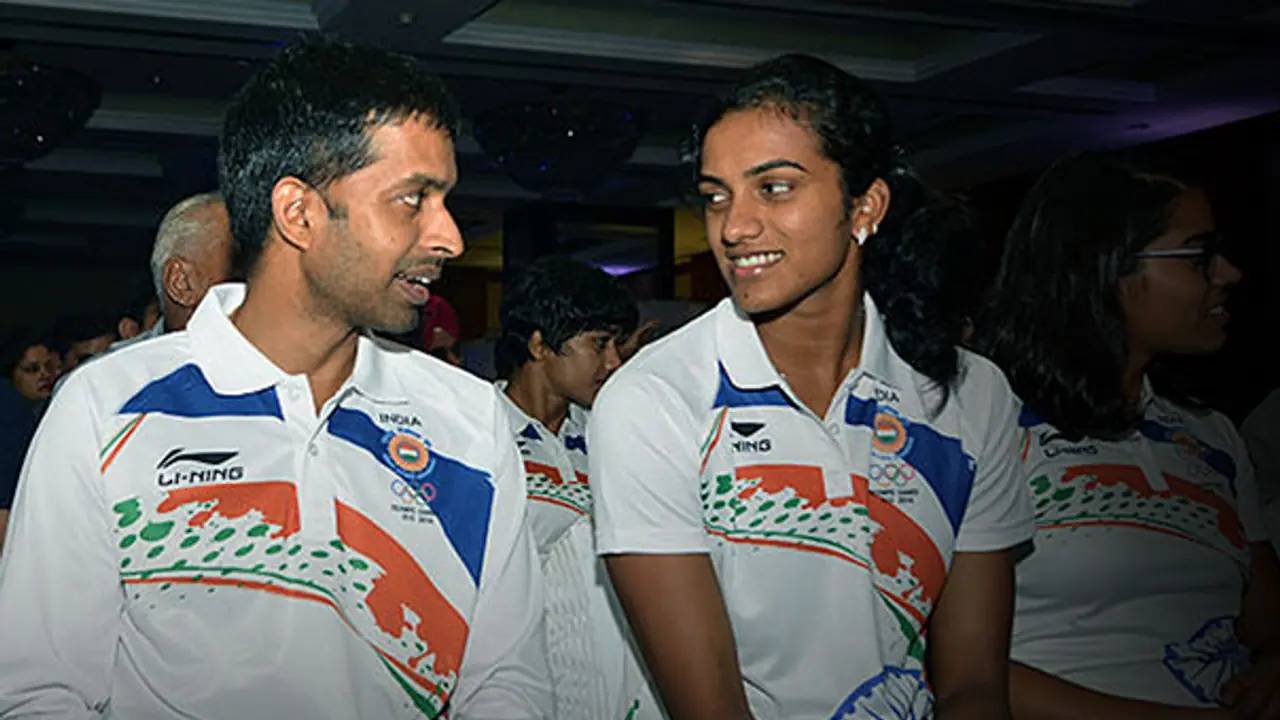
If Pullela Gopichand, India's badminton coach, were to write a book, he may well borrow his title from Robin Sharma's The Monk Who Sold His Ferrari. Because in the manner in which Gopi has inspired an entire generation of young badminton players to dream big, he could well title it The Monk Who Sold The Badminton Dream.
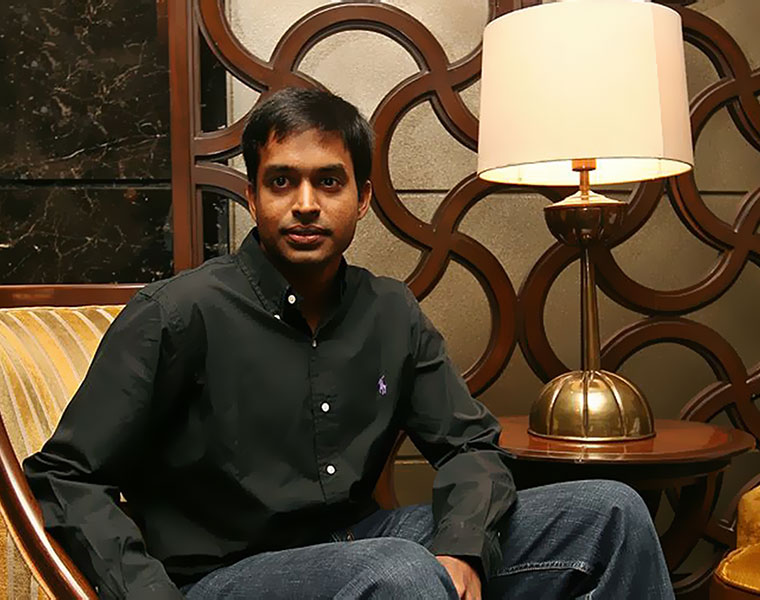
Gopi, thanks to his demeanour and a sergeant-like approach to his work, is often referred to as a monk on court. “For me, this badminton academy is like a temple. Every day I enter this place, I remind myself that there is a lot of work still to be done,” he says.
His mother, Subbaravamma, the administrator of the academy, even leaves her slippers outside the main door. Devotion to the game is clearly the purest form of worship for the family.
But should Gopichand decide to produce a manual on how to win an Olympic medal, it will sell like hot cakes. Especially in a country that is devoid of a sporting culture, has politicians occupying positions of power and privilege in sport federations and where the few success stories that emerge are despite the system rather than because of it.
Here are what could be Indian sports' 10 commandments if they took a cue from the badminton monk.
- Inspire gen-next to play a sport or two. Tap the best among them to take to it seriously. The talent tapping has to be immaculate, with professionals who have played the game for the country, drafted to be part of the search team. Put the selected students into a nursery for training. Check them for aptitude and basic skills. If you are lucky, you may spot a child prodigy.
- Invest in state-of-the-art academies, with hostel facilities. The Chinese template is what Gopichand adopted for badminton and there are similar examples from different parts of the world for different kinds of sport. Bring in the sports psychologists because the modern game is as much about the mind as the body.The younger lot in the 6-12 years age group are the most precious commodity. Invest in them with an eye on 2028 Olympics. Gopichand's own children, Gayatri and Vishnu among many kids in the same age group train at his academy and are his investment for a decade from now.
- Do not put all your money in white elephants like big stadia but in everything-under-one-roof training centres. Treat them as temples of sporting excellence. Maintaining discipline is key.
Respect for the coach and fellow players should be the mantra while eschewing the habit of venting spleen on social media or planting stories about others in the media. The sanctity of the guru-shishya relationship to be upheld. Invest in training coaches and wooing the best in the world to come to India and train Indian athletes.
- Invest only in players who make the game their life. They cannot figure both on Page 3 and sports page of a newspaper.
Focus on the job at hand. When Gopi went for the All-England championship in 2001, he did not call his family then living in Chennai, during the entire duration of the tournament. He did not read newspapers either to know what was being written about his progress in the event.
Gopi's mother Subbaravamma says the last two days before the semi-finals, she was reminded of that. Gopi neither dialled home nor answered his phone. Subbaravamma says she thought of that as a good sign, that when she finally heard from him, it would be good news.
- Gopichand discourages players using social media as he considers it a distraction. He in fact, believes that if high-performance athletes do ordinary things, they will remain ordinary. So Rio-bound players were advised to be off their accounts two months before the event. The focus on the eye of the fish a la Arjuna - in this case, a podium finish at Rio - is all that Gopi wanted his wards to think about. Take one match at a time but as part of a larger process of winning.
- Junior players at Gopichand academy hostel aren't allowed to keep cellphones. In fact, with CCTVs around the academy, the staff keeps a keen watch on any violations. Even surprise raids are undertaken by Subbaravamma and team.
One month before Rio, even the seniors were ordered to switch off their mobiles and WhatsApp chats. They were asked to use the academy landline number to make calls to their parents.
- Diet is critical for a sportsperson. Gopi's aversion to aerated drinks is well-known. At a time when most cricketers of his generation were endorsing fizz drinks, he refused to do so as a matter of principle that they are harmful to health. At the academy, fresh watermelon juice is what is available.
Gopi led by example by staying off carbs for the last three months so that he could be an effective sparring partner to PV Sindhu and Kidambi Srikanth. Sweets are sin and can come only after a sweet victory.
- Run the academy like a military camp but allow players to indulge themselves, if they paid the ‘penalty’. For example, knowing Sindhu's craving for Hyderabadi biryani, Gopi would allow her to eat a plate provided she did ten rounds of the Academy. The shuttler, to satisfy her gastronomic desire, did so on quite a few occasions. But again closer to Rio, Gopi did not give an inch on the dining table.
- Set targets to excel. Take care of your body. Even 500 gm over your prescribed weight means you will move a fraction or two of a second slower on court. In a match against players of the calibre of a Lin Dan or a Carolina Marin, that is like giving them a mile.
- Believe in yourself. Trust your coach. Strategise. Study the opponent's game. Plot. Have a clear gameplan. Use guile. Be cunning on court. Think calm. Be inspired by the tricolour. Go to the podium. Receive the medal. Wave to the crowd. Tears of joy.
