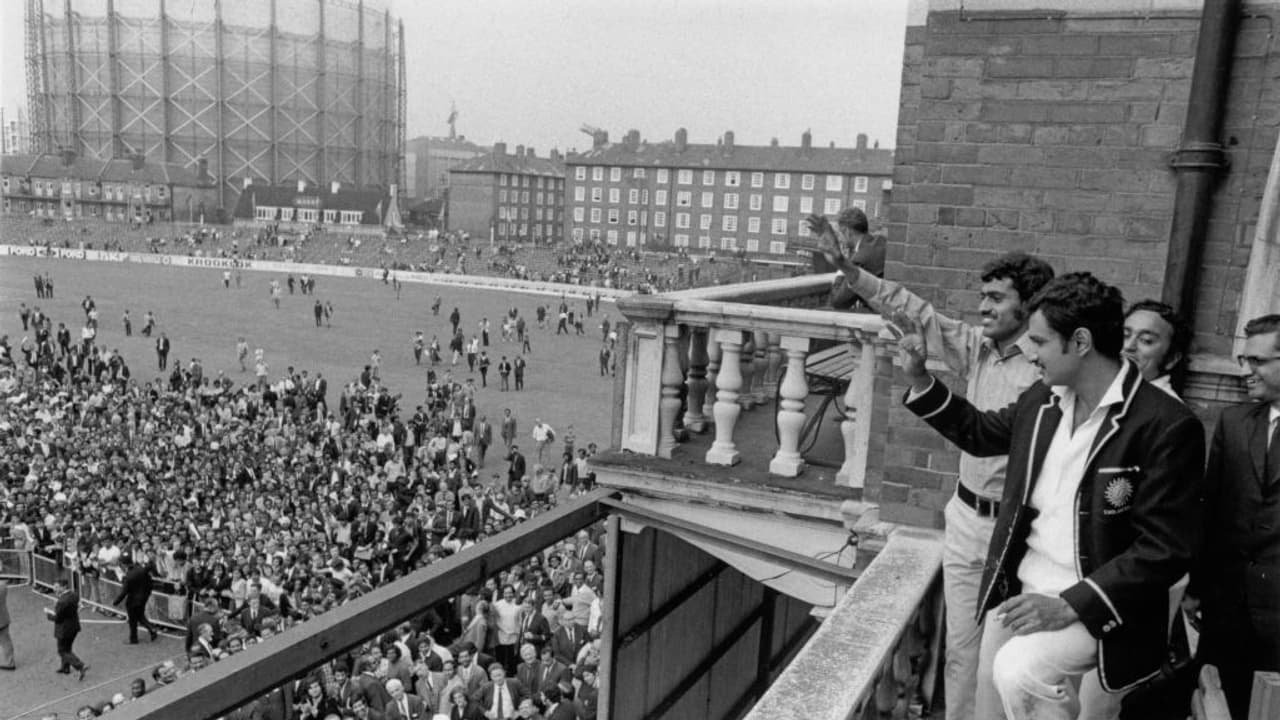
Team India aims to level the series against England at The Oval. Their historic 1971 victory at the same venue marked their first Test win and series win on English soil, a pivotal moment in Indian cricket history.
Team India will face England in the fifth and final Test of the ongoing series at The Oval in London on Thursday, July 31. The Oval Test is a series decider of the Anderson-Tendulkar Trophy after the Shubman Gill and co. managed to salvage a draw in the fourth Test at Old Trafford in Manchester, in a dramatic fashion, keeping the five-match series alive at 2-1 in favour of England.
Team India will head into The Oval Test with a sole aim of leveling the series 2-2 after pulling off a thrilling draw in the Manchester Test, thanks to the visitors’ resilient batting. India had played 14 matches against England at the venue from 1936 to 2021, but managed to register two victories - 1971 and 2021, and lost six and drew seven.
Team India registered their first The Oval Test win in 1971 under Ajit Wadekar's Captaincy and took 50 years to break the long-drought of a winning Test match at the venue, which was achieved under the captaincy of Virat Kohli.
Related Articles

The 1971 Test victory at the Kennington Oval in London holds a lot more compared to other India’s overseas red-ball wins as it was this Test that made their dream come true, winning the series on English soil. This series win in England was another historic moment for India, following their maiden Test series victory in the West Indies.
Ajit Wadekar and his boy did unimaginable
The 1971 Test series in England was India’s seventh tour of the United Kingdom and carried the hopes and weightage of a cricketing nation desperate to prove its mettle abroad.
The first two Tests at Lord’s and Old Trafford of the three-match series ended in a draw, and they headed into the third match, but the pressure was immense as Ajit Wadekar’s side was in the spotlight, given that they savalage a draw in the opening two Tests. India skipper Wadekar lost the toss to England captain Ray Illingworth, who asked the visitors to bowl first.
Illingworth’s decision to bat first backfired as Indian bowlers, including Eknath Solkar (3/28), Bhagwat Chandrashekar (2/76), Bishan Singh Bedi (2/120), and Srinivas Venkatraghavan (2/63), rattled England’s batting line-up as they were bowled out for 355, a modest total considering the conditions. Alan Knott was the top scorer for England in the first innings with 90, while James Johnson and Richard Hutton scored 82 and 81, respectively.
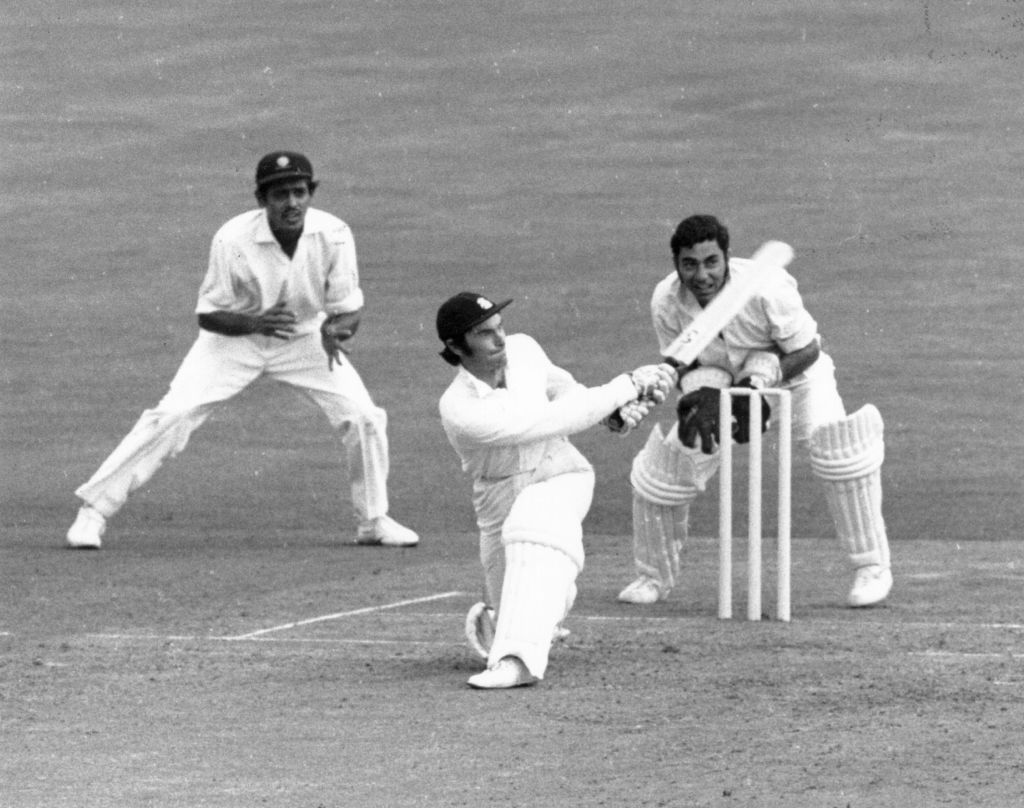
After bowling out England for a modest total, it was India’s turn to bat in the first innings. Though there was pressure from the opposition’s bowlers, including John Snow, Derek Underwood, and Richard Hutton, but Indian batters weathered the storm and responded with grit and determination.
Riding on half-centuries by Dilip Sardesai (54) and Farokh Engineer (59), and vital contributions from Ajit Wadekar (48), Eknath Solkar (44), Syed Abid Ali (26), and Srinivas Venkatraghavan (24), Team India managed to post a total of 284 and left trailing by 71 runs.
Bhagwat Chandrashekar’s magical spell that turned the game around
England assumed their second innings with a 71-run lead, and it looked like the advantage was on the hosts' side, who would look to build on the lead and set a massive target for Team India to chase. However, the Indian quarter had other plans.
Bhagwat Chandrashekar and Srinivas Venkatraghavan turned the tide dramatically, leaving England under immense pressure. Chandrashekar, in particular, was the engineer behind the hosts’ dramatic collapse as he picked six wickets while conceding just 38 runs at an economy rate of 2.09 in 18.1 overs. Venkatraghavan registered figures of 2/44 at an economy rate of 2.20 in 20 overs.
England would not have expected such a collapse in their batting line-up as they were bundled out for a mere 101 in 45.1 overs. Opener Brian Luckhurst was the top scorer for the hosts in the second innings, with 33. Apart from Luckhurst, no other England batters managed to score 20 or above, such was India’s dominance with the ball in the second innings.
The innings that sealed a maiden series win in England
With a moderate 173-run target, India assumed their second innings batting on Day 4, and at the close of play, the visitors posted a total of 76/2, with Ajit Wadekar and Dilip Sardesai batting on 45 and 13, and needed 97 runs to win. In the first hour of the first session on Day 5, Wadekar was dismissed at 76/3.
Then, Sardesai and Gundappa Viswanath stitched a crucial 48-run stand for the fourth wicket until the former was dismissed for 40 at 124/4. Then, Eknath Solkar was dismissed for 1 at 134/5. Thereafter, Farokh Engineer joined Viswanath at the crease and the pair stitched yet another vital 36-run partnership for the sixth wicket until the latter’s resilient innings of 33 off 171 balls came to an end at 170/6.
India needed 3 runs to win the match. Syed Abid Ali walked out to bat and joined Engineer at the crease. Guess what? Syed Abid Ali hit a winning four to take the team past the finish line and sealed their first-ever Test victory and series win on English soil.
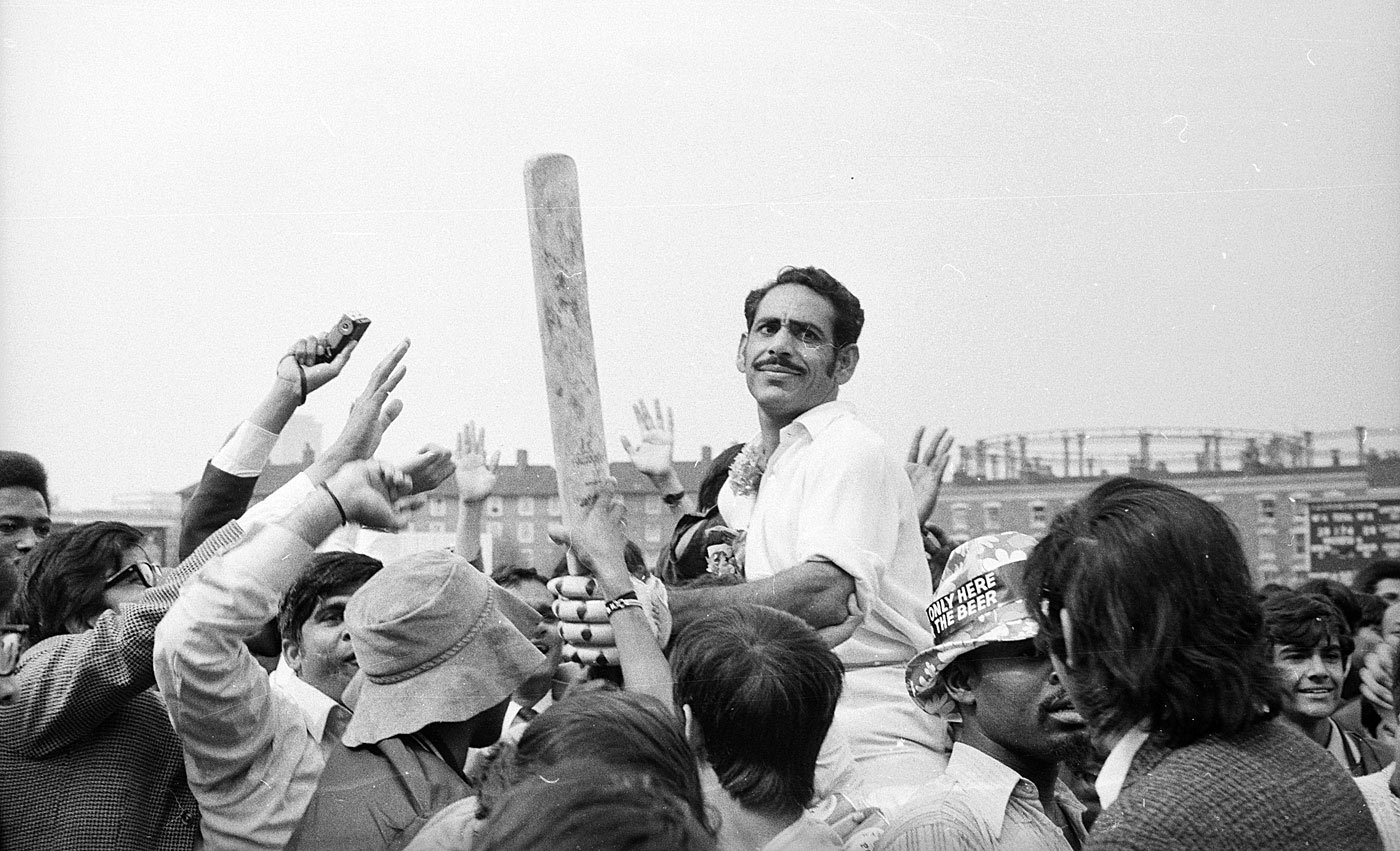
The victory not only sealed India’s first-ever Test win on English soil but also marked a defining chapter in Indian cricket following the first-ever Test series win in the West Indies, establishing India as a serious force in world cricket.