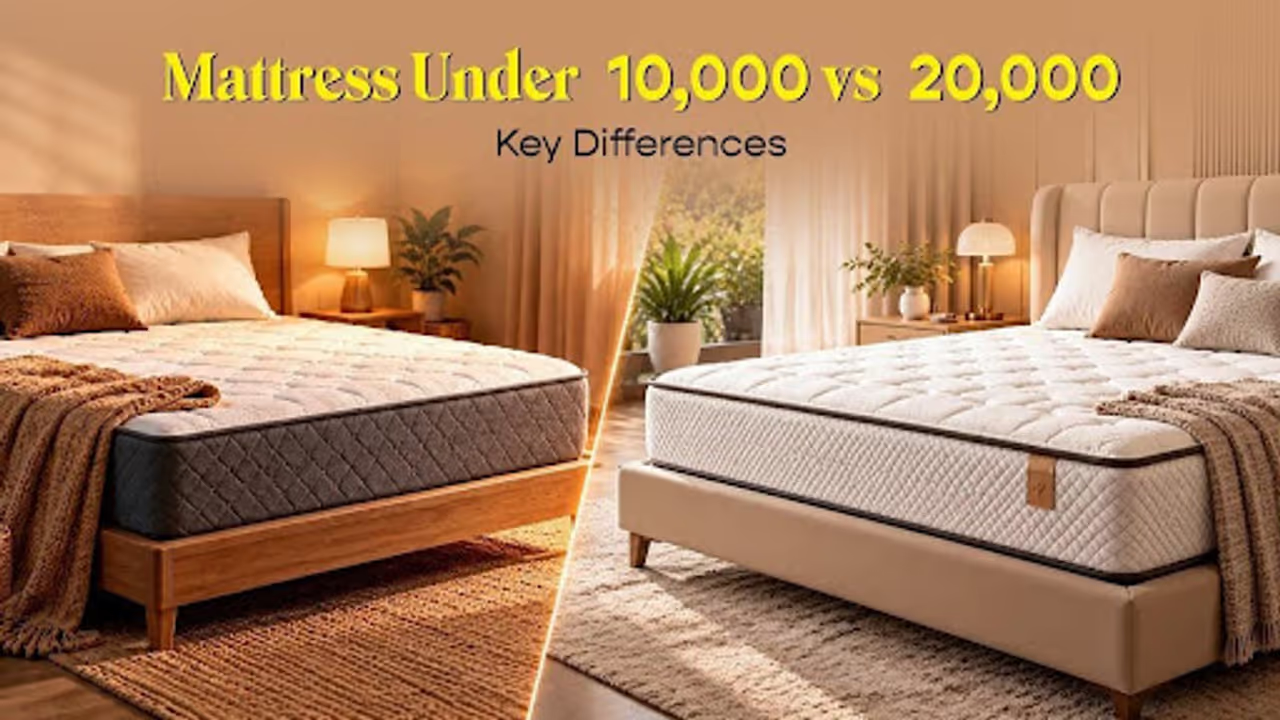
Planning to buy a new mattress? Compare mattresses under ₹10,000 and ₹20,000 to understand the differences in materials, comfort, support, durability and features before deciding which option offers better value for money.
When shopping for a mattress, price is something that often we all consider. However, a lower price does not necessarily mean compromising on comfort, just as a higher price does not automatically guarantee a better sleeping experience.
Additionally, mattresses under ₹10,000 and those priced around ₹20,000 can differ in their materials, cushioning, support systems and durability. Knowing what sets these options apart can help consumers identify the features that matter most before making a purchase.
Understanding the Difference Between Mattresses Under ₹10,000 and ₹20,000
Mattresses priced under ₹10,000 typically focus on essential comfort and functional support. Depending on the brand and mattress size, this segment may include foam, basic memory foam and certain entry-level spring or coir-based options. These mattresses can be suitable for guest rooms, occasional use or buyers looking for a practical everyday solution within a limited budget.
In comparison, mattresses around ₹20,000 may offer more advanced material combinations, improved comfort layers, better-engineered support systems or additional features designed to enhance the sleeping experience. However, price alone does not guarantee better quality. The actual difference depends on the mattress construction, material density, design and manufacturing standards.
For buyers, the key is to look beyond the price tag and understand what each mattress offers in terms of comfort, support and durability.
1. Comfort: Basic Cushioning vs More Refined Pressure Relief
One of the most noticeable differences between mattresses in these price brackets can be the way they respond to the body.
Mattresses under ₹10,000 often provide straightforward cushioning, with comfort levels depending on the type and thickness of the foam or other materials used. A well-designed mattress in this category can offer a comfortable sleeping surface, particularly for individuals who prefer a simpler, firmer feel.
Mattresses around ₹20,000 may incorporate additional comfort layers, responsive foam or memory foam designed to distribute pressure more evenly. These features can be particularly beneficial for side sleepers, who often experience pressure around the shoulders and hips. Depending on the construction, the mattress may also offer a more balanced combination of cushioning and support.
The important consideration is personal preference. Some sleepers prefer a firmer surface, while others enjoy a softer, more contouring feel. A higher-priced mattress is worth considering when its comfort layers address specific sleeping needs rather than simply adding extra softness.
2. Materials: What Goes Into the Mattress?
The materials used in a mattress influence its feel, responsiveness, breathability and ability to retain its shape over time.
In the under-₹10,000 category, buyers may find conventional polyurethane foam, basic memory foam, coir or other entry-level constructions. The quality can vary considerably between products, even within the same price range. Foam density, layer thickness and overall construction are therefore important factors to check.
At around ₹20,000, buyers may have access to more elaborate constructions, including higher-density foams, multiple comfort layers, better-specified memory foam or pocket-spring systems, depending on the brand and size. Some mattresses also feature materials designed to improve airflow or manage heat and moisture.
These differences can affect how the mattress feels during use. For instance, memory foam generally contours more closely to the body, while spring-based designs can offer a more responsive feel. Open-cell foam and breathable covers may help with airflow, although actual temperature regulation depends on the entire mattress design and the sleeper's environment.
Rather than assuming that a more expensive mattress automatically uses superior materials, buyers should review the product specifications and understand the purpose of each layer.
3. Support: Why Mattress Construction Matters
Comfort and support are closely related, but they serve different purposes. Comfort refers to how the sleeping surface feels, while support relates to how the mattress accommodates the body and helps maintain a comfortable sleeping posture.
A mattress under ₹10,000 can provide adequate support when its firmness and construction are appropriate for the user's body type and sleeping position. However, some entry-level models may have simpler support systems or fewer comfort layers.
Mattresses around ₹20,000 may offer more carefully engineered combinations of comfort and support layers. Depending on the design, these can help distribute body weight, reduce excessive sinking and provide more consistent support across different areas of the body.
For couples, certain pocket-spring mattresses may also help limit the transfer of movement from one side of the bed to the other. For individuals who prefer foam, the density and resilience of the support core can influence how the mattress responds to movement and repeated use.
It is important to remember that the ideal firmness is not determined by price alone. A mattress should feel comfortable in the sleeper's usual position and provide an appropriate balance of cushioning and support.
4. Durability: Looking Beyond the Initial Purchase Price
A mattress is a long-term household purchase, making durability an important part of the comparison.
In the under-₹10,000 segment, durability depends heavily on foam quality, material density, construction and daily usage. Some budget mattresses can perform well for years, while others may lose their shape or develop visible impressions sooner under frequent use.
At around ₹20,000, certain models may use more durable materials, stronger support cores or layered constructions designed to maintain their performance over time. However, these benefits should be verified through product specifications, warranty terms and the manufacturer's stated usage recommendations.
Buyers should look for clear information about the mattress warranty, exclusions, sagging coverage and care requirements. A longer warranty can offer additional reassurance, but it should not be treated as a direct guarantee of the mattress's lifespan.
The better purchase is one that delivers consistent comfort and support over its useful life, rather than one that simply costs more upfront.
5. Breathability and Temperature Regulation
Sleep comfort is also influenced by how well a mattress manages heat and moisture.
Basic foam mattresses can feel warmer to some sleepers, particularly when the foam contours closely to the body or the mattress has limited airflow. This does not apply to every budget model, as breathability varies by material and construction.
In the ₹20,000 price range, buyers may find mattresses with ventilated foam, breathable fabric covers, responsive spring systems or material combinations designed to improve airflow. These features can help create a more comfortable sleeping environment, although no particular price bracket guarantees a cooler night's sleep.
For people who tend to sleep warm, it is worth examining the cover fabric, foam structure and overall construction instead of relying exclusively on marketing terms such as cooling or temperature-regulating.
6. Which Mattress Offers Better Value for Money?
The better-value option depends on the buyer's needs, sleeping habits and expectations.
A mattress under ₹10,000 may be a practical choice for budget-conscious buyers, guest bedrooms, temporary living arrangements or individuals who find a simple, well-constructed mattress comfortable. It can also be suitable for everyday use when the materials and support system meet the user's requirements.
A mattress Under ₹20,000 may be worth the additional investment for people seeking more specialised comfort, a particular combination of materials, improved motion isolation or a more refined balance of cushioning and support. It may also provide more options for couples and sleepers with specific firmness preferences.
Before making a decision, buyers should compare mattresses of the same size, as prices can vary significantly between single, double, queen and king sizes mattress . They should also consider trial periods, return policies, delivery conditions and warranty coverage.
Ultimately, the most expensive mattress is not necessarily the best choice. Whether choosing a budget-friendly option or considering the SleepyCat Original Mattress , the best value comes from finding a mattress that meets the sleeper's needs and delivers reliable performance within the available budget.
What Should Buyers Check Before Making a Purchase?
Regardless of the price, a few practical checks can make the buying process easier:
- Firmness: Choose a feel that suits your sleeping position and personal comfort preferences.
- Material specifications: Review the foam type, density where disclosed, layer composition and support-core design.
- Sleeping position: Side sleepers may prefer greater pressure relief, while back and stomach sleepers may need a firmer, more supportive feel depending on their body type.
- Mattress size: Confirm the dimensions against the bed frame and the needs of the people using it.
- Trial and return policy: Understand the conditions for testing the mattress and returning it if necessary.
- Warranty: Check the coverage period, exclusions and conditions related to sagging or structural defects.
- Care requirements: Follow the manufacturer's guidance on rotation, cleaning and suitable bed bases.
Taking these factors into account provides a more meaningful comparison than relying on price alone.
Summary
In summary, the difference between a mattress under ₹10,000 and one around ₹20,000 often comes down to the materials, comfort layers, support construction and additional features available in each product. While a budget mattress can deliver satisfactory everyday comfort, a higher-priced option may offer more specialised construction and a wider range of comfort choices.
Ultimately, the right mattress is one that balances comfort, support, material quality and durability for the individual sleeper. By comparing specifications, understanding personal preferences and evaluating the complete value proposition, buyers can make a confident decision without assuming that a higher price automatically means a better night's sleep.