
The crypto market has come a long way in the last decade. What we are seeing now in the last few years is a market that is rapidly maturing.
Crypto markets are increasingly defined by where capital chooses to reside, not just where it trades. A growing share of digital assets is consolidating on a small number of exchanges, reflecting a clear shift in how both institutional and retail participants evaluate counterparty risk. Rather than relying on trading volume as a proxy for market leadership, investors are placing greater weight on custodial depth, liquidity resilience, and the ability of a platform to safeguard assets at scale. This article examines why crypto reserves are concentrating at leading exchanges and why this trend has emerged as a more meaningful signal of market confidence than trading activity alone.
When $153 Billion Moves to One Place
The crypto research firm Coinglass published their 2026 Q1 market share report recently. In it, the metrics show a clear trend of capital concentration moving to the top of the list of the most popular exchanges worldwide. At the top of that list is Binance, which currently holds around $153 billion in user asset reserves. What makes this number significant is that it represents asset reserves of “about 73.5% among major CEXs.” For one exchange to have nearly three-quarters of the entire market is a clear message from market participants that Binance is where they trust parking their capital.
Related Articles

Binance’s Co-CEO Richard Teng had this to say on the development: "When markets become uncertain, users make decisions based on trust. The fact that $152.9 billion in assets remain on Binance reflects something we've built deliberately over years — transparency in our reserves, consistency in our protections, and a commitment to putting user security above everything else."
Reserves Matter More Than Trading Volume
Trading volume is an important metric when considering the health of an exchange. However, it only tells a small piece of the story on why capital moves. Volume reflects short-term activity, but it does not tell us about long-term commitment. For example, if a trader deposits assets, trades, then withdraws, this does not tell us that the trader trusts the platform beyond just the trades.
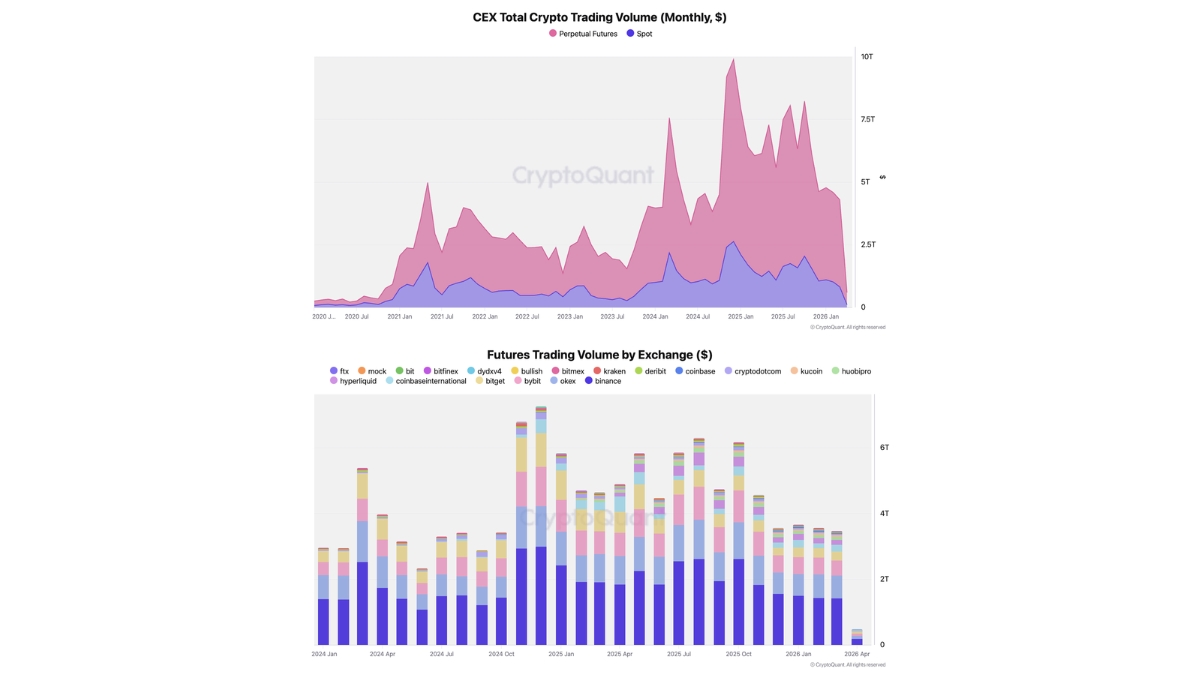
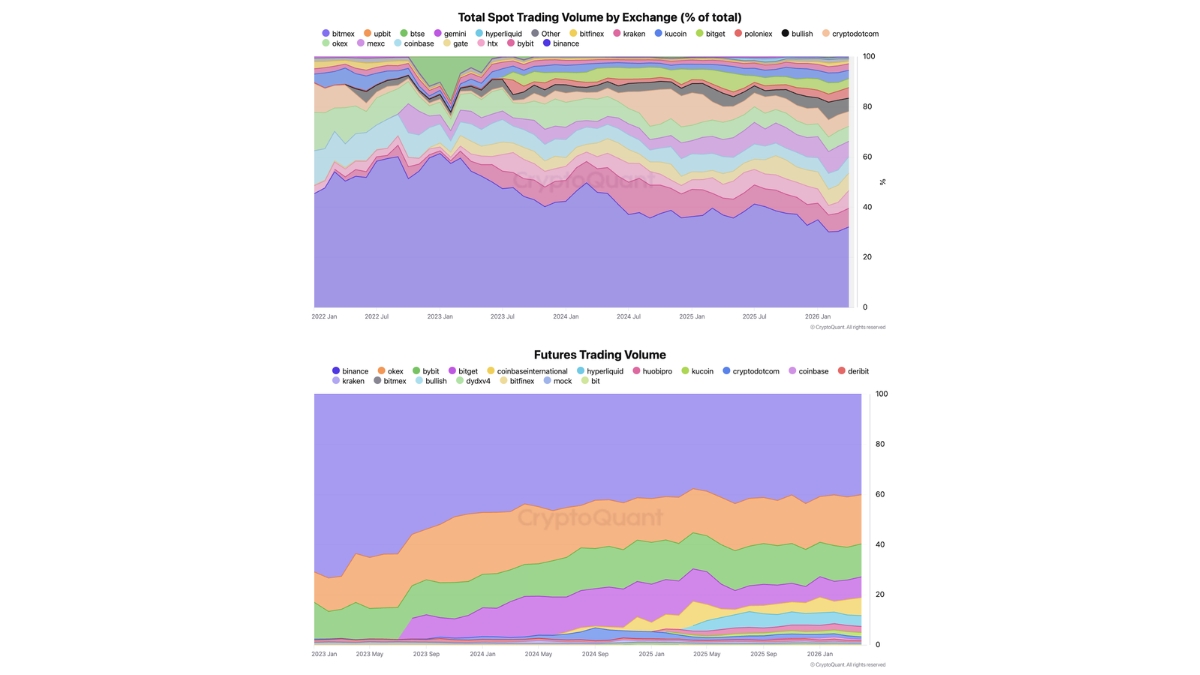
However, if we tie the two metrics together, we can develop a more realistic outlook on how the market views a given platform. A report on CryptoQuant observes that on both metrics, “Binance continued to maintain its industry leadership,” leading in both volume and reserves depth.
The Institutional View on Custody and Safety
Retail investors that turn earnings into assets, have fundamentally different needs than institutional investors. In a recent think piece by investment firm State Street, the authors write: “Large financial institutions will only deploy funds at scale if they are confident those assets are safe.” The key word being confidence.
The idea behind custodial gravity is largely that confidence attracts confidence. If enough market actors have faith in a platform, that faith and confidence can spread. This is especially true for institutions. As soon as a critical mass of institutional capital moves onto a platform, more institutional capital will inevitably follow it.
This is also because institutions will have the highest demands for security standards. The State Street piece builds on this idea, with the authors arguing that when comparing traditional finance standards to crypto platforms: “The same standard will be expected for digital assets as secure, reliable custody will be essential to institutional adoption. Without strong custody solutions, institutions risk hacks, loss of funds and legal uncertainty, all of which will undermine confidence.” This means only crypto firms that meet these stringent standards will win the trust of professional investors.
What This Concentration Means for Crypto
The crypto market has come a long way in the last decade. What we are seeing now in the last few years is a market that is rapidly maturing. And with that maturation comes professional capital. Mature markets typically come with capital concentration as a result of custodial gravity. The biggest banks hold the most capital, and likewise the most trusted exchanges and platforms will inevitably hold the most crypto capital. Platforms that prioritize user security and transparency, maintain auditable proof-of-reserves and dedicate resources to legal compliance will attract the most institutional investment. Therefore it is no surprise that Binance is leading the field and attracting the most capital, according to research groups like Coinglass and CryptoQuant.
Derivatives volume is a strong proxy for institutions, and currently “derivatives remain the decisive growth engine for exchanges, cementing Binance’s position as the dominant venue across both spot and derivatives,” per CryptoQuant. This tells us that even with institutions' strict demands on custody and security, Binance is ahead of competitors, securing their “position as the dominant venue across both spot and derivatives.”