
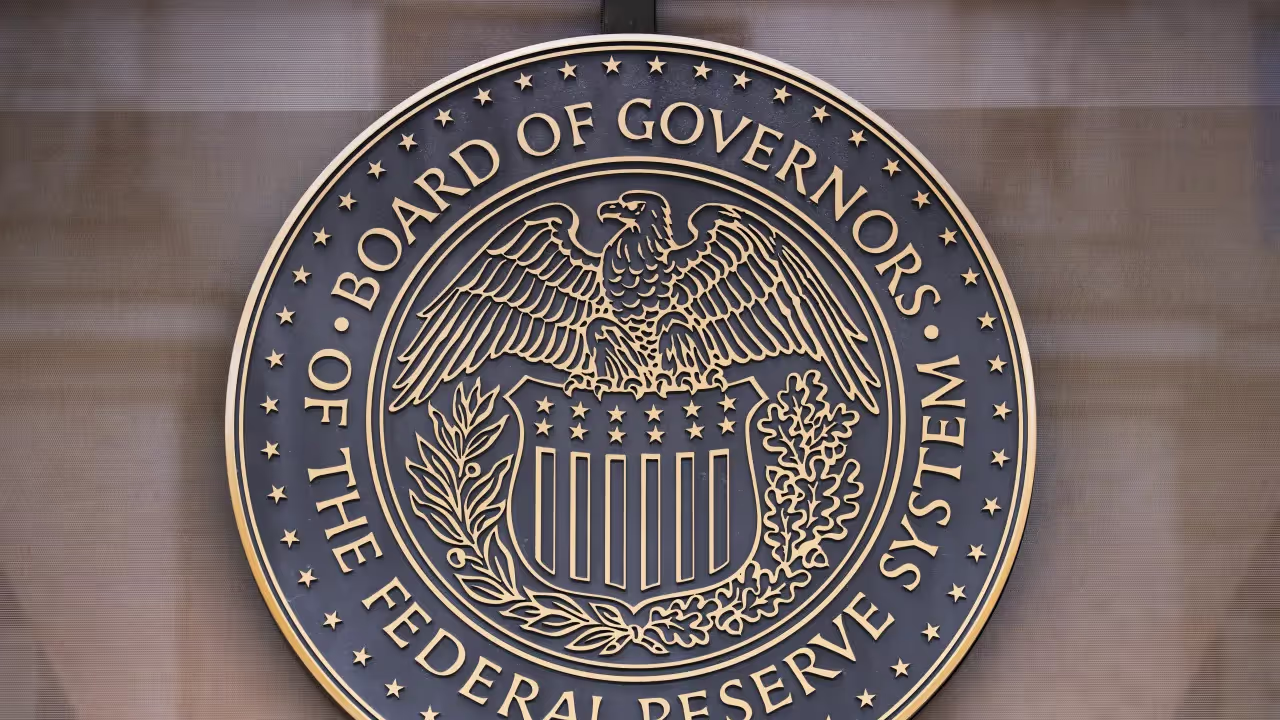
Its voting membership includes the seven members of the Board of Governors, the president of the Federal Reserve Bank of New York, and four of the other regional Federal Reserve Bank presidents.
- The FOMC usually meets eight times a year; however, the frequency of the meetings may change depending on the prevailing market or economic conditions.
- The Federal Reserve has a "dual mandate", which is a goal set by the U.S. Congress for the Fed to conduct monetary policy to promote two goals: maximum employment and stable prices.
- FOMC members discuss policy options and vote on monetary policy, primarily by setting the target range for the federal funds rate, the rate at which banks lend to each other overnight.
The Federal Open Market Committee, or FOMC, is the independent twelve-person committee of the U.S. Federal Reserve that sets the monetary policy.
Its voting membership includes the seven members of the Board of Governors, the president of the Federal Reserve Bank of New York, and four of the other regional Federal Reserve Bank presidents, who serve one-year terms on a rotating basis. Although only these 12 vote, all Reserve Bank presidents, even those who don’t vote, take part in the meetings and provide their input on the economy and their respective regions.
How the FOMC Sets Monetary Policy
The FOMC usually meets eight times a year; however, the frequency of the meetings may change depending on the prevailing market or economic conditions. For example, in March 2020, before the onset of the COVID-19 pandemic, the FOMC slashed interest rates by 1.5 percentage points in total across two unscheduled meetings.
In each meeting, the governors are presented with recent economic data, financial market conditions, and forecasts covering inflation, employment, production, credit, and other macroeconomic factors.
After carefully reviewing all the data points, FOMC members discuss policy options and vote on monetary policy, primarily by setting the target range for the federal funds rate, the rate at which banks lend overnight to each other.
When a simple majority of Fed members agrees on a specific rate, the committee sets the mandate for the Fed that conducts open-market operations, such as buying or selling government securities, to align market interest rates with the intended target. Since 2008, the FOMC has also used balance-sheet management as part of its toolkit to influence longer-term interest rates.
Why the FOMC Matters for the Economy
The Federal Reserve has a “dual mandate”, which is a goal set by the U.S. Congress for the Fed to conduct monetary policy to promote two goals: maximum employment and stable prices. Currently, it wants inflation to remain about 2% while ensuring the job market is not affected.
The central bank’s decisions directly affect the cost of borrowing and the availability of credit, which in turn influence economic growth, investment decisions, hiring, consumer spending, and overall demand.
As the Fed itself notes, when the economy is overheating or inflation rises, the FOMC may tighten policy by raising the federal funds rate to cool demand and stabilize prices. During economic slowdowns or recessions, the FOMC may ease policy by lowering rates or expanding the money supply to encourage spending and investment. By doing so, the FOMC brings stability to the economy.
Impact on Financial Markets
Interest rate changes are one of the primary talking points on Wall Street and can cause wild swings in the stock market. Even a minor hike in interest rates can cause panic among investors, while a cut could cause a rally.
As macroeconomic volatility continues to rise, the role of central banks is gaining more prominence. The markets not only react to changes in rates but also price in expectations of what the central banks might do next, in real time, as soon as any Fed Governor speaks or a key economic data point is released.
What It Means for Consumers
Changes in the federal funds rate influence interest rates on mortgages, auto loans, student loans, and credit cards. When the FOMC cuts its target rate, borrowing becomes cheaper, which bolsters demand for homes, cars, and air travel. When rates rise, borrowing becomes costlier, which may discourage new debt and slow down spending.
Additionally, by steering monetary policy toward stable inflation, the FOMC helps preserve purchasing power, as stable prices help households plan longer-term budgets, savings, and investments.
For updates and corrections, email newsroom[at]stocktwits[dot]com.<
