
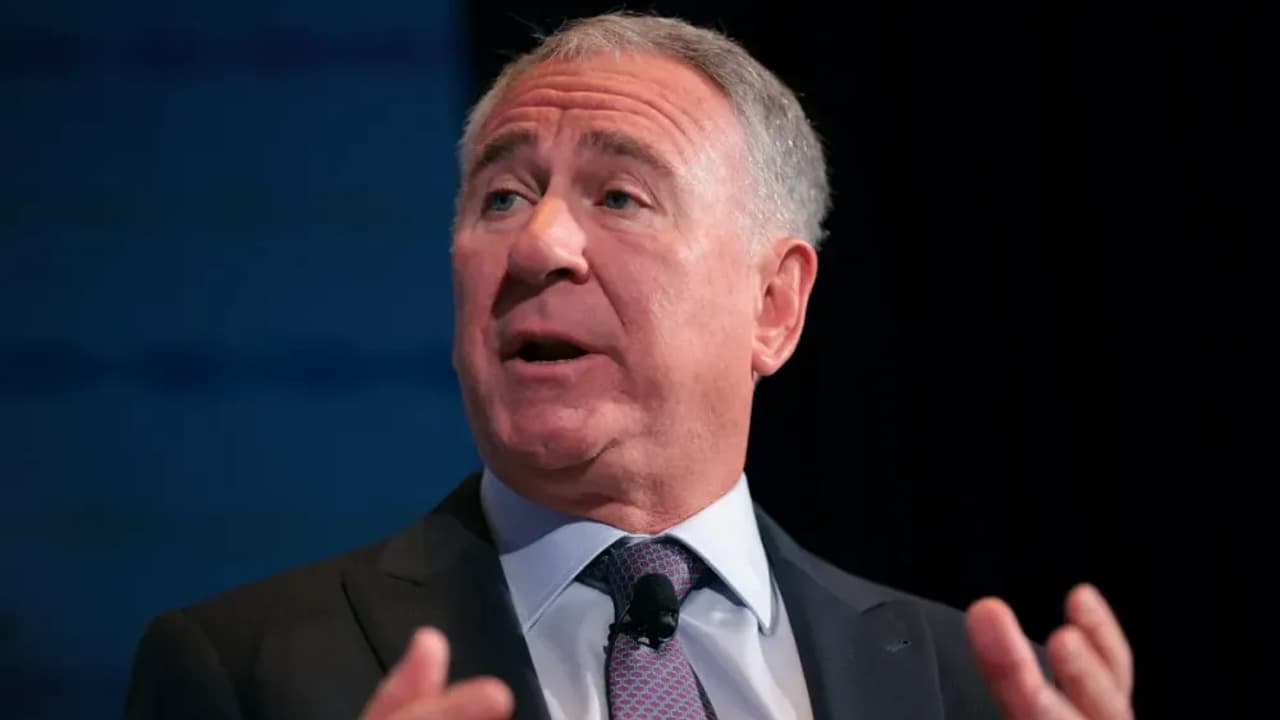
SanDisk, Micron Technology, and Bloom Energy accounted for about 66% of Situational Awareness’ portfolio.
- Citadel executed nearly 100 block trades totaling over $4 billion in market value to liquidate over 80% of the aggregate risk in Situational Awareness' public equity portfolio.
- The transaction provided vital balance sheet relief to Leopold Aschenbrenner’s $45 billion AI-focused fund.
- Citadel’s flagship Wellington fund surged 5.94% in July, its best month since 2022, bringing year-to-date returns to 12.02% following the takeover.
Citadel has dismantled more than 80% of the risk exposure associated with the massive equity portfolio it acquired from the trouble-plagued artificial intelligence fund Situational Awareness late last month.
In an investor letter issued on Friday, viewed by CNBC, Citadel founder and CEO Ken Griffin revealed that his firm orchestrated nearly 100 block transactions worth over $4 billion in total market value. The unwind included the largest single-day block sales of the year across 10 separate stock names.
SanDisk (SNDK), Micron Technologies (MU), Bloom Energy (BE), Nebius (NBIS) and Taiwan Semiconductor Manufacturing (TSM) were Situational Awareness Fund’s top five holdings, and most of these shares, barring TSM, ended lower on Friday.
Retail sentiment on Stocktwits around SNDK was ‘neutral’, and ‘bearish’ for MU, NBIS, and BE.
Rapid Resolution To Margin Crisis
The intervention traced back to July 29, when Citadel opened negotiations to take on a substantial portion of holdings from Situational Awareness. Led by 25-year-old Leopold Aschenbrenner, the $45 billion fund had plunged into crisis following catastrophic losses across its concentrated portfolio.
The firm’s strategy—heavily long on high-profile AI infrastructure plays like SanDisk and Bloom Energy, while shorting traditional software firms such as Adobe—backfired in June and July. As software equities unexpectedly rallied and AI hardware targets tumbled by more than 50%, Situational Awareness was squeezed on both fronts. Facing escalating margin calls and forced liquidations, Aschenbrenner approached rival institutions.
While rival investment houses such as Millennium Management and Jane Street evaluated potential trades, Citadel moved aggressively. Griffin noted that his analytical team priced and structured the global asset portfolio in just a few hours, acquiring the fund's public stock positions at a discount exceeding 10%.
Market Relief And Strong Fund Performance
The transfer served to stabilize Situational Awareness' balance sheet and stave off a disorderly liquidation that threatened broader markets. Market observers noted that the deal signaled a bottom for the summer technology slump, sparking a sector-wide relief rally.
Griffin commended the quick execution by trading desks and prime brokerage units at banking partners, which enabled the complex transfer to be executed smoothly.
The opportunistic rescue yielded immediate gains for Griffin’s firm. Citadel’s flagship Wellington fund recorded a 5.94% gain for July—marking its strongest monthly showing since 2022—and lifted its overall 2026 performance to 12.02% year-to-date.
For updates and corrections, email newsroom[at]stocktwits[dot]com.<
