
Michael Burry lists Build-A-Bear's transformation, loyal customer base, and shareholder returns as reasons to overlook near-term weakness.
- Michael Burry believes Build-A-Bear has evolved beyond its struggling mall-retailer image.
- Build-A-Bear's Q2 revenue and comparable-store sales declined, prompting another reduction in its 2026 outlook.
- Burry sees Build-A-Bear as undervalued, citing its unique store experience, low debt, and share buybacks.
Michael Burry sees deep value in Build-A-Bear Workshop (BBW), saying the retailer is more than a struggling mall brand. Despite two outlook cuts, tariff pressure and weaker sales, Burry believes its revamped store model, strong cash generation, aggressive buybacks and unique in-store experience give the business a durable competitive moat.
Build-A-Bear stock traded over 2% higher overnight, ahead of Friday. The stock is on track for its best week since May 2025, with a 15.1% gain.
How Build-A-Bear Transformed Its Mall-Dependent Business
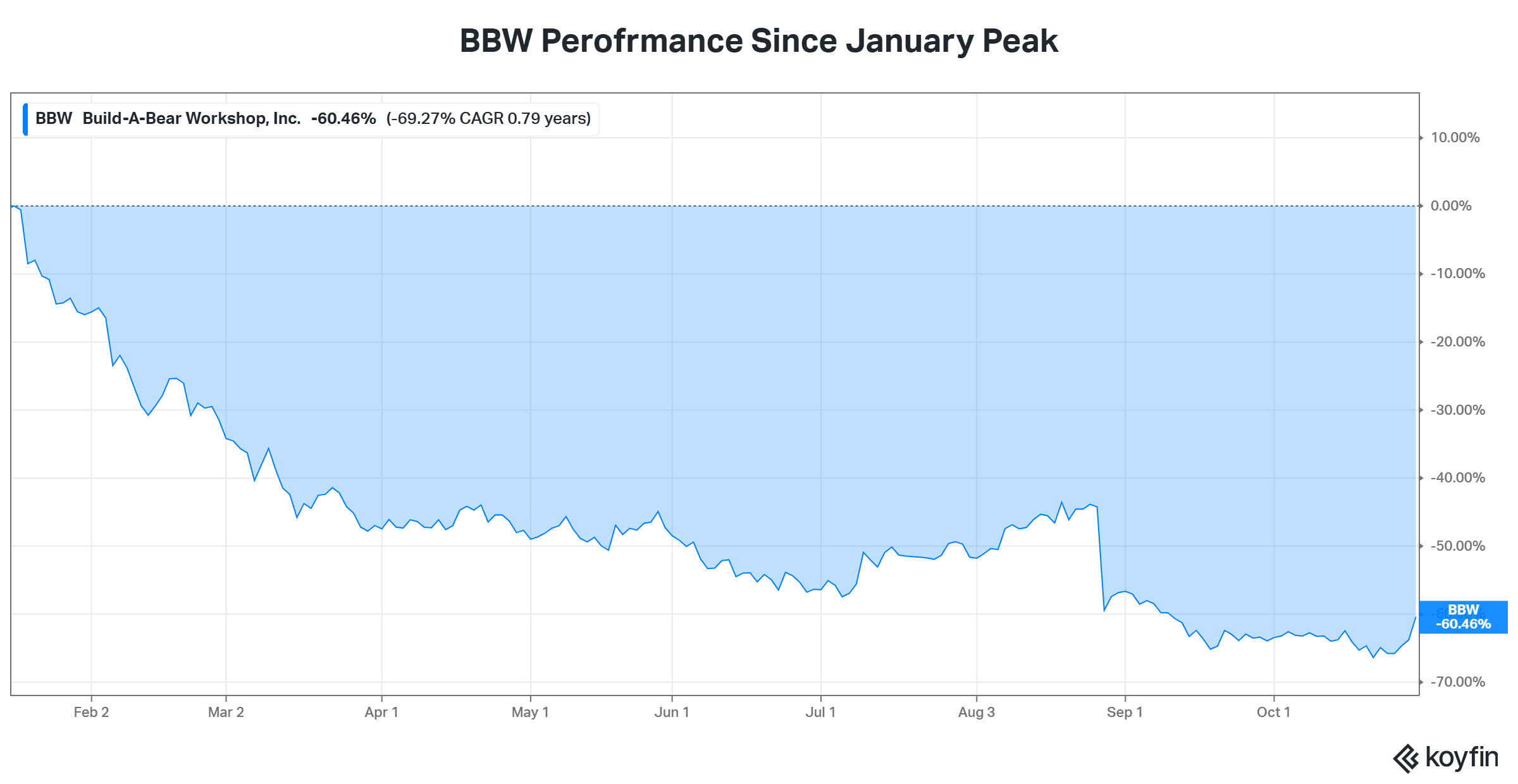
Build-A-Bear Workshop faces growing investor concerns as its stock falls, store sales weaken, and the company repeatedly cuts its outlook. However, famed investor Michael Burry believes the business has improved over the past decade and that its shares may now offer value despite near-term challenges.
In his latest Substack post, Burry said Build-A-Bear, founded in 1997, initially relied heavily on traditional shopping malls. Its business struggled as mall visits declined following the 2008 financial crisis and consumers turned to digital entertainment. By 2012, about one-fifth of its stores were losing money, while online sales represented just 4% of retail revenue.
“The nature of entertaining a child’s imagination changed, and BBW suffered dramatically. Malls themselves were even thought to be dinosaurs in the post-GFC(global financial crisis) period.”
Consequently, the company renegotiated leases, introduced smaller store formats, and expanded into tourist destinations and partnerships. Mall-based locations declined from 85% of the network to 65% by 2022. Its wholesale partner network grew from 60 locations in early 2022 to 177 by June 2026, letting the company reach more customers without bearing the full cost of opening stores.
Today, Burry said, Build-A-Bear operates 662 locations across 37 countries. Its refreshed Discovery store format is present in 55% of company-operated outlets.
Weak Sales And Guidance Cuts Weigh On Build-A-Bear
Despite business improvements, Build-A-Bear faces new challenges, Burry said. Second-quarter 2026 revenue fell 7.2% to $115 million, while sales at existing stores dropped 9.5%. Direct-to-consumer revenue declined 6.3%, and international franchise revenue fell 32.8%. The company also lowered its full-year revenue guidance to $500 million - $525 million from $530 million - $550 million. The company also lowered its pre-tax profit expectations, following an earlier outlook reduction.
Higher tariffs have added pressure because about half of the company's supply chain comes from China and another 40% from Vietnam. Meanwhile, weaker consumer spending has pushed shoppers toward less expensive products.
“In 2025, Build-a-Bear finally broke above $500 million revenue, and with a continued tariff hit, 2026 will be a little off that. Two consecutive guidance cuts are killing the stock and management’s credibility. Fears are of a return to bad days, but the company is fundamentally different now.”
Why Build-A-Bear's Business Could Still Have An Edge
Burry’s investment thesis centers on Build-A-Bear's distinctive in-store experience. The company also maintains relatively low financial leverage, continues repurchasing shares, and has reduced its outstanding share count by approximately 25% since 2021.
“I believe the company finally has the right management and efficient strategy and structure to grow long-term.”
“The accounting is clean, and a quarter of the shares were retired the last five years. Dividend is fat here, buyback authorization at nearly 13% of shares, with a quarter of the float short. There is a physical moat to this business that is hard for Wall Street to understand.”
At about $25 per share, the stock trades at roughly seven times estimated 2026 earnings and less than four times EBITDA, said Burry. Its dividend yield stands near 3.6%.
Burry Says Investors Are Misjudging Build-A-Bear's Business
Burry believes investors are underestimating Build-A-Bear by viewing it as an outdated “mall dinosaur”. Despite recent challenges and tougher comparisons with last year's Walmart sales, he sees the business as stronger than its reputation suggests.
“I rate this business a low Castle. Perhaps high Chapel. It has come through all manner of challenges, none of them from a competitor, and is still profitable and buying back shares.”
“I rate BBW a full 6% position in the low-mid $20s fully understanding there are a couple more potentially heavy quarters before the deck is cleared.”
BBW Stock: Retail View
On Stocktwits, retail sentiment around the stock improved to ‘bullish’ from ‘neutral’.
A user said, “Been holding for a while; the exlusives sell out like crazy. There is definitely a fanbase for this and a fantastic balance sheet, but they need to do something to spur growth and create their own ip.”
BBW stock has crashed 55% year-to-date.
For updates and corrections, email newsroom[at]stocktwits[dot]com.<