
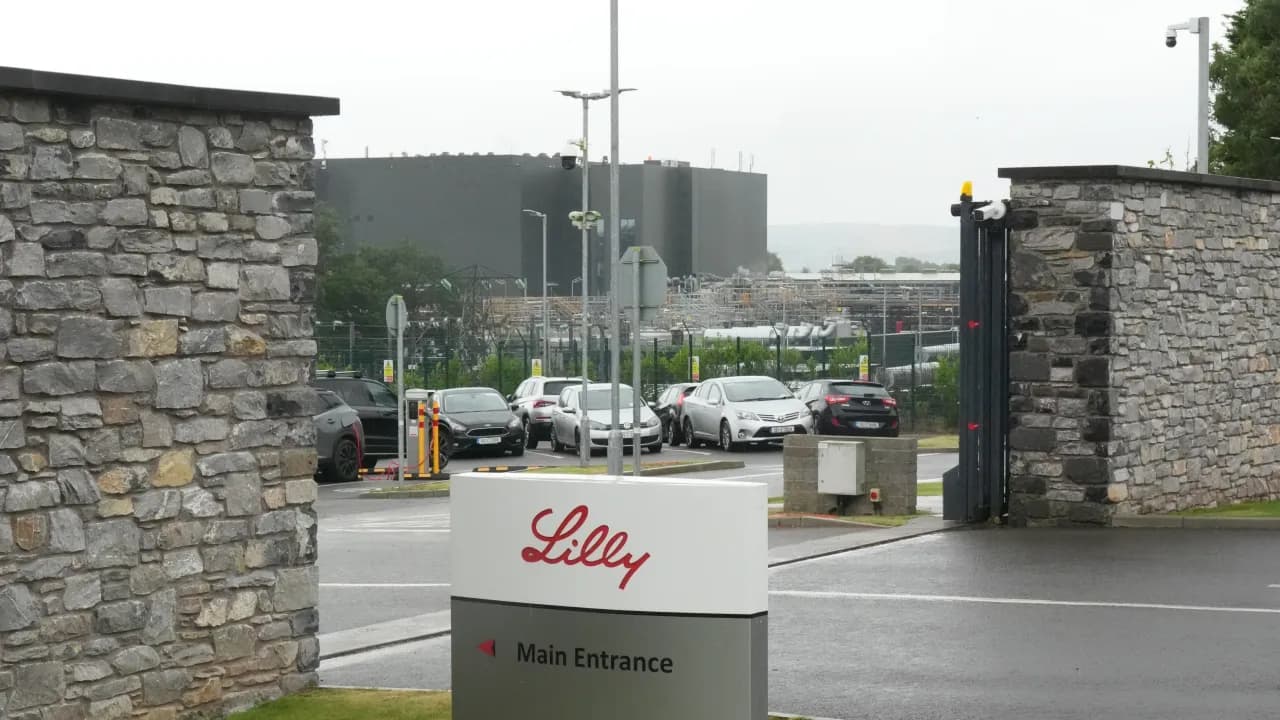
Ricks told Bloomberg that the world’s largest drugmaker will keep spending the cash from its weight-loss and diabetes franchise to buy its next act, not just defend the current one.
- Lilly has already been on a record deal-making run this year.
- The Centessa deal, completed earlier this year, added experimental sleep-wake drugs that Lilly has called a large, underserved market.
- Ricks pointed to infectious disease, women’s health and psychiatric conditions as areas of interest.
Eli Lilly & Co (LLY) CEO Dave Ricks reportedly told investors to expect slightly larger acquisitions—on the scale of the company’s $7.8 billion purchase of Centessa Pharmaceuticals—as the company searches for medicines in what he called the “white spaces” of science.
Ricks told Bloomberg that the world’s largest drugmaker will keep spending the cash from its weight-loss and diabetes franchise to buy its next act, not just defend the current one. The company has already been on a record dealmaking run this year.
“We have a choice here to reinvest in productive areas outside of obesity with that return or buy back shares and issue dividends,” the CEO reportedly said, while adding that it is “much more interesting to reinvest in human health.” He also pointed to infectious disease, women’s health and psychiatric conditions as areas of interest.
LLY’s Year Of Buying Beyond Obesity
Lilly has used the boom in Mounjaro and Zepbound to buy its way into areas beyond obesity and diabetes. The Centessa deal, completed earlier this year, added experimental sleep-wake drugs that Lilly has called a large, underserved market. In April, it agreed to pay up to $7 billion for Kelonia Therapeutics and its in vivo CAR-T platform for cancer. In May, it lined up three vaccine developers—Curevo, LimmaTech Biologics and Vaccine Company—for as much as $3.8 billion, marking a return to infectious disease.
The shopping list kept growing. Lilly closed a $2.8 billion upfront deal for AtaiBeckley in September, plus contingent payments of up to about $1 billion, adding a late-stage psychedelic-based program for treatment-resistant depression. It has also agreed to buy Merida Biosciences for up to $2.875 billion to pursue autoimmune conditions such as Graves’ disease and thyroid eye disease; that deal is still expected to close in the fourth quarter.
Earlier buys included Ventyx Biosciences for about $1.2 billion and Ajax Therapeutics for up to $2.3 billion. Last week it added a research pact with China’s InnoCare that includes up to $100 million in near-term payments and about $3.25 billion more if milestones are hit.
Lilly has long favored earlier-stage bets over mega-mergers. Ricks is now signaling that the next wave may look more like Centessa than a string of smaller tuck-ins.
How Did LLY Retail Traders React?
On Stocktwits, retail sentiment around LLY stock stayed within neutral territory over the past 24 hours, while message volume stayed at normal levels.
Earlier on Monday, JPMorgan raised the firm's price target on Eli Lilly to $1,500 from $1,400 and keeps an Overweight rating on the shares ahead of the company’s third-quarter earnings on Oct. 29. The company is positioned to again raise its guidance, the analyst said, while adding that growth in Lilly's business remains driven by the ramp of the international obesity business as well as strong initial uptake of Zepbound in Medicare.
LLY stock has gained 11% year-to-date.
For updates and corrections, email newsroom[at]stocktwits[dot]com.<
